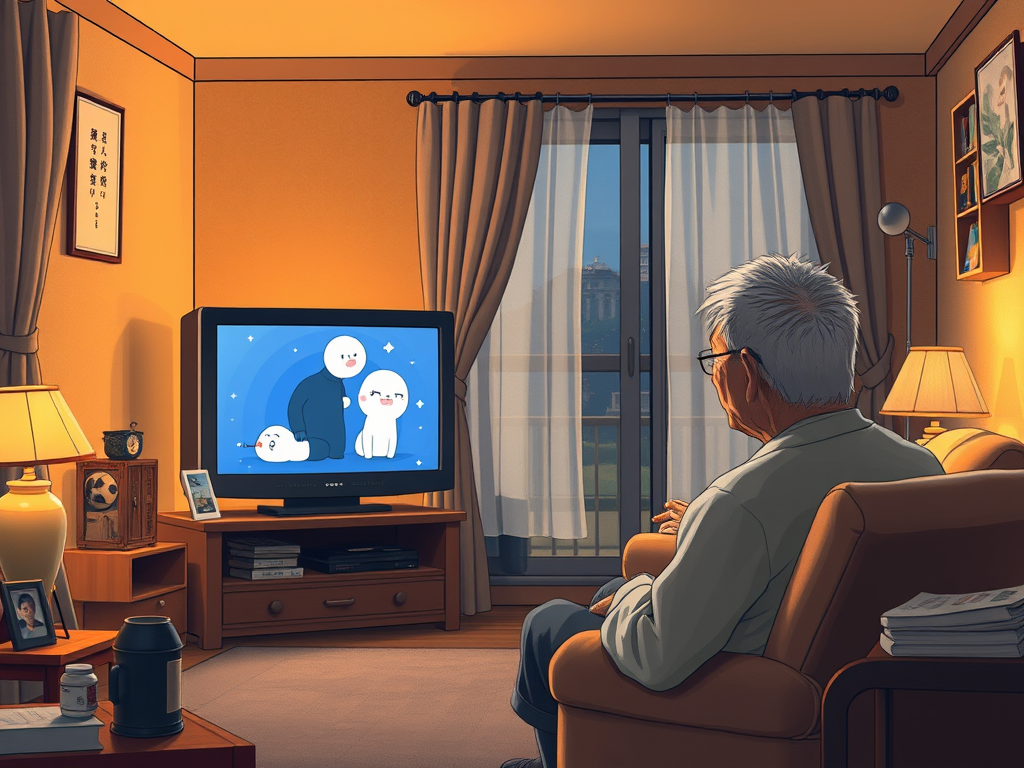
Every year, as December approaches, I make it a personal habit to look back on the past twelve months. Rather than writing a long and detailed summary of everything that happened, I try to distill the year into just a few keywords—short phrases that capture what was new to me, what stayed with me, and what quietly reshaped my daily life. This small ritual helps me see the year not as a blur of events, but as a story with a few clear themes.
Once again, that time of reflection has come. After some thought, I have decided to announce this year’s keywords. There are only two of them this time: “Chot-chan” and “nursing home.” Compared with some past years, this may seem like a short list. Still, these two words carry more meaning for me than their simplicity suggests.
Keyword One: “Chot-chan”
The first keyword, Chot-chan, comes from a television drama rather than from a personal event. During the first half of this fiscal year, I watched the NHK asadora Chot-chan on BS television. This was not a new program, but a rebroadcast of a series that initially aired in 1987.
When Chot-chan was first broadcast, it was not widely remembered as a particularly outstanding drama. At least, it did not leave a strong impression on me or many others at the time. However, watching it again nearly four decades later turned out to be a surprisingly rich experience.
What struck me most was the strength of the storytelling. The structure of the narrative was carefully crafted, with each episode advancing the story in a steady, believable way. There were very few moments where the plot felt forced or overly convenient. In many television dramas, especially long-running ones, the story can collapse under its own weight, relying on coincidences or unrealistic plot twists. Chot-chan largely avoided these problems, and that restraint made the story feel trustworthy.
Another primary reason Chot-chan stayed with me was the quality of the acting. The series featured many veteran actors from an earlier generation, and their skill was evident in even the smallest scenes. They did not simply deliver lines; they inhabited their characters. Their facial expressions, pauses, and subtle movements added layers of meaning that were never spelled out directly.
The direction also deserves special mention. One detail that impressed me was how naturally the actors moved while speaking. Instead of standing still and taking turns delivering dialogue, as is often the case in television dramas, the characters were usually doing something—cooking, cleaning, walking, or working—while they talked. These small actions made the scenes feel closer to real life, as if the camera had stepped into an ordinary moment rather than a staged performance.
My appreciation for Chot-chan was sharpened by contrast. At the same time this rebroadcast was airing on BS, a different asadora, Anpan, was airing on terrestrial television. Compared side by side, the difference was striking. The newer drama often felt weak in its writing, uneven in acting, and careless in direction. Watching these two shows in parallel made Chot-chan’s strengths stand out even more clearly.
For these reasons, Chot-chan became more than just something I watched to pass the time. It became one of the most memorable experiences of my year, which is why it earned its place as one of my keywords.
Keyword Two: “nursing home”
The second keyword, nursing home, is far more personal and much more severe. In March of this year, my father, who is 96 years old, and my mother, who is 91, moved into a nursing home located near their long-time home.
This decision marked a significant turning point, not only for them but also for the rest of our family. Until then, they had continued to live in their own house, supported in various ways by family members. The move changed their daily routines, their surroundings, and their sense of independence. It also changed the lives of my siblings and me.
For my parents, adjusting to life in a nursing home meant adapting to a new rhythm. Scheduled meals, care routines, and interactions with staff and other residents now structure their days. While this environment provides safety and professional support, it also requires letting go of some personal freedom. Watching them navigate this transition has been both reassuring and emotionally complex.
For me, and for my brother and sister who live closer to them, our own lives have also shifted. Visits replaced casual drop-ins. Conversations became more intentional. We now share information about care plans, health updates, and schedules in ways that were never necessary before. Time feels more precious, and ordinary moments carry a new weight.
The word “nursing home” may sound cold or clinical, but for us it has become filled with very human meanings: relief, concern, gratitude, guilt, and acceptance. It represents a stage of life that is unavoidable, yet never easy to face. This year, that really became part of my everyday thinking, and it deserves recognition as one of the defining elements of my year.
Looking Back, Looking Ahead
When I finished choosing these two keywords, I realized something else. This year did not bring me many moments of serendipity. There were fewer unexpected encounters, fewer sudden discoveries, and fewer new interests than in some previous years. As a result, only these two keywords came to mind.
Still, I do not see this as a failure of the year. Some years are about expansion, while others are about depth. This year, I was asked to look closely at a well-made drama from the past and at the quiet, profound changes happening within my own family.
As I close this entry, I hope next year brings more new encounters and more surprising connections. I wish for more keywords and for stories I cannot yet imagine. Until then, these two words—Chot-chan and nursing home—stand as honest markers of where this year took me.
Leave a Reply