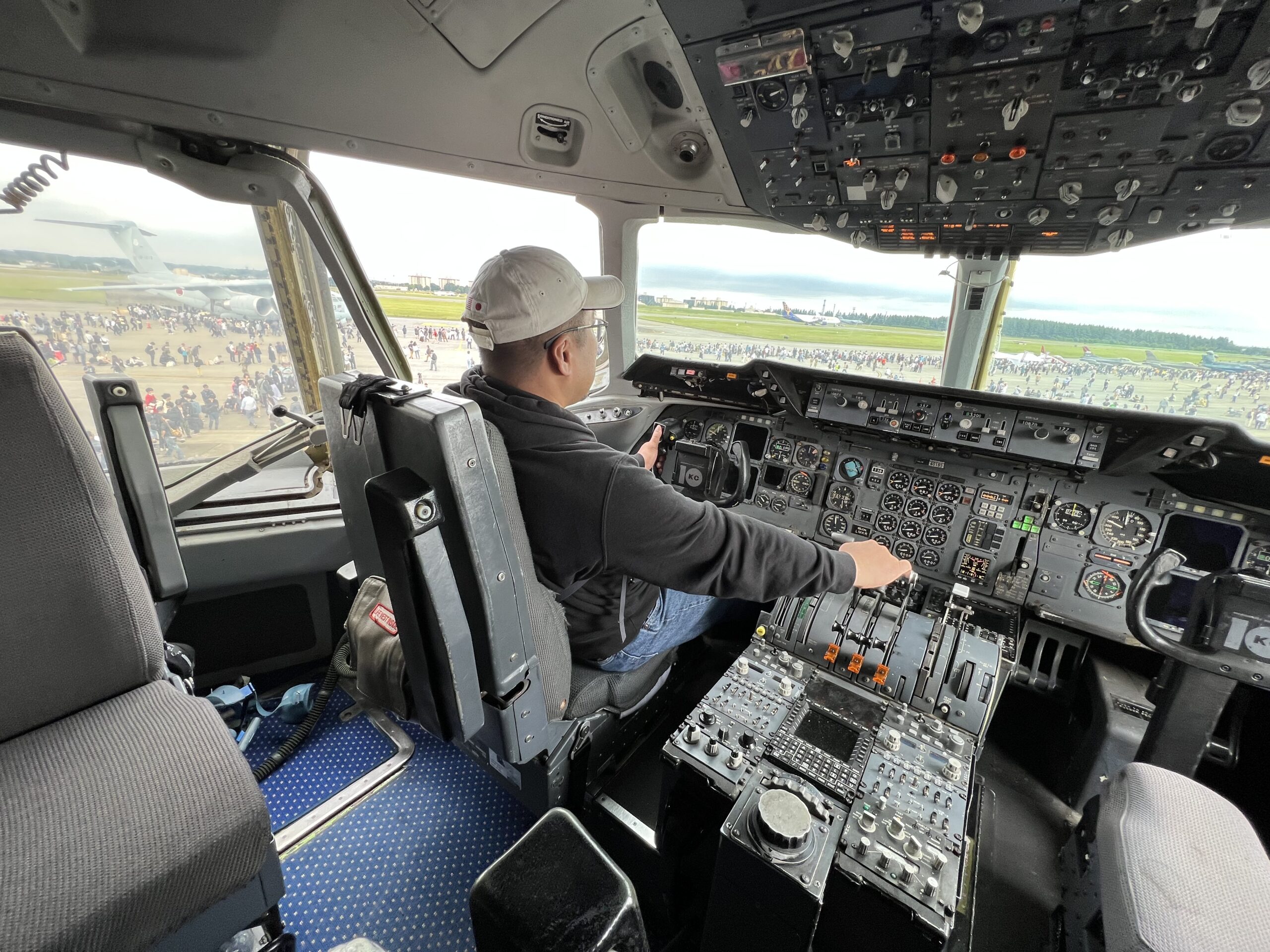
As I wrote in this entry of my blog, I became interested in flying an airplane last year; I had been interested in airplanes and aviation 20 years ago, but at that time, I was more fascinated by the women flight attendants who took care of the passengers in the cabins of airplanes than by flying itself. This time, I was seriously interested in piloting the plane itself.
Of course, I don’t have the time, ability, or financial resources to attend flight school or have a flight instructor train me to get a certificate to fly an actual airplane. What I am trying to do is just a simulated flight using a flight simulator. Nevertheless, the 2020 version of Microsoft Flight Simulator is much closer to flying a real airplane than previous versions, so mastering how to fly in that simulator is enough for me. Most reassuringly, nobody will die or be injured if I make a mistake in the controls.
In the months since late last year, I taught myself navigation, including using wind triangles to determine true airspeeds and tracks from wind and course data, airplane structure, the basics of aerodynamics, weather theory, maneuvers, and airport facilities and signage. The Federal Aviation Administration (FAA)’s free online resources, such as charts, handbooks, and other publications, and the airplane manufacturers’ online Airplane Flight Manuals and Pilot’s Operating Handbooks (AFM/POH), were excellent teaching aids. Aviation-related websites, such as SkyVector, the Aeronautical Information Manual, and FlightService, also helped a lot.
After learning all I could about airplanes, I bought a reasonably inexpensive gaming PC and installed Microsoft Flight Simulator 2020. I then purchased a control yoke, rudder, and thrust lever for flight simulation software and connected them to the PC. I went through the flying tutorials in that software and learned the basics of piloting. Much of what I had learned about airplanes up to that point came in handy. I chose the Cirrus SR22, one of the most used aircraft in primary flight training, and practiced for a few months before switching to a twin-engine Beechcraft G58 Baron. The Civil Aviation Academy in Japan uses these aircraft types to instruct students who wish to become professional airline pilots. I’ve flown for hundreds of hours between major airports in Japan and the United States (and made dozens of planes crash in the process, though).
I am now simulating IFR (instrument flight rules) flights from one large city to another using mainly the Boeing 787 Dreamliner. Learning to use the Flight Management System is challenging, and navigating an airplane properly by correctly programming the FMS with information on departure and arrival airports and en route airways is very difficult. Still, I am delighted when I can complete a flight to land. It is still profound and offers much to learn, but it is a great way to relieve daily stress.
Leave a Reply