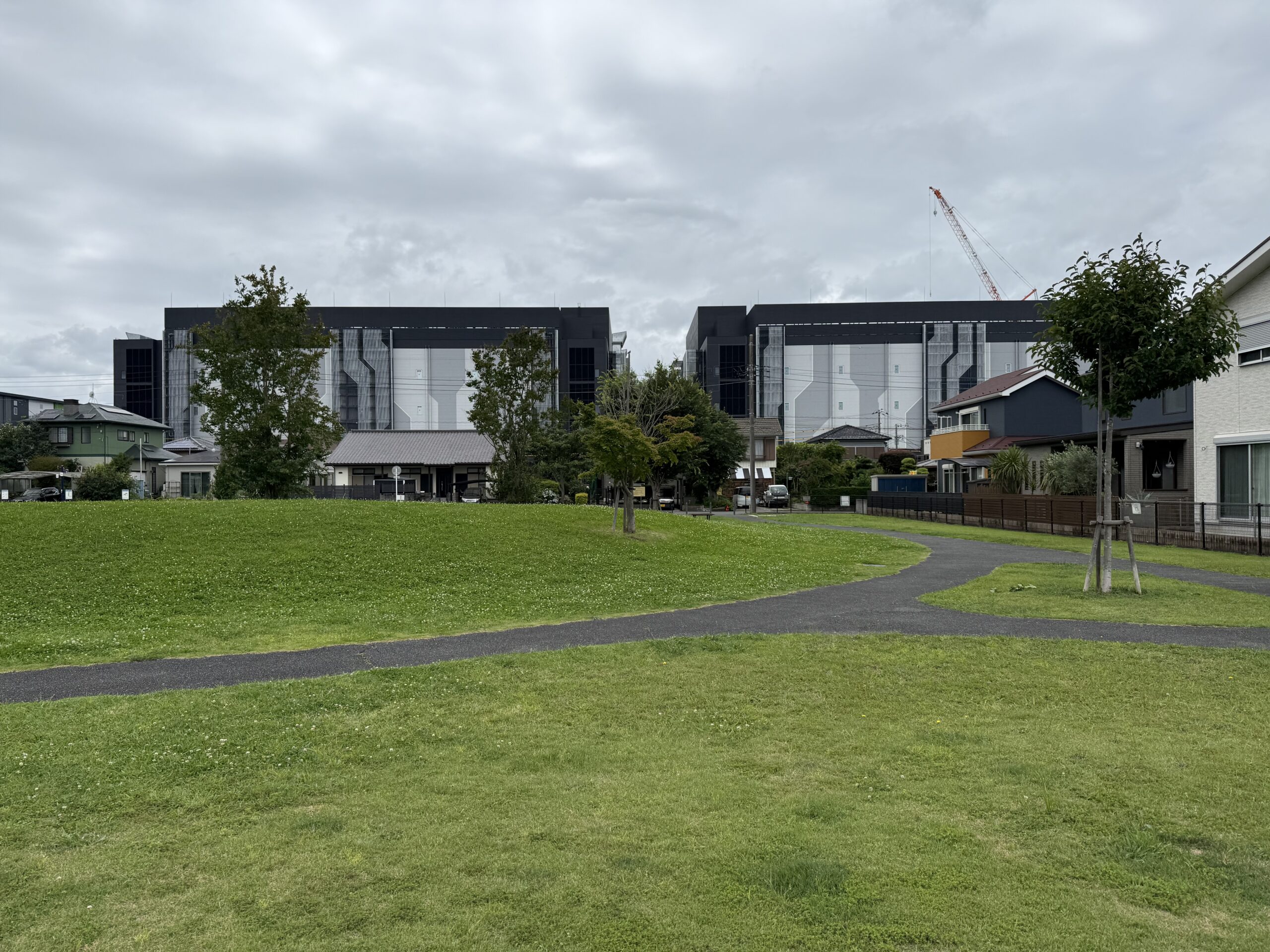
Earlier this month, I left Tokyo after living there for more than a quarter of a century and moved to an apartment in Inzai City, Chiba Prefecture, about 30 miles east of central Tokyo. It is the first time I have moved since relocating to my condominium in Oji, Tokyo, back in 2012. Fourteen years is a long time to stay in one place, so packing up my life and starting over felt like a major milestone.
People have asked me why I chose Inzai, since it is not a place that usually comes to mind when people think about moving from Tokyo. The decision was actually the result of several practical considerations rather than a single reason.
The biggest factor was rent. The lease on my condominium in Oji expires this July, and when it came time to renew, I was offered a monthly rent that was dramatically higher than what I had been paying, as noted in this entry. Continuing to live there at the new price simply did not make financial sense.
Another reason is that my work style has changed completely since the COVID-19 pandemic. I now work most of the time remotely. I no longer need to live within easy commuting distance of my office in Otemachi or spend an hour on crowded commuter trains every day. Going to the office has become an occasional event rather than part of my daily routine.
My lifestyle has also changed over the years. I rarely drink alcohol anymore, which means driving has become the most practical way for me to take care of everyday errands. Because I have been relying on my car since I moved to Oji, living in a place designed with drivers in mind has become increasingly important.
That naturally led me to Chiba New Town and the surrounding area. The roads are remarkably wide by Japanese standards, intersections are spacious, and the entire area has an orderly layout. In many ways, it reminds me of suburban America. Every time I drive around here, I feel as though I could be somewhere in the United States. The residential environment is clean, modern, and comfortable, making it an ideal place for someone who prefers traveling by car.
Safety was another important consideration. Inzai is well known in Japan as a location for major data centers and the computer facilities of financial institutions. One reason is its exceptionally solid geological foundation. The city sits on an ancient upland terrace composed of dense Pleistocene deposits, providing firm, stable ground. The elevation, roughly 60 to 90 feet above sea level, also means the risk of flooding is relatively low. Since the city is more than 30 miles inland, the risk of tsunamis is minimal. While no place is completely free from natural disasters, the overall risk level here is considered relatively low.
Transportation also played a role in my decision. When I do need to go to the office, I can simply drive to the nearest train station, park my car, and take the train into Tokyo. This “park-and-ride” style of commuting works especially well here because the station areas were designed with automobiles in mind. There are wide streets, easy access to parking lots, and no narrow roads or crowded buildings that often surround railway stations in older Japanese cities.
Another advantage is access to airports. Both Narita International Airport and Haneda International Airport are relatively convenient to reach, making travel within Japan and overseas much easier.
Perhaps the most surprising part of this move is how much more space I now have. My home in Oji had one bedroom, a kitchen, and a bathroom. My new apartment has two bedrooms, a kitchen, a living room with a dining area, and a bathroom, and it has well over twice the total floor space. Yet the rent is only slightly higher than what I had been paying in Oji, and it is far less expensive than the higher rent I was offered to renew my old lease.
The parking situation alone feels like a luxury. My apartment comes with a parking space directly in front of the building, and it costs only 3,000 yen per month. In Oji, I paid more than 20,000 yen every month for a mechanical parking garage located quite a distance from my condo, and getting my car in and out was never convenient. Between the lower rent and the dramatically cheaper parking, my monthly fixed living expenses have decreased considerably.
One thing that impressed me throughout this move was how much digital technology has transformed the entire moving process over the past 14 years.
Back in 2012, many procedures still required paperwork and in-person visits. This time, almost everything happened online. Reserving the apartment, signing the lease, paying the initial fees, and even requesting estimates from moving companies were all completed through dedicated websites using nothing more than my smartphone.
The apartment management company and my internet provider both have their own smartphone apps. After creating an account, I can receive announcements, submit questions, and even order optional services directly through the apps. It is hard to imagine this level of convenience being available when I last moved.
Even the front door reflects how much technology has changed. There is no traditional physical key. Instead, I unlock the door by entering a personal PIN code. Once the door closes, it locks itself automatically. It took me a few days to get used to not carrying a key, but now it already feels perfectly normal.
I have now been living here for about two weeks. One bedroom has become my sleeping room, while the other has been turned into my home office. To be honest, it is much more living space than one person really needs, but I certainly am not complaining.
Daily life has been enjoyable so far. With a car, shopping and dining are easy because everything is within a short drive. Chiba New Town features efficiently planned shopping districts and business areas, while Makinohara offers beautiful residential neighborhoods with wide streets and attractive landscaping. Yet if I drive just five minutes away from these developed areas, I find myself surrounded by forests, open fields, and idyllic countryside. It is an interesting contrast that gives the area a unique character.
There is one aspect of life here that still takes some getting used to. After dark, traffic becomes much lighter, and almost everything except grocery stores closes for the night. Street lighting is limited in many areas, making the roads feel surprisingly dark. To make matters more interesting, local drivers often travel at speeds that feel faster than I am comfortable with, and it is not unusual for someone to follow closely behind my car as if encouraging me to speed up. Night driving is probably the only part of living here that I find a little intimidating.
Ironically, I first drove through this area once around 1999. At the time, it felt like the middle of nowhere. I remember thinking that I could never imagine living in such a distant place. Nearly 30 years later, I have made it my home. Life has a funny way of bringing us back to places we never expected to return to. Perhaps this was simply where I was meant to be all along.
I have no idea how many years I will end up living here. But for now, I am looking forward to exploring my new surroundings, settling into my new routine, and enjoying this next chapter of my life.
Leave a Reply