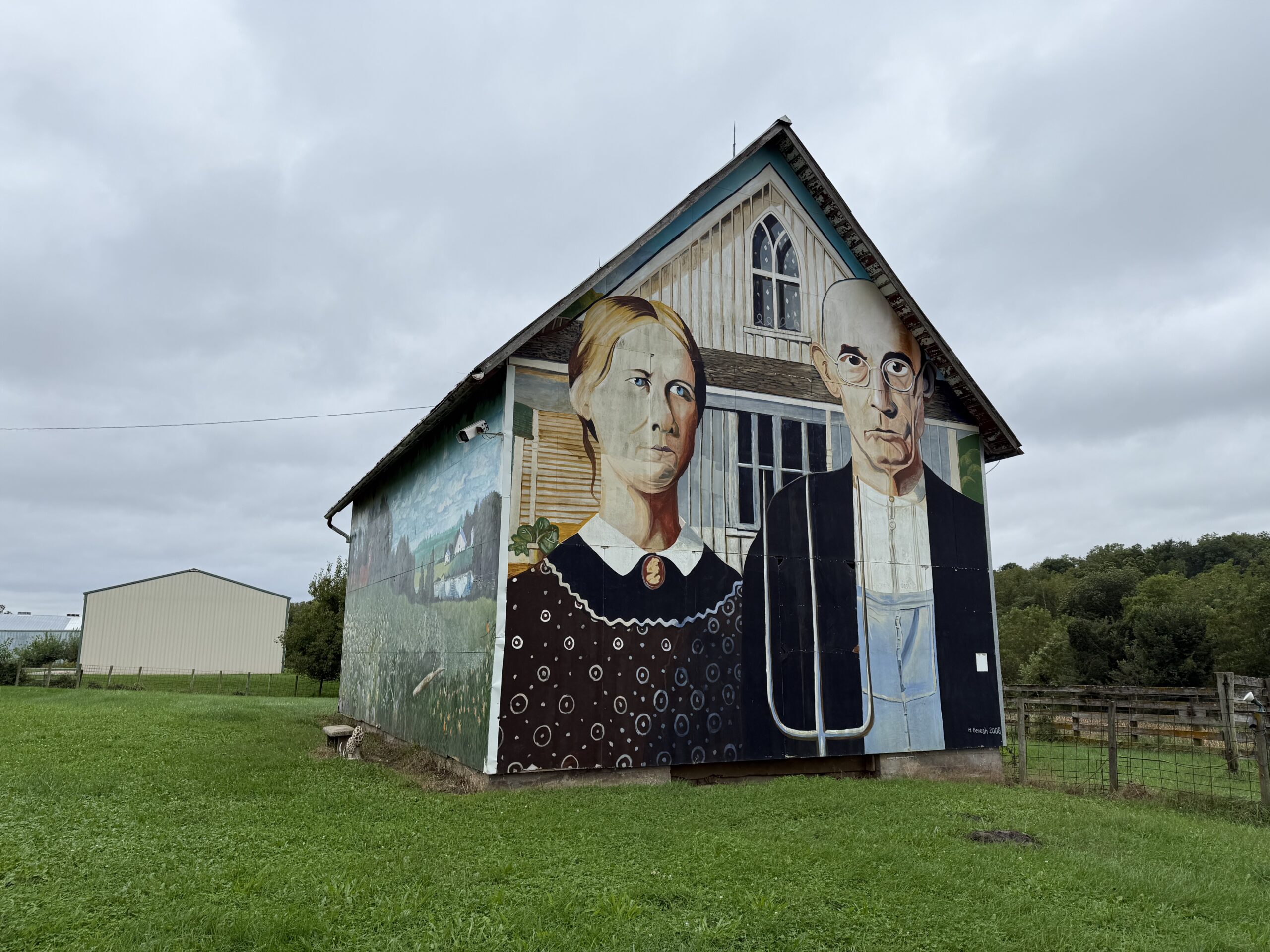
For the past two decades, I’ve visited the cultural festival at Kokugakuin Tochigi University High School every year to see performances by Ms. Saigusa’s musical club. There, whenever I saw the display for the homestay program—organized almost every summer by Mr. Devin Kelso, an English teacher at the school, in which students from the school visit his hometown in Iowa—I’d dream of going there myself someday.
That dream came true this year. During the week of Silver Week in September—which is packed with national holidays—I visited Mount Vernon and Lisbon in Iowa, Mr. Kelso’s hometown, as well as the filming location of the movie Field of Dreams in Dyersville, Iowa, the world’s steepest funicular train in Dubuque, Iowa, and the Mark Twain and Tom Sawyer museums in Hannibal, Missouri—destinations frequently visited by students on the homestay program. By driving a rental car on American roads, staying at motels, and eating at diners, I experienced America’s good old-fashioned culture.
Tokyo to Cedar Rapids
Because the closest airport to Mount Vernon, Iowa, is Eastern Iowa Airport in Cedar Rapids, Iowa, I booked a flight on the Delta Air Lines website from Haneda Airport to Cedar Rapids via Minneapolis about a year before this trip. I had accumulated more than enough Delta SkyMiles to cover a round-trip flight to Cedar Rapids, so the flight cost me nothing (aside from a few thousand yen in additional airport facility fees and fuel surcharges). Before the trip began, I completed my ESTA application, obtained an international driving permit, arranged a rental car, booked each motel through Hotels.com and Booking.com, and even enrolled in Global Entry to make entering the US easier.
On the day I left Japan, it was raining at Haneda Airport. I didn’t bring any luggage to Haneda other than a small Karrimor backpack. I had lost my large suitcase—which had broken after many years of use—so I planned to visit a local Costco (I had looked it up beforehand and knew there was one in Iowa City) during my stay in the US to buy a new one and pack all the items I’d purchase on this trip into it.
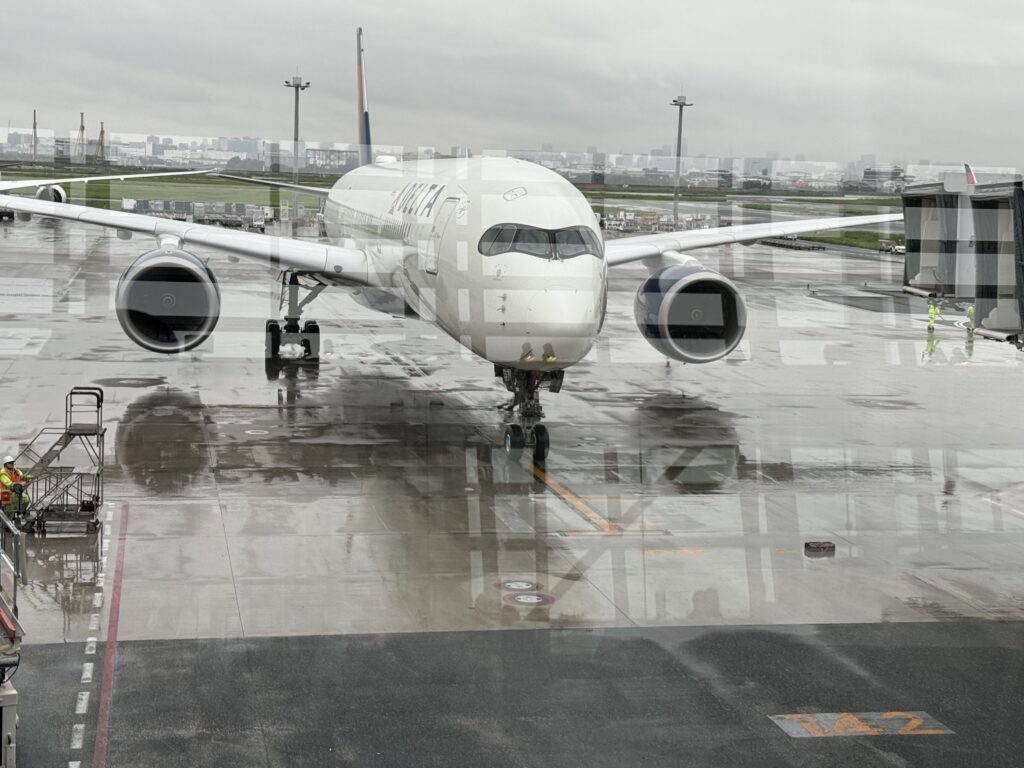
The 10.5-hour Delta flight from Haneda to Minneapolis wasn’t bad. The aircraft was an Airbus A350-900, one of the newest models. The cabin was clean, and each seat had a blanket and a pillow. We were served two meals, both loaded in Japan. However, the in-flight Wi-Fi wasn’t available until our plane entered US airspace.
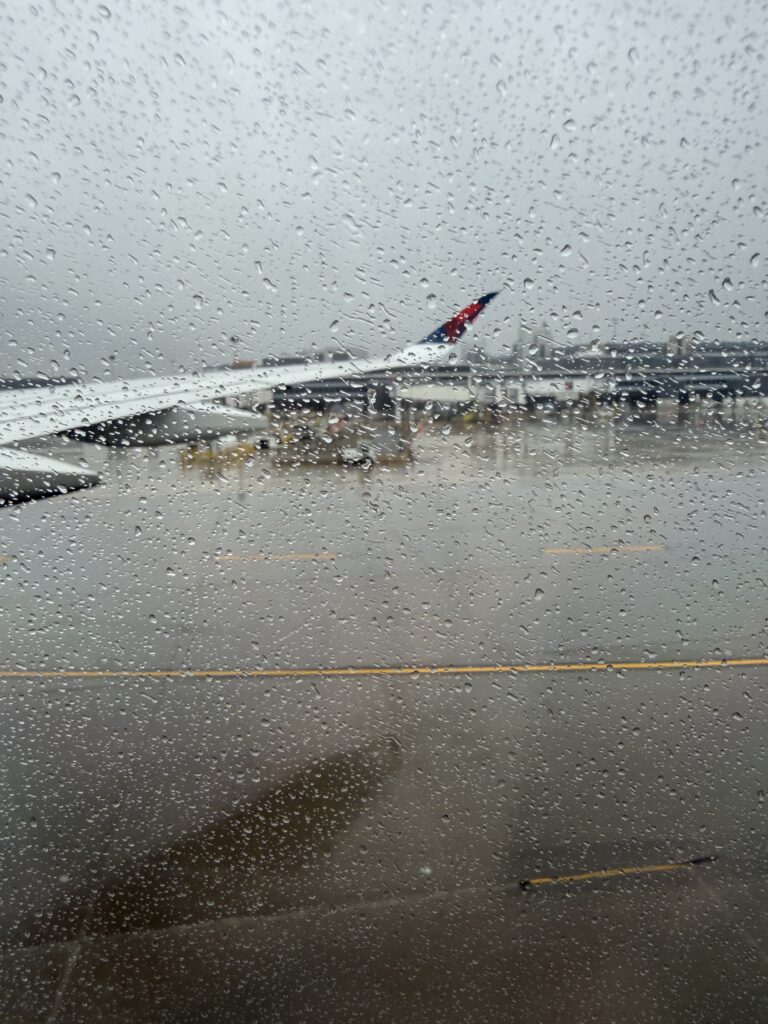
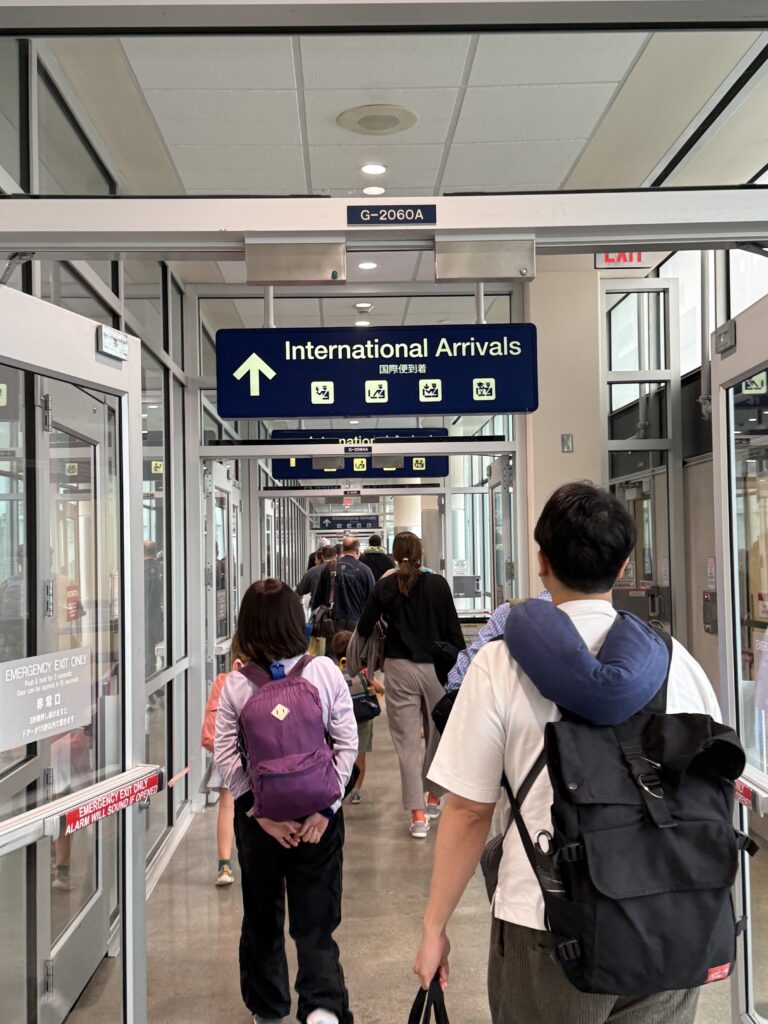
It was raining around Minneapolis-St. Paul International Airport, just as it had been at Haneda. The signs along the walkway from the plane to immigration were written in both English and Japanese.
Immigration was as strict as at any other US airport. Even though I had Global Entry, I received absolutely no preferential treatment. I waited in line at the same booth as other non-US passport holders. The immigration officer at the booth, who had a handgun holstered at his waist, fired a rapid-fire series of questions at me: how many days I planned to stay in the US, what my occupation was, and what kind of work I did. At the same time, he instructed me to place my fingers and thumb on the scanner and face the camera. I was a bit flustered because I had to think of answers to his questions while also following his instructions. Before long, I was granted entry and handed a customs declaration form. He instructed me to fill it out and hand it to a customs officer. Since I had moved shortly after enrolling in Global Entry, I told him I wanted to update my address on file. He told me to sit in one of the chairs lined up a short distance from the booth and wait for further instructions. As I sat in that chair filling out the customs declaration form, an immigration officer at another booth called me over. I went to that booth and completed the address change procedure there. The officer quickly completed the change.
The next room was the baggage claim area, but since I hadn’t checked any luggage, I simply handed the completed customs declaration form to the customs officer at the exit. As soon as I exited, I found the check-in counter for my connecting flight and the security checkpoint right ahead. I checked in for my connecting flight using the Delta Airlines app on my smartphone. At the security checkpoint, I showed the officer my passport and the boarding pass displayed on my phone, then passed through the body scanner. After clearing security, I entered the airport’s restricted area, where American shops—including convenience stores, newsstands, cosmetics stores, restaurants, and coffee shops—lined the area.
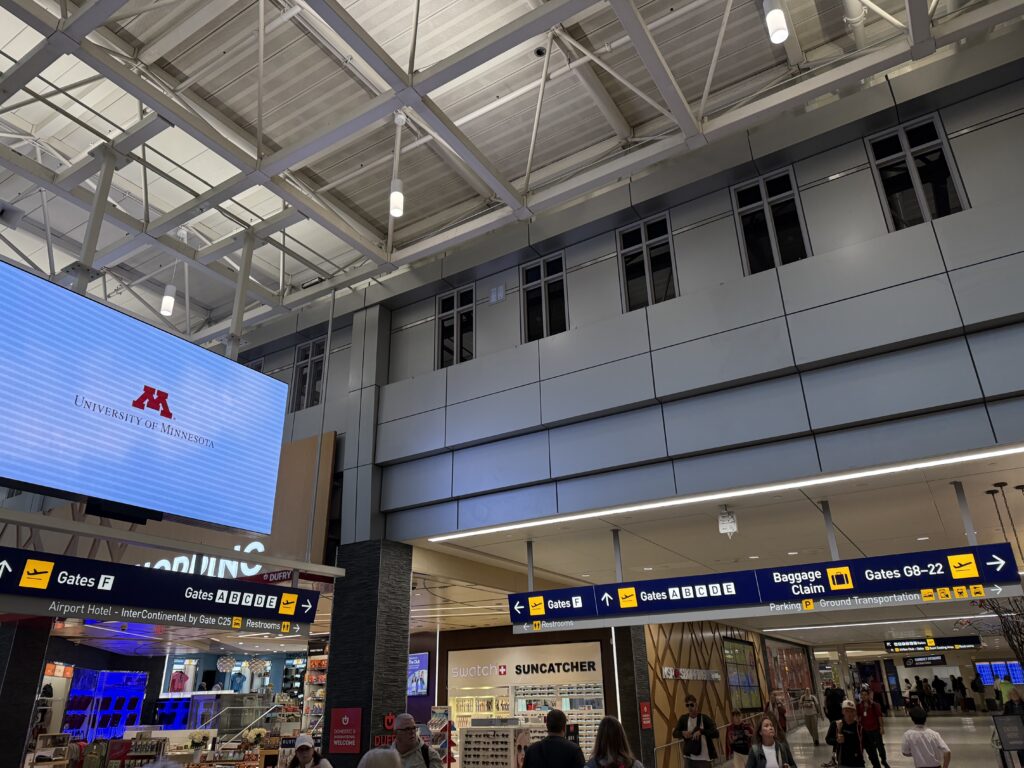
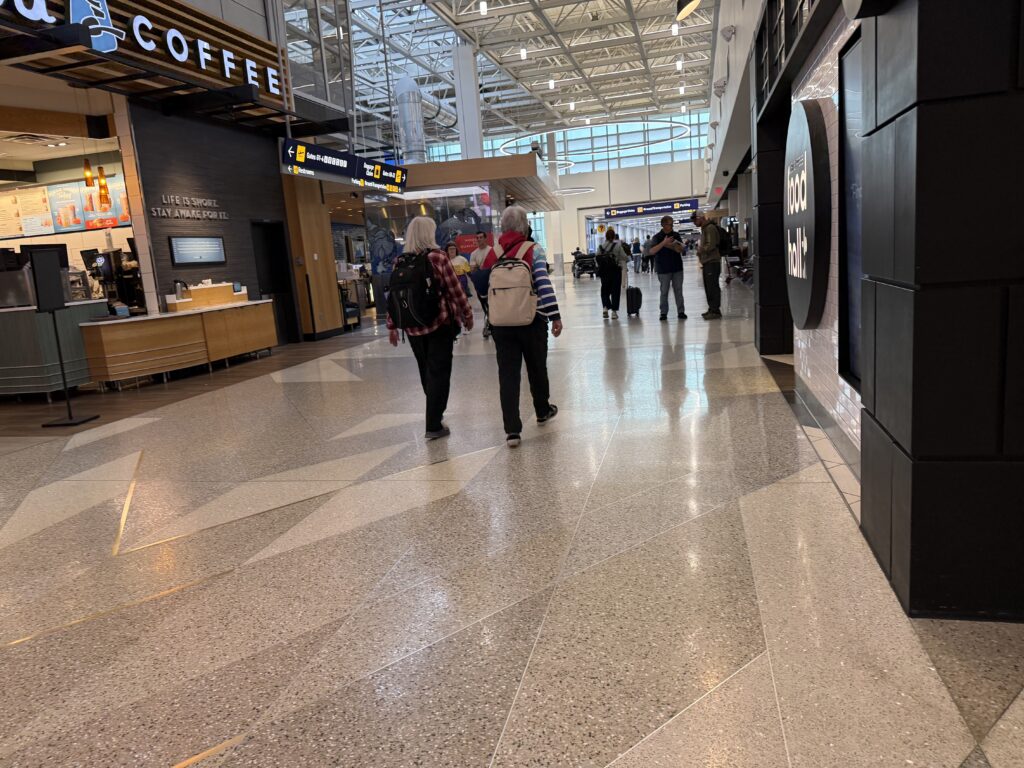
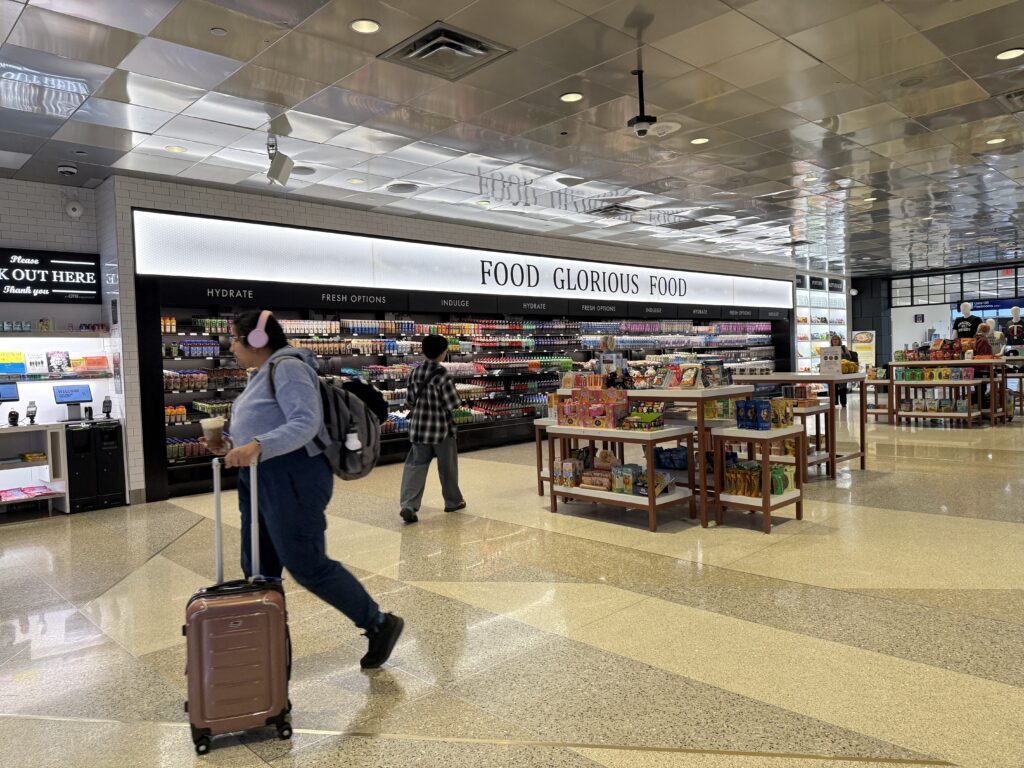
The phrase “Food Glorious Food” displayed in this store reminded me of a line from the famous British musical Oliver!
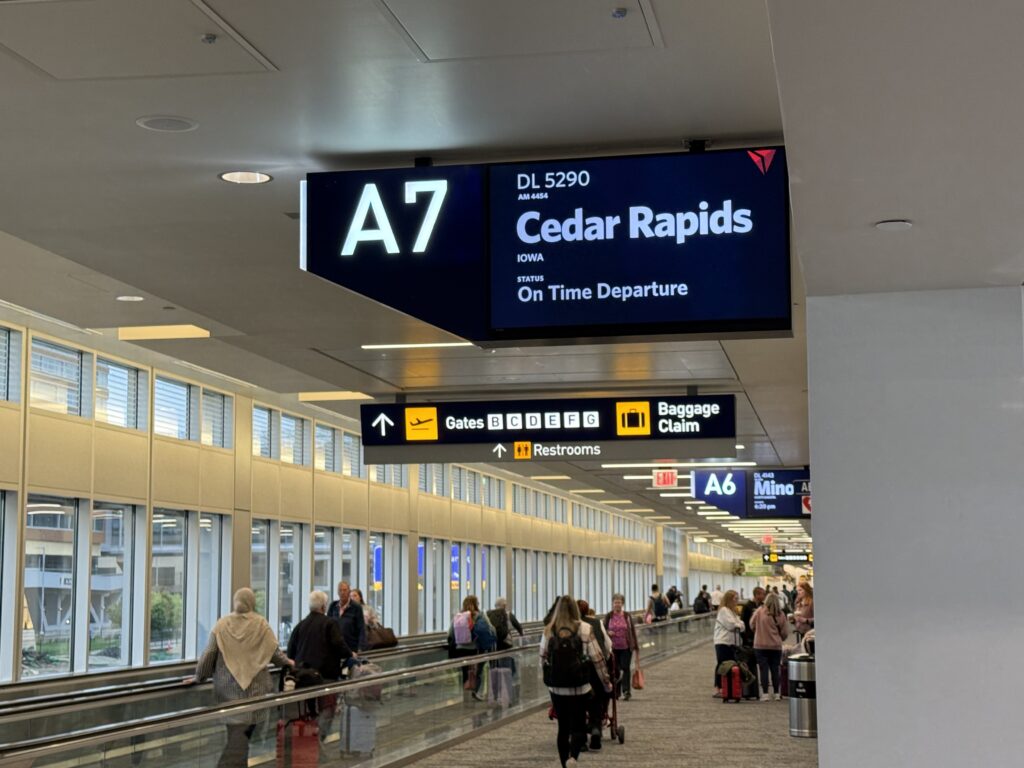
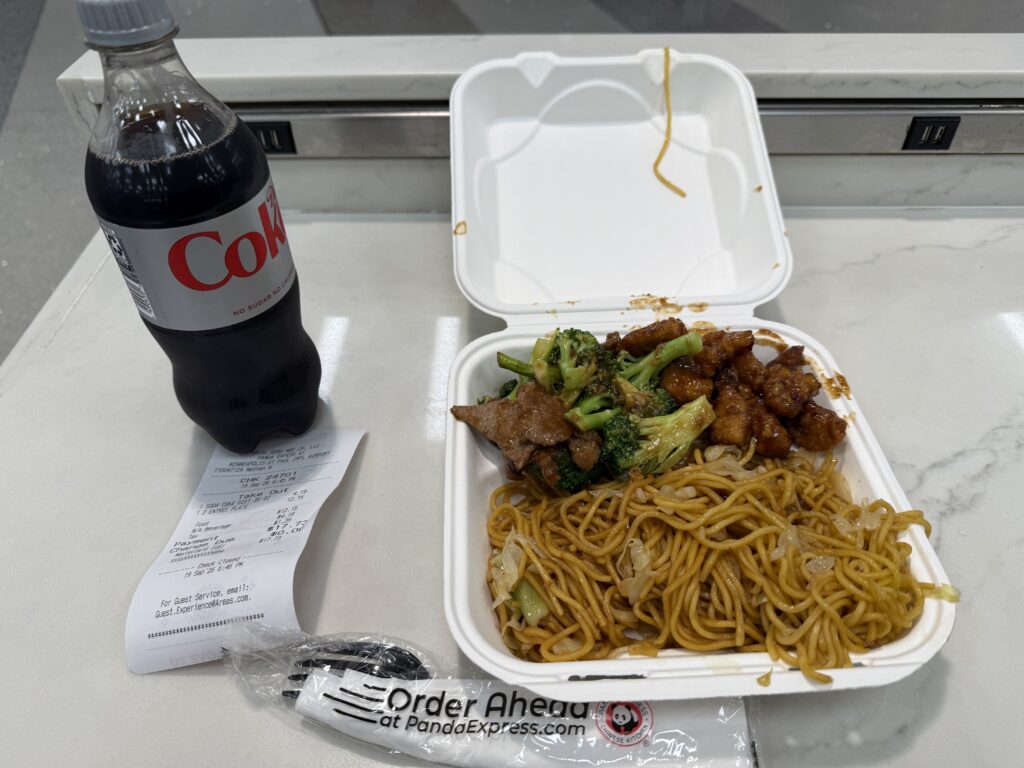
Since my flight to Cedar Rapids wasn’t scheduled to depart for more than six hours, I spent the time browsing the shops and charging my smartphone, which had run low on battery after my flight from Japan. For dinner, I ordered a meal set from Panda Express in the food court and ate it there.
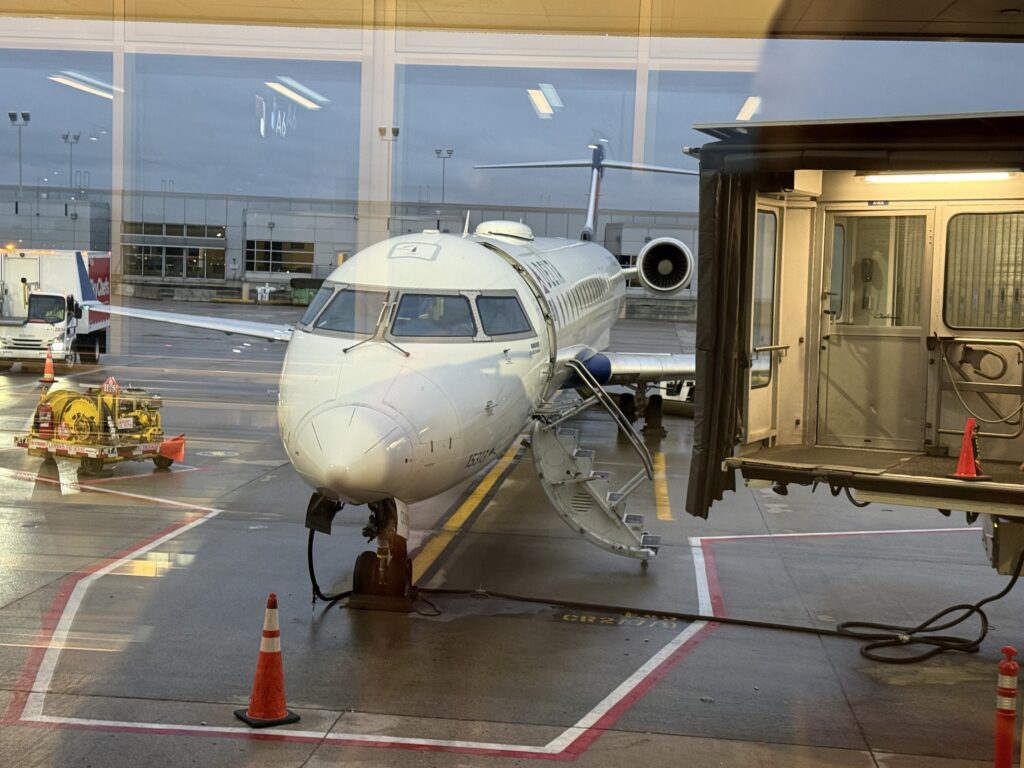
The flight to Cedar Rapids ran into trouble. Immediately after the plane began taxiing toward the runway, it stopped on the taxiway and remained stationary for a while. The captain announced to the passengers that takeoff was delayed because a storm had developed in the Cedar Rapids area, making it impossible to land. In the end, the plane sat there for about 30 minutes, and once the situation calmed down, it began moving again. About five minutes later, it took off and arrived safely at Eastern Iowa Airport in Cedar Rapids, our destination, 40 minutes later.
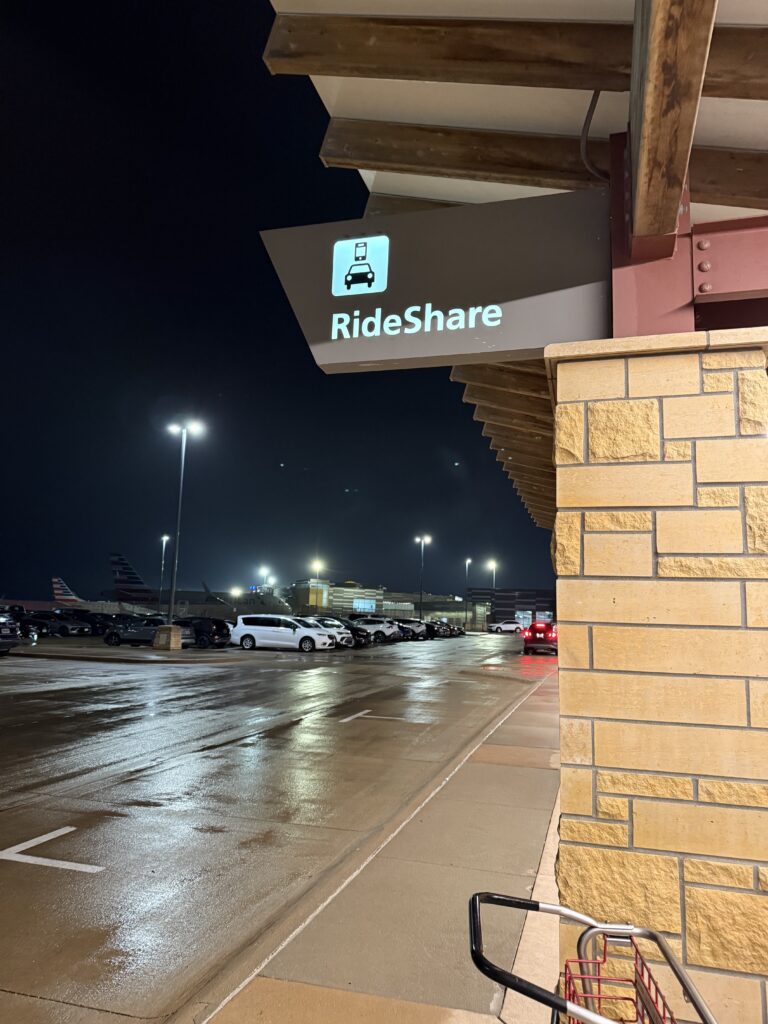
Outside the airport was a rideshare pickup area. I opened the Lyft app—which I had never used before because its service wasn’t available in Japan—entered my current location and the address of the hotel where I planned to stay that night, and requested a ride. Less than five minutes after placing the request, a registered driver in a large Hyundai pulled up, called my name, and invited me into the car. He then drove me to the hotel in about five minutes. I paid the fare in the app, including the tip, using the payment method I had registered beforehand. By the time I arrived at the hotel, the date had already changed.
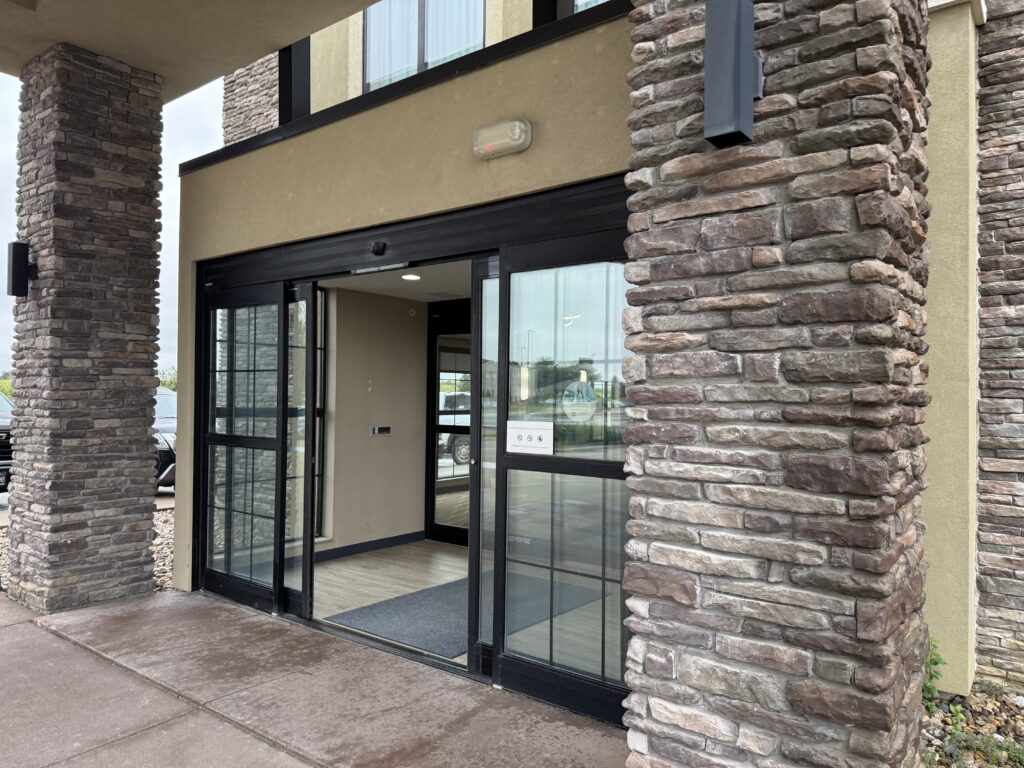
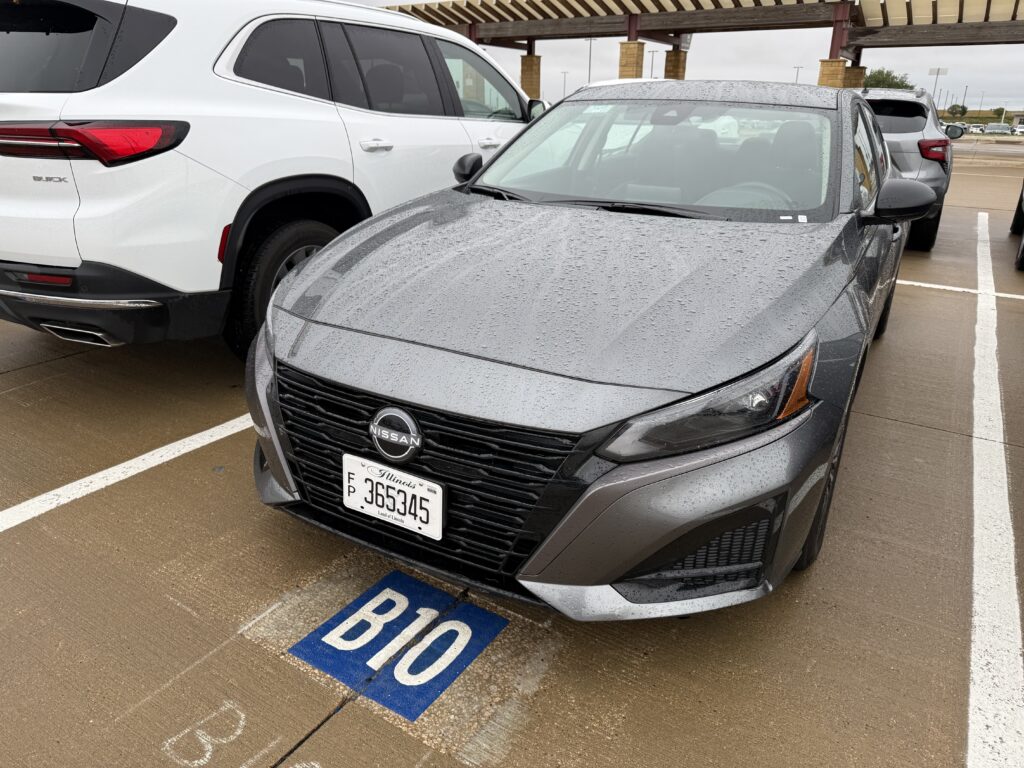
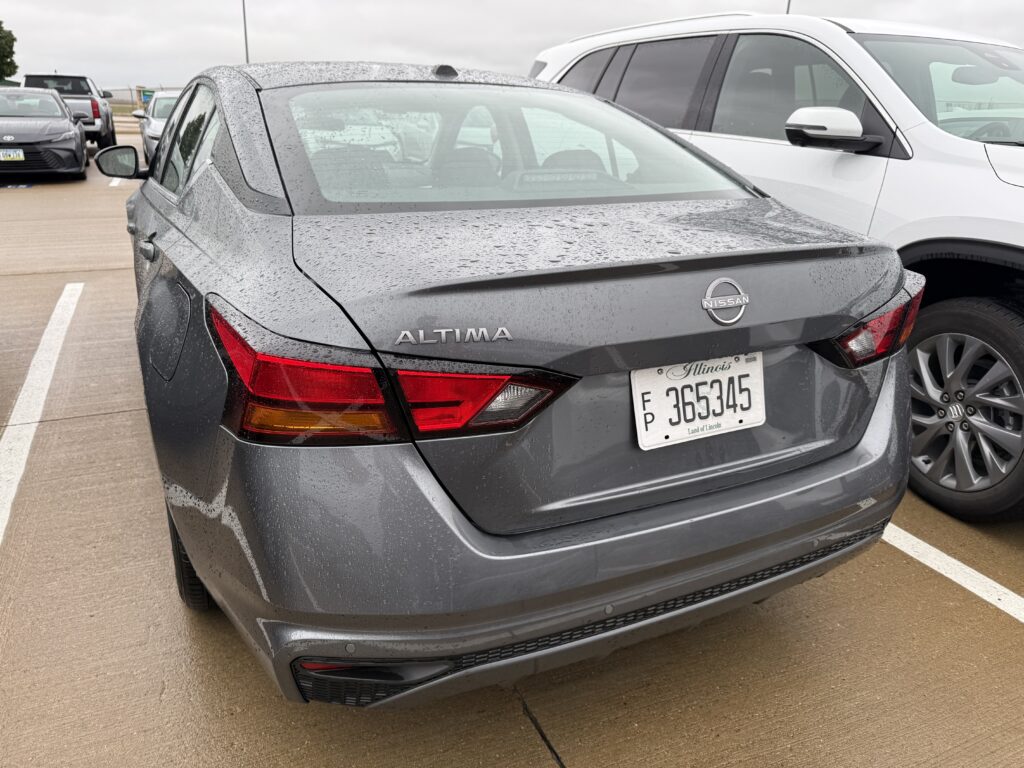
The next morning, I checked out of the hotel and took the shuttle van to the airport to complete the rental car procedures at the airport counter. At the Hertz rental car counter, a female clerk checked me in. She asked me to present my passport, international driving permit, Japanese driver’s license, and credit card, and she checked them. After entering the information into the counter terminal, she handed me the car key and told me which bay the car was parked in. This time, the car parked in the bay was a Nissan Altima with approximately 8,000 miles on the odometer. The gas tank was full.
Mount Vernon and Lisbon
From Eastern Iowa Airport, I headed north on I-380, then took US-30 east at the junction and drove for about 15 minutes before arriving in Mount Vernon, Mr. Devin Kelso’s hometown. It had been 11 years since I’d driven on American roads with right-hand traffic, so I was a bit flustered until I got used to driving again. To make matters worse, it was raining, which reduced visibility and made driving even harder.
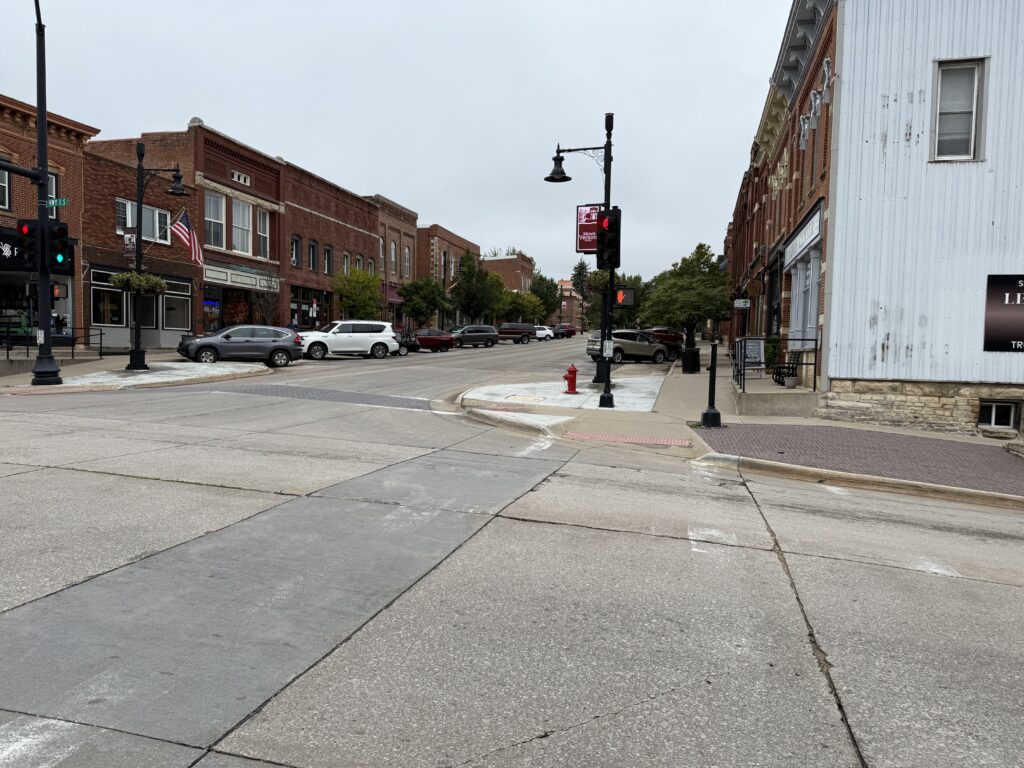
1st Street was the heart of Mount Vernon. Perhaps because this is an old town, the streets weren’t very wide, and driving around there in an unfamiliar car was a real struggle. I parked, got out, and walked around.
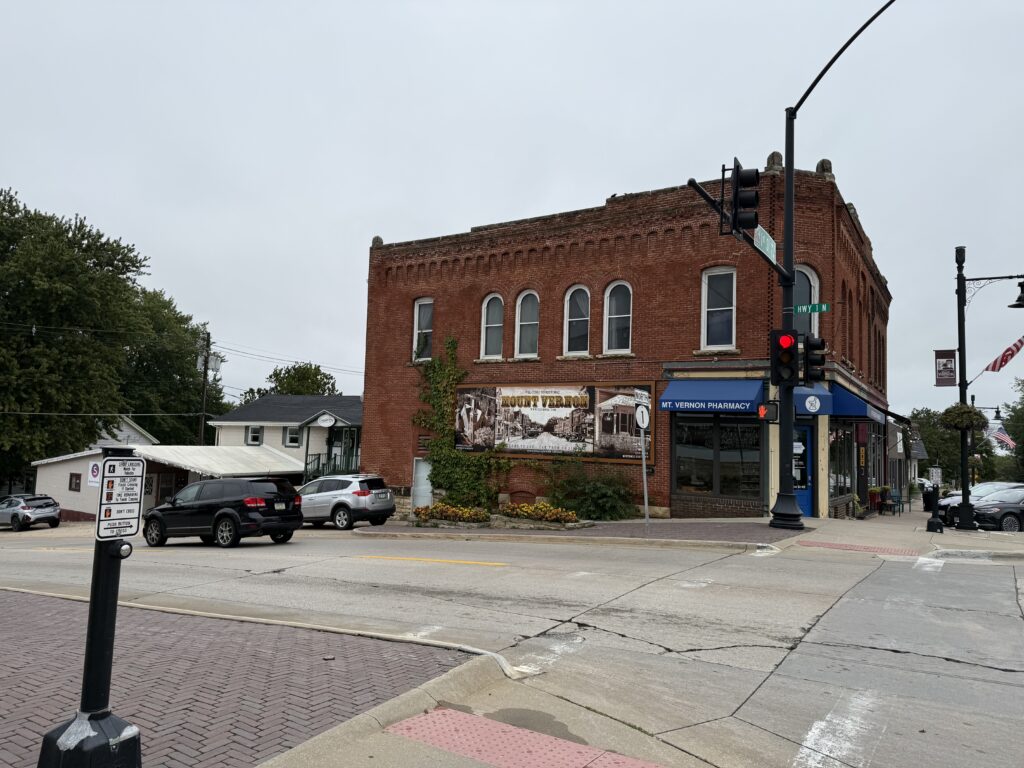
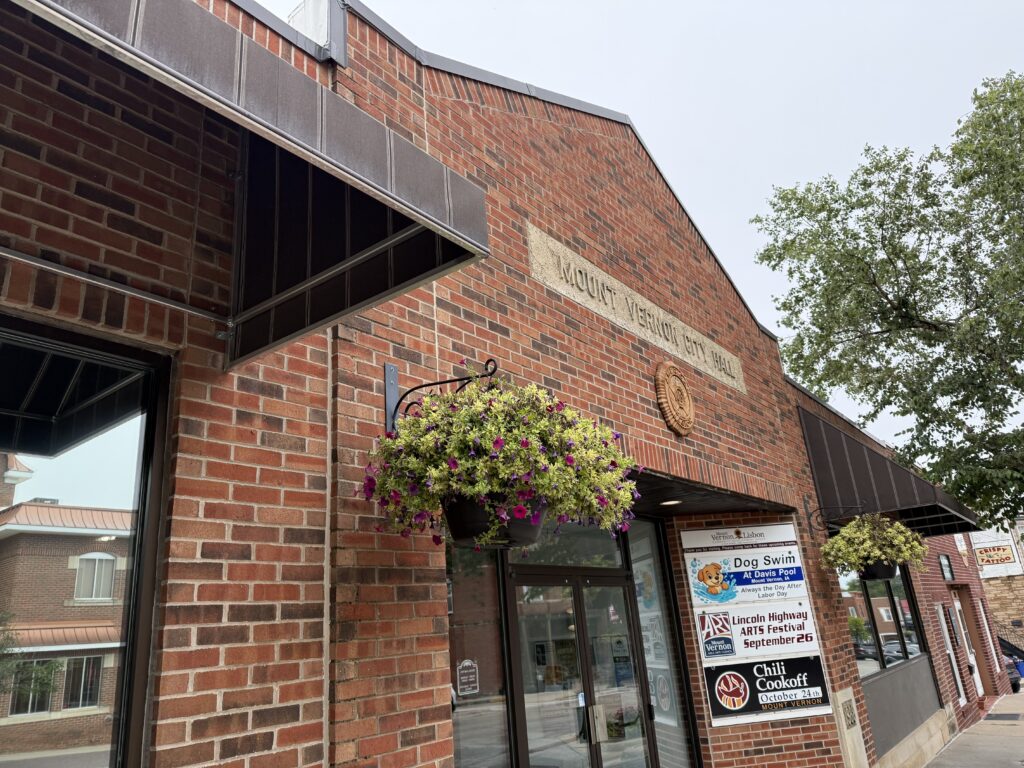
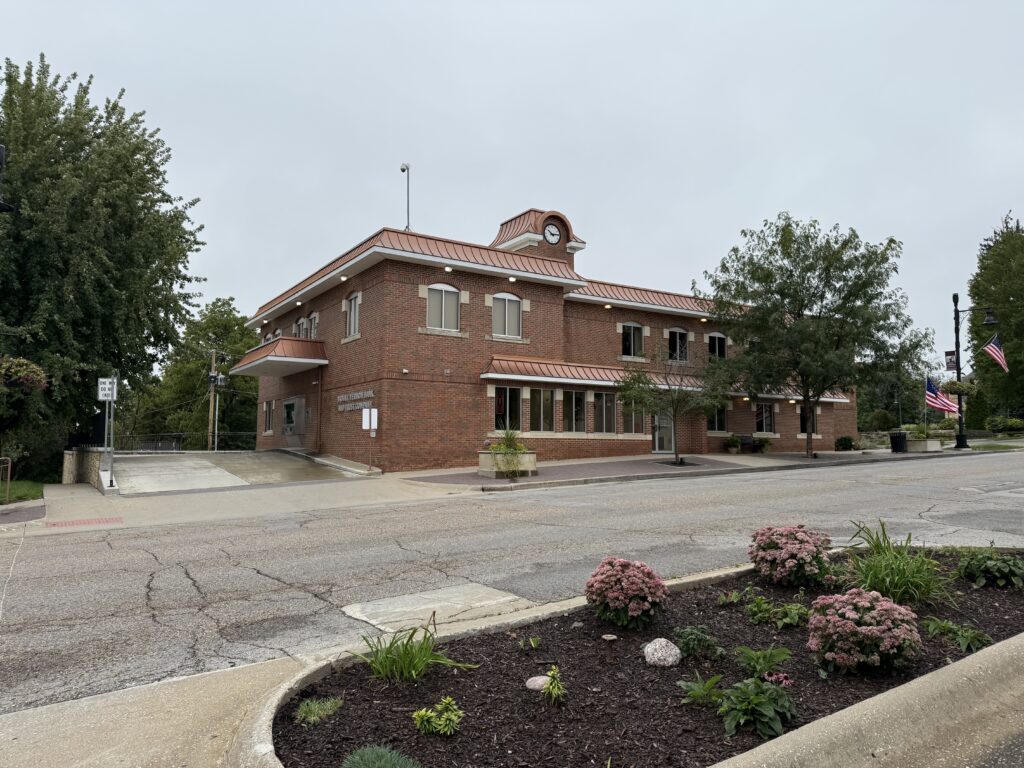
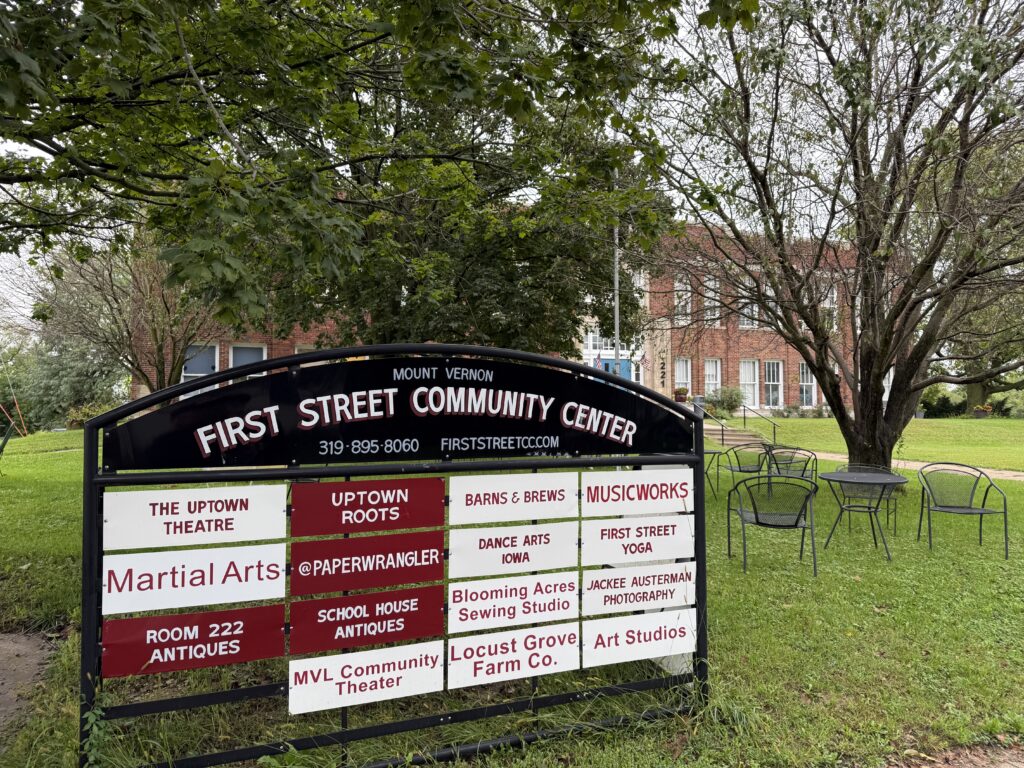
City hall, a bank, the community center, a movie theater, restaurants, bars, a clothing store, a barbershop, a hair salon, a laundromat, antique stores, and souvenir shops clustered on both sides of the street.
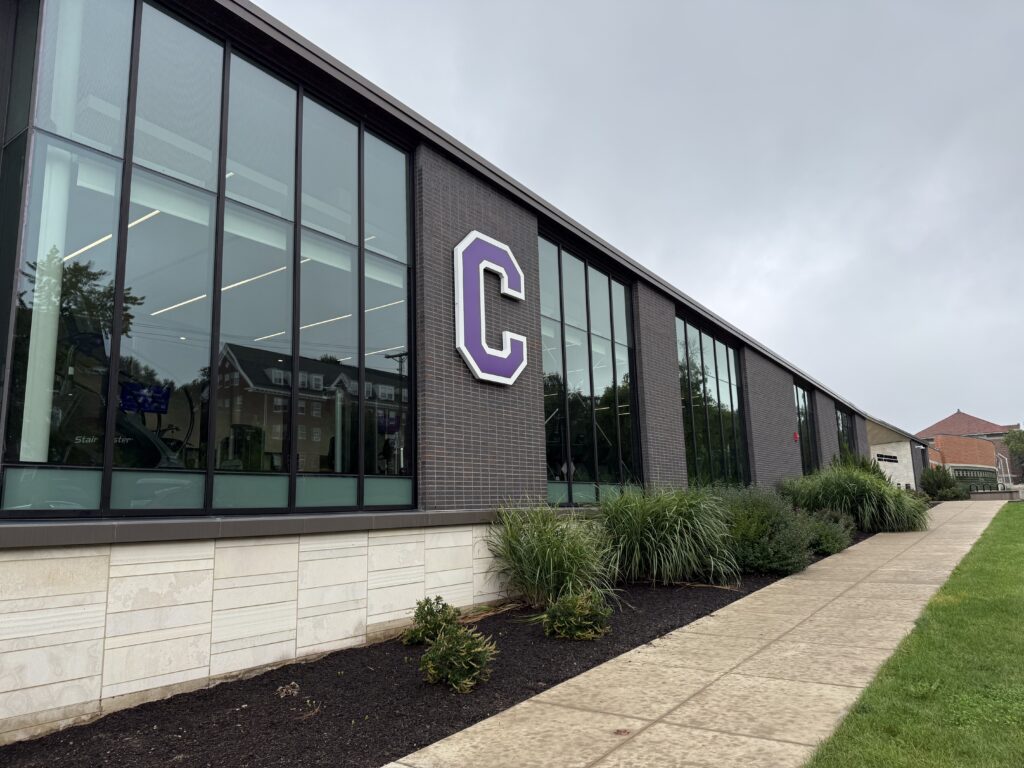
Driving a short distance west on 1st Street, I came upon Cornell College. This college is different from Cornell University—an elite Ivy League institution. It seemed like a pleasant place where students could study at a leisurely pace in the quiet surroundings of a small town. Squirrels scampered through the campus gardens, and many students were out on campus even though it was Sunday.
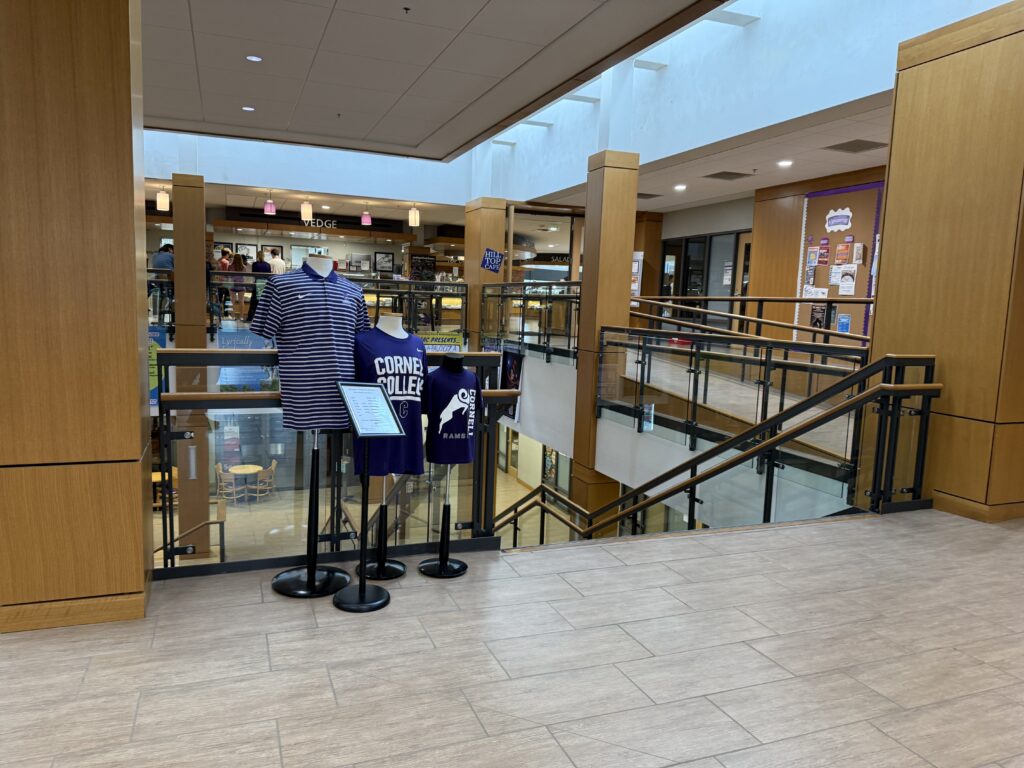
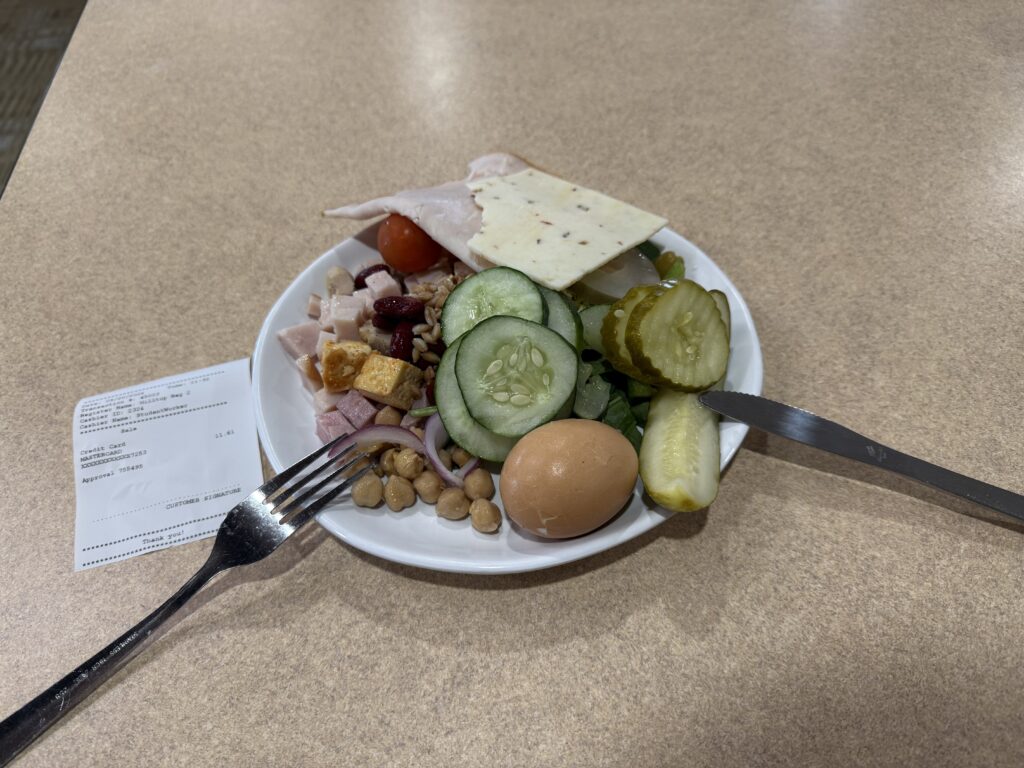
I spotted the college administration building and went inside. The building had a room that looked like the student affairs office, a souvenir shop, a bookstore, bulletin boards, and trophy displays. Since it was lunchtime, I went into the cafeteria. After paying $11.61 at the entrance, I could help myself to as much food as I wanted from the buffet. To make up for my usual lack of vegetables, I piled my plate high with salad.
After leaving Cornell College and driving further west on 1st Street, the road turned into Mount Vernon Road just past the police station. The road widened, and the speed limit increased from 25 mph to 60 mph. I accelerated to 60 mph, and the cars around me did the same. Oncoming traffic passed by at about the same speed.
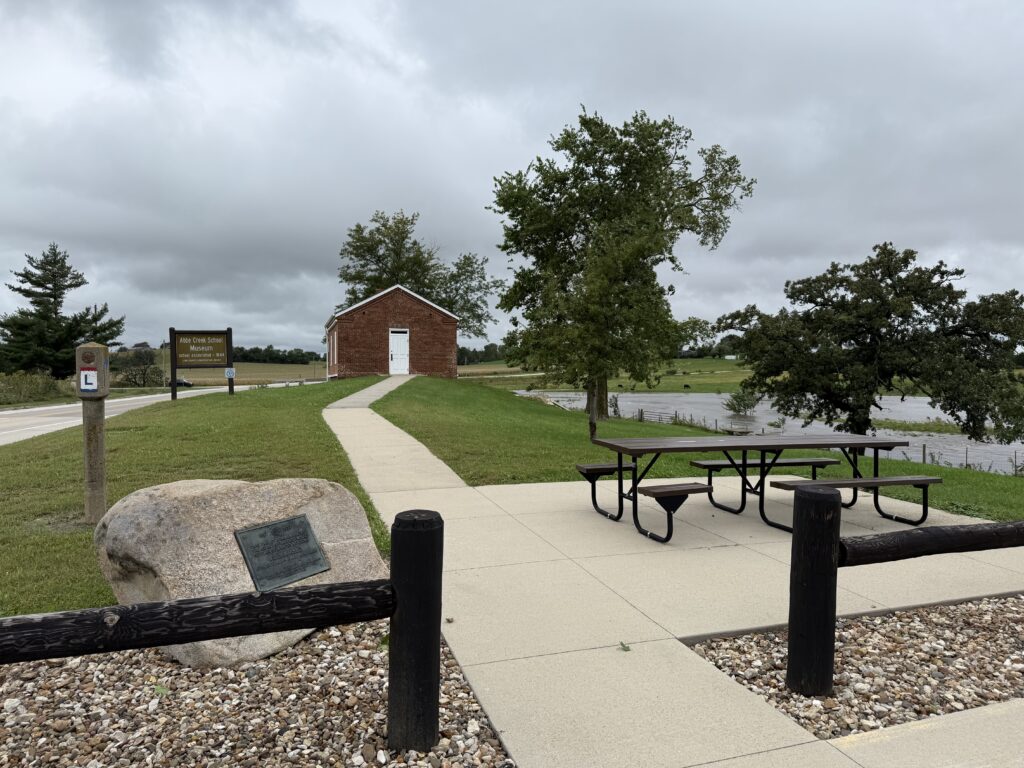
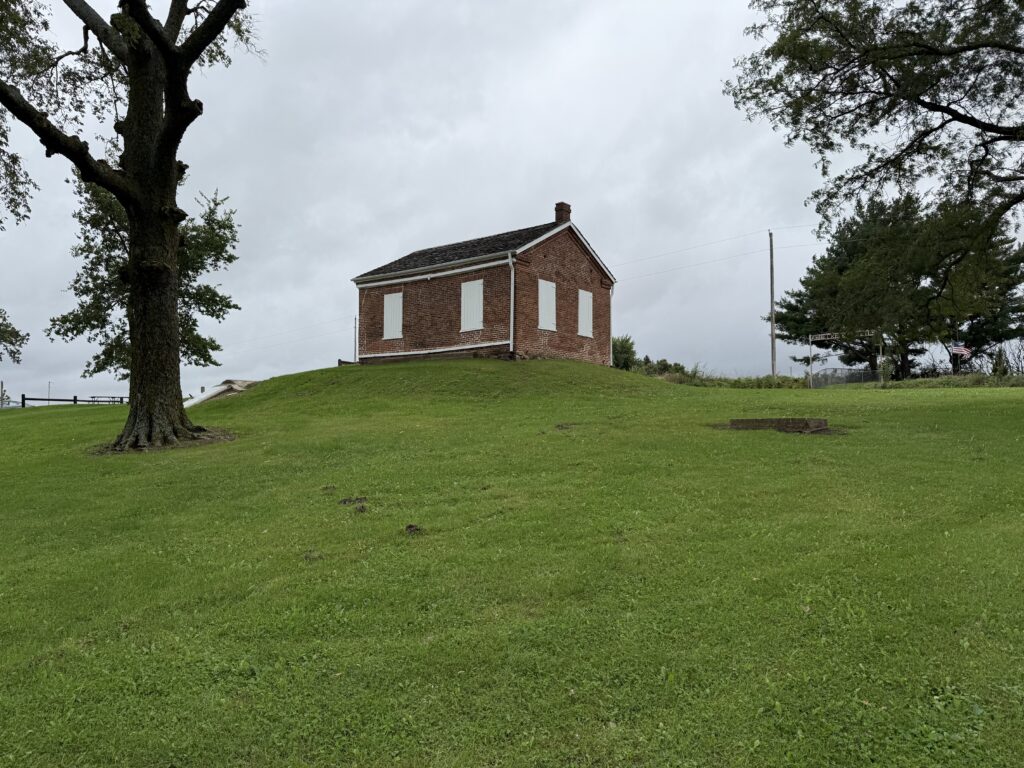
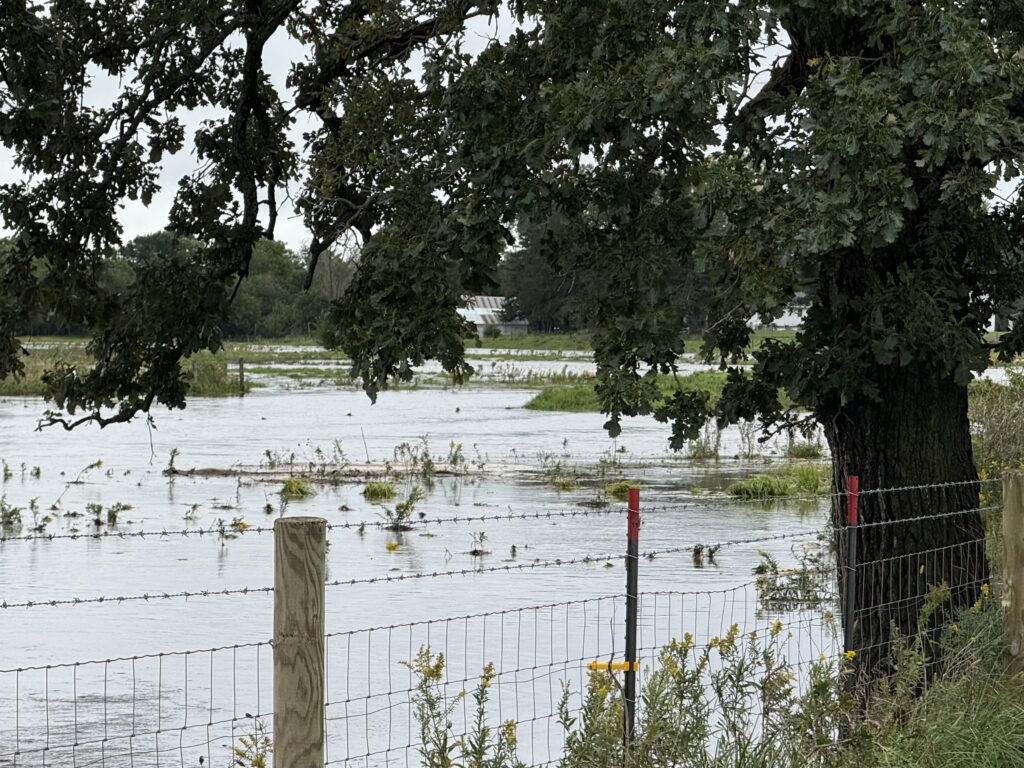
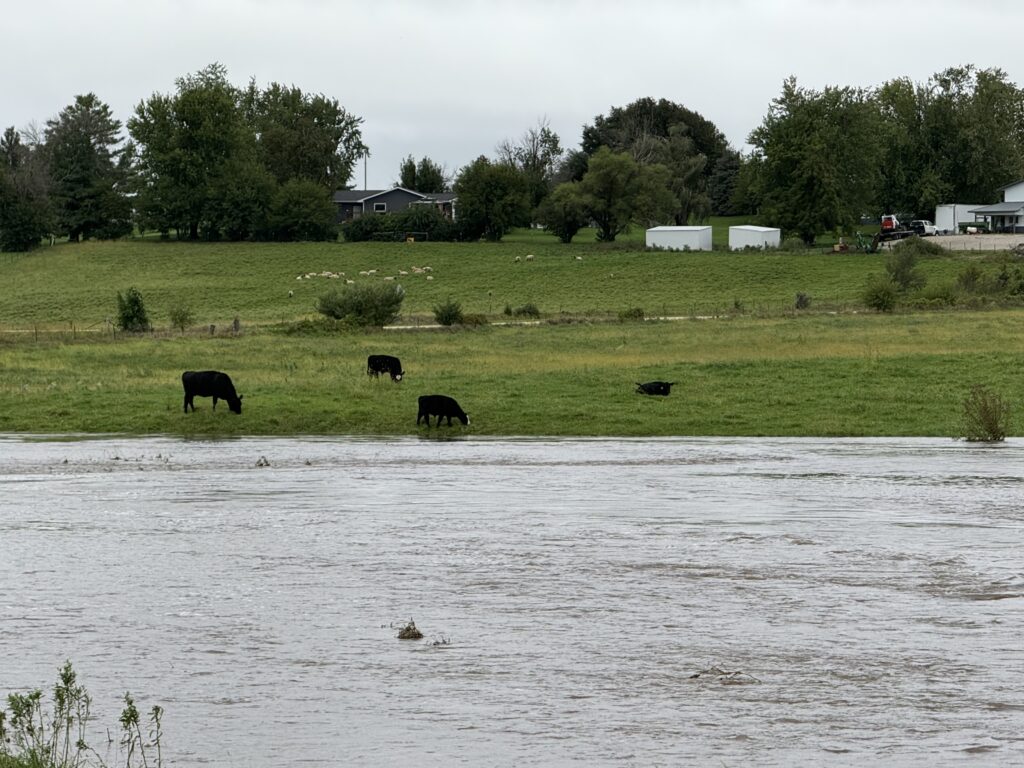
After driving for a while, I saw the Abbe Creek School Museum along Mount Vernon Road, so I pulled over there. This museum preserves the Abbe Creek School, said to be Iowa’s oldest school. Participants in the Kelso Heartland Homestay program had reported taking a guided tour inside this museum, so I was looking forward to the same experience. However, it seemed the guided tours were only available until August, and now that it was September, the entrance door was locked, so I could only admire the building’s exterior. Outside the building, green meadows stretched out, and a river ran through them; across the river, in the distance, what looked like a ranch, cows and sheep grazed.
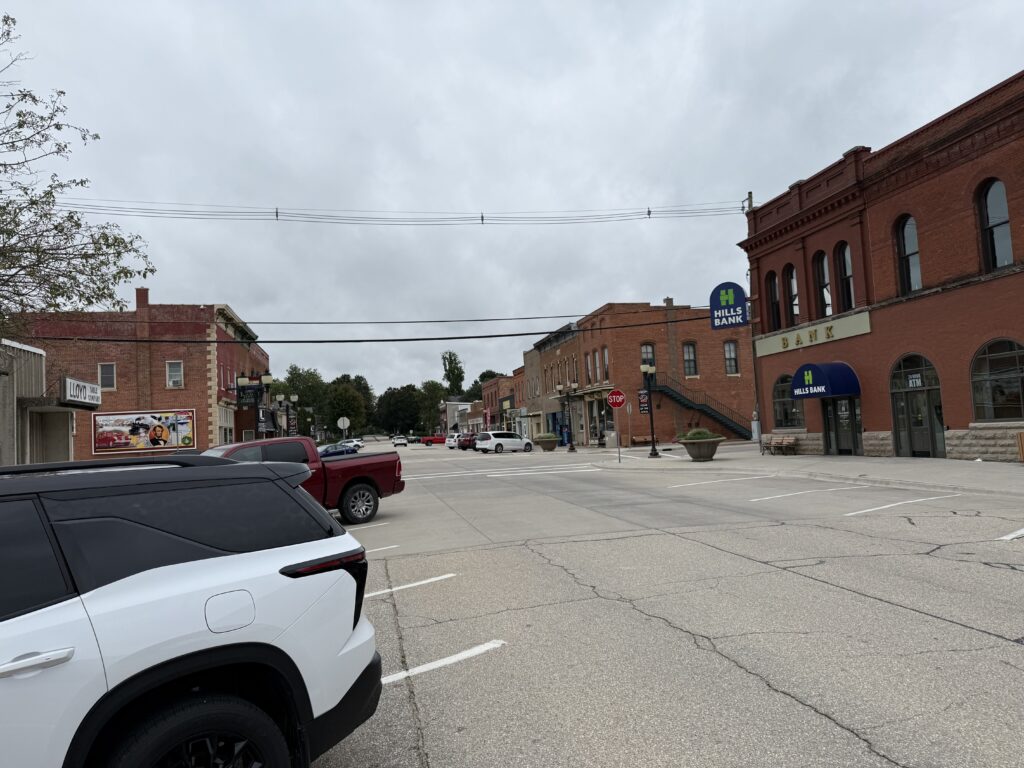
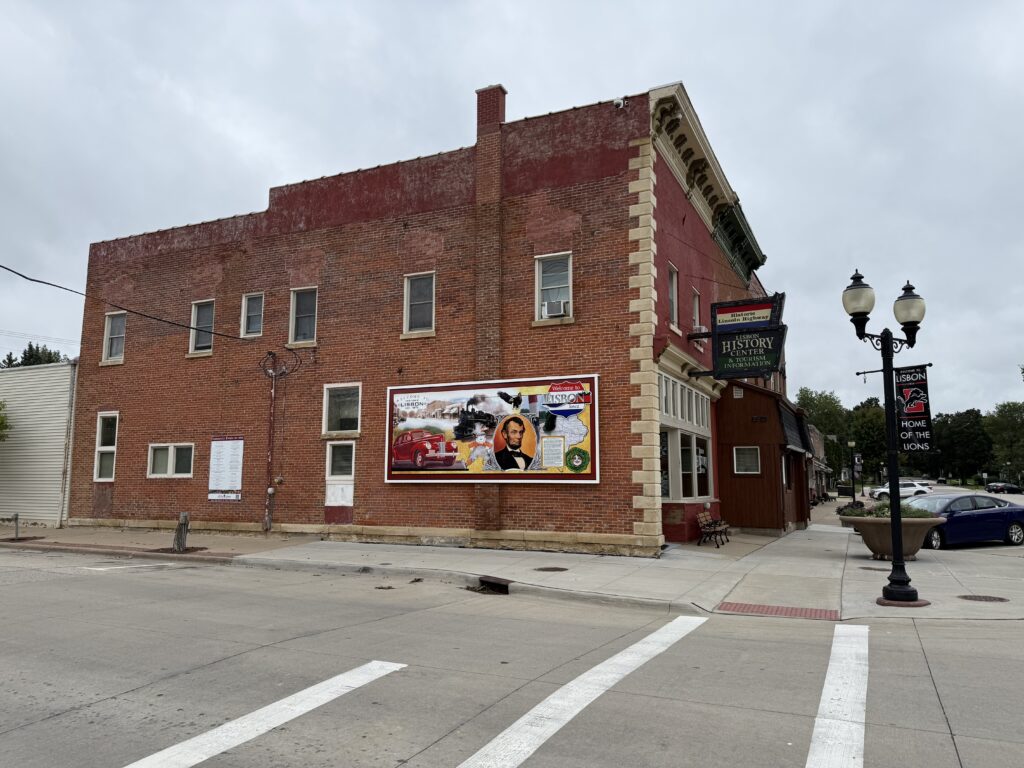
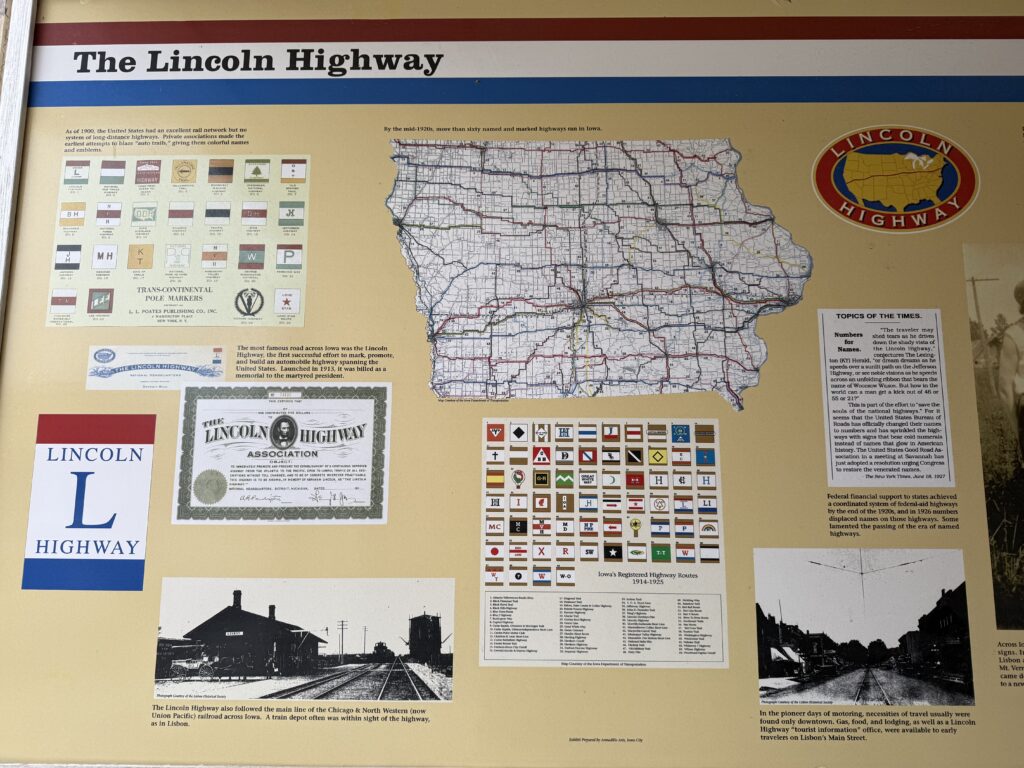
The next day, I went to Lisbon, located about two miles east of Mount Vernon. It was a town a bit smaller than Mount Vernon. At the entrance to a small archive along Main Street—the heart of Lisbon—a sign explained the road called Lincoln Highway. This highway was America’s first transcontinental automobile route, stretching 3,142 miles from Times Square in New York City to San Francisco, passing through New York, New Jersey, Pennsylvania, Ohio, Indiana, Illinois, Iowa, Nebraska, Colorado, Wyoming, Utah, Nevada, and California. It opened 13 years before the more famous Route 66, which is celebrating its 100th anniversary this year. Heading west, Main Street connects to 1st Street in Mount Vernon and continues on to Cedar Rapids via Mount Vernon Road. That route forms part of the Lincoln Highway and served as a transcontinental highway until US-30 was established. I didn’t learn this until I came to Iowa, though I thought I’d learned a lot from the Kelso Homestay program exhibitions.
Dyersville and Dubuque
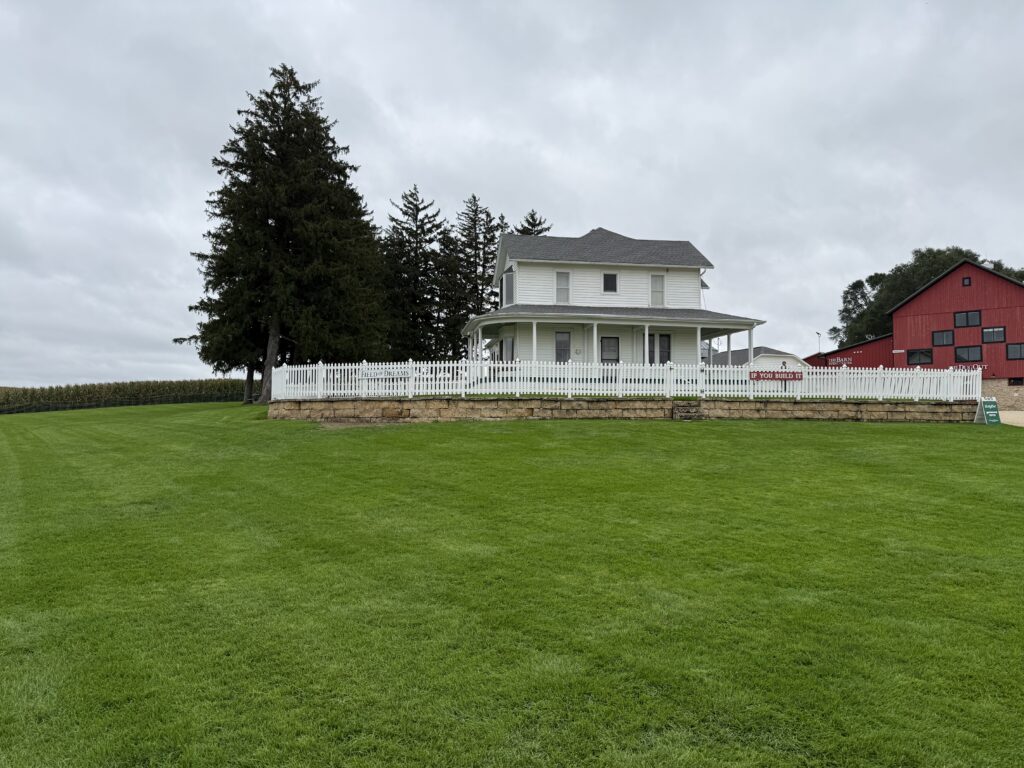
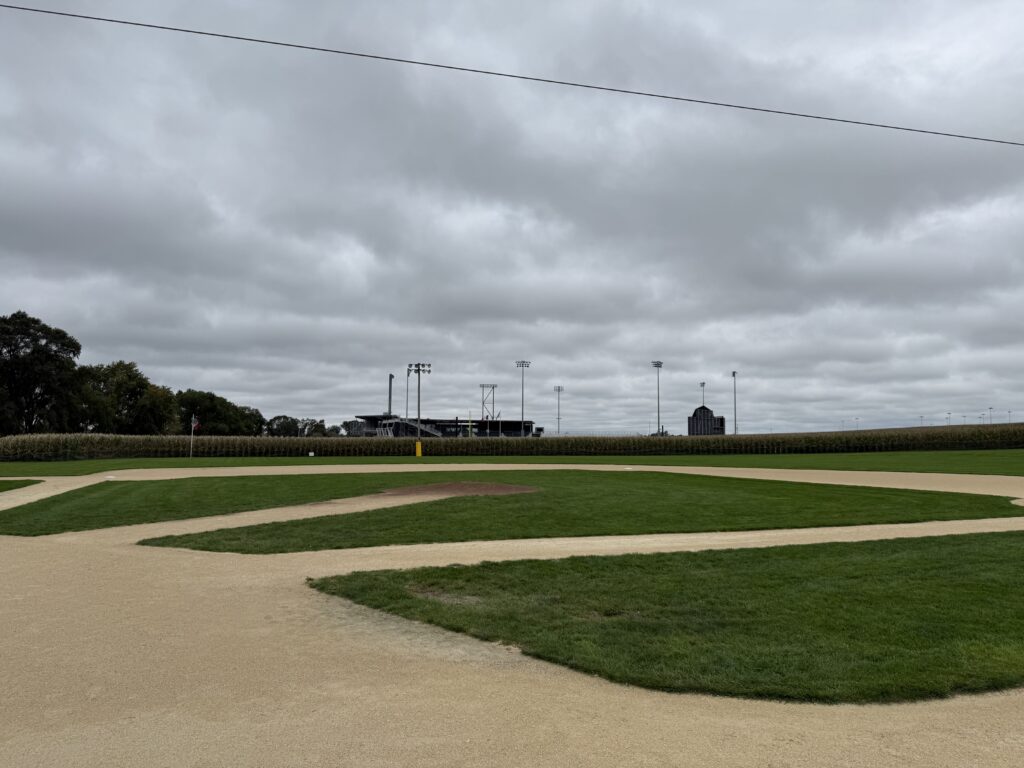
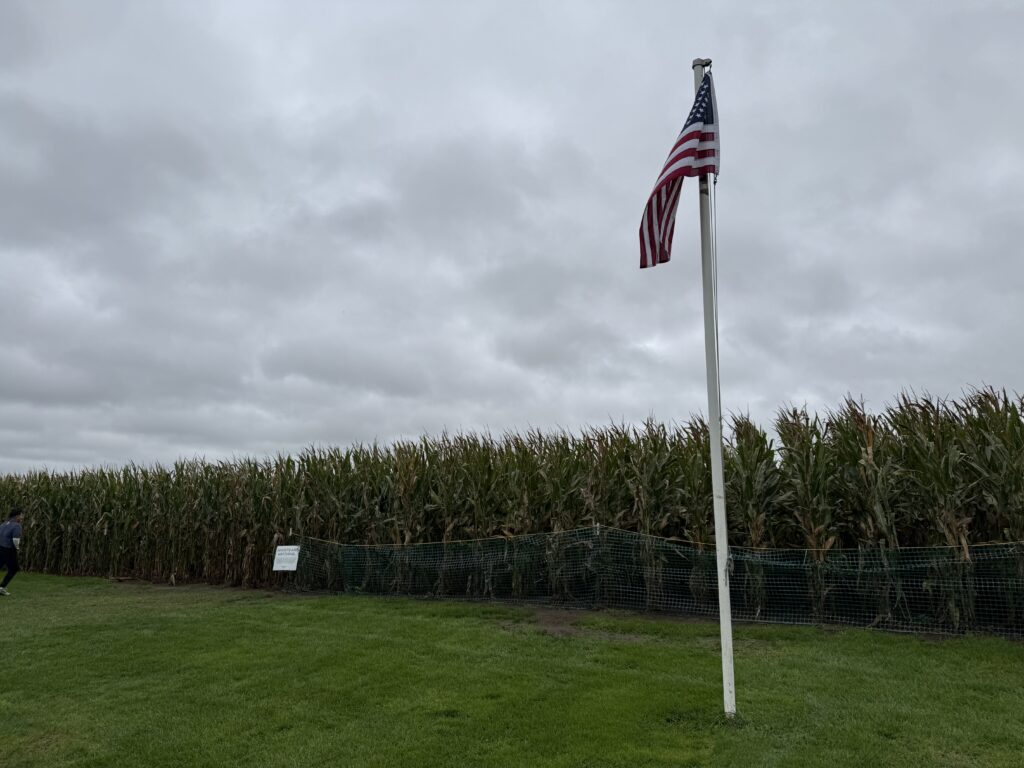
The next day, I drove to the Field of Dreams Movie Site in Dyersville. It was a little over an hour’s drive from Mount Vernon. There was the protagonist’s white house from the movie Field of Dreams, the baseball field he cleared from the cornfield in front of his house, a gift shop, and a bar.
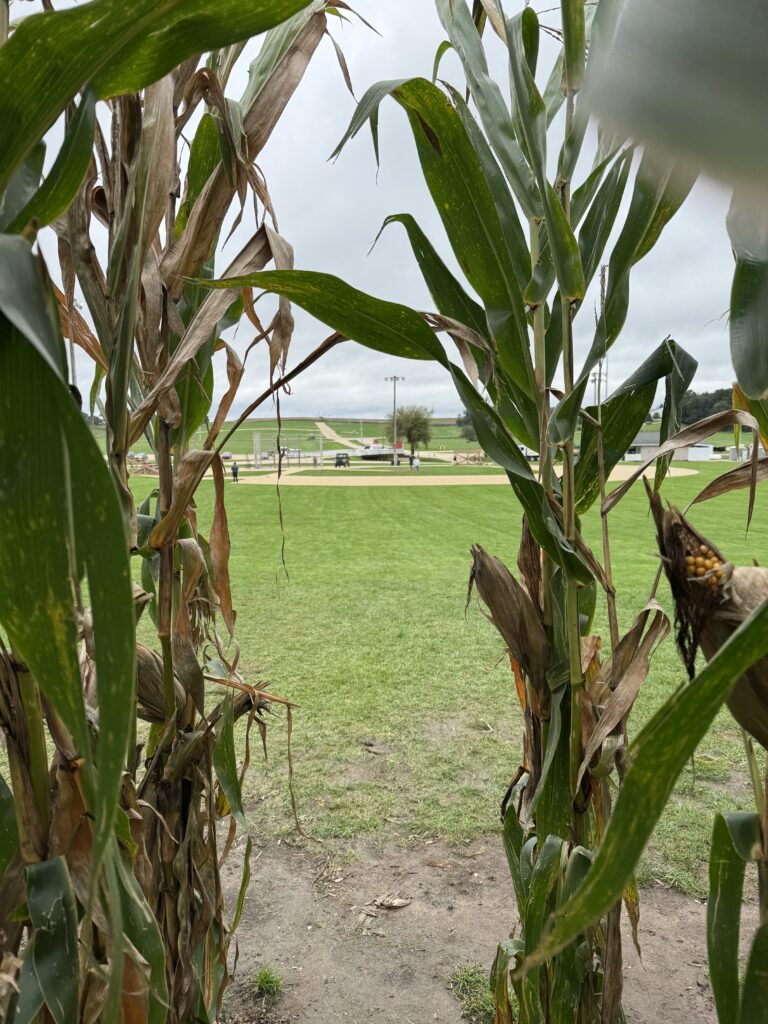
After that, I drove east on US-20 from Dyersville into Dubuque to ride the Fenelon Place Elevator—the world’s steepest funicular train—and visit the National Mississippi River Museum & Aquarium.
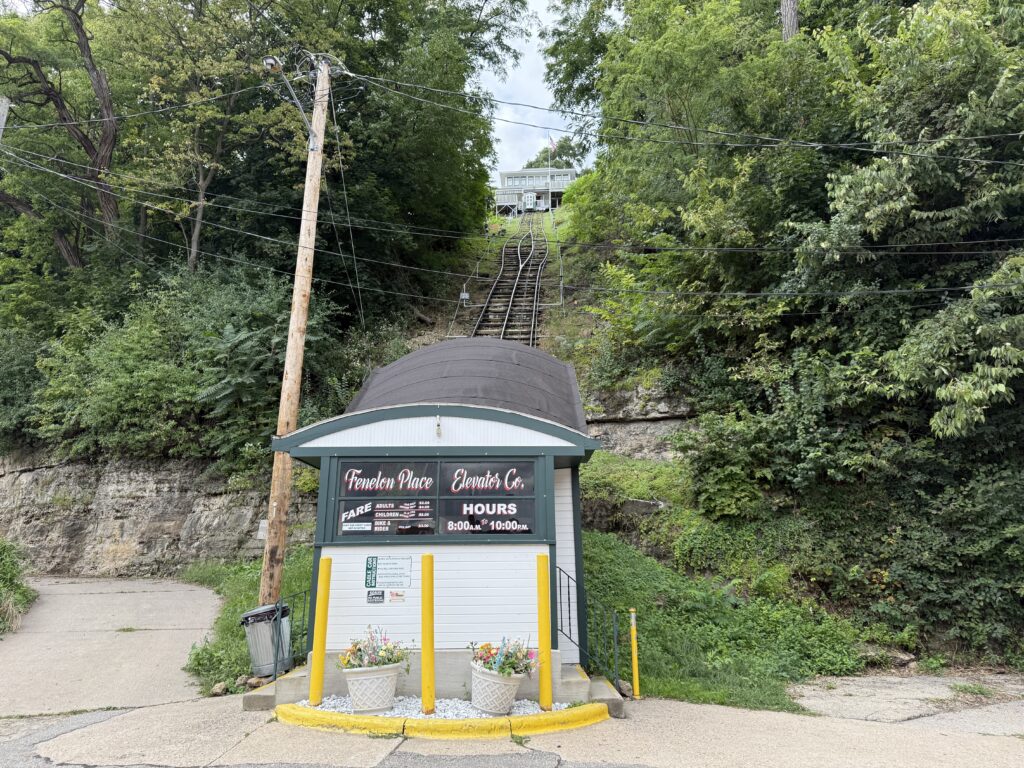
The elevator consisted of two gondolas connected vertically by a single steel cable; an operator at the upper station controlled the system and switched the gondolas’ positions. The lower station had no staffed ticket booth; passengers boarded the gondola themselves. When they pulled down a cord hanging from the station ceiling, a bell would ring, alerting the operator at the upper station that they were ready, who would then move the gondola in response. The fare was $2 one way and $4 round trip, payable at the staffed ticket booth at the upper station. Only cash was accepted; credit cards, debit cards, and mobile payment apps were not accepted.
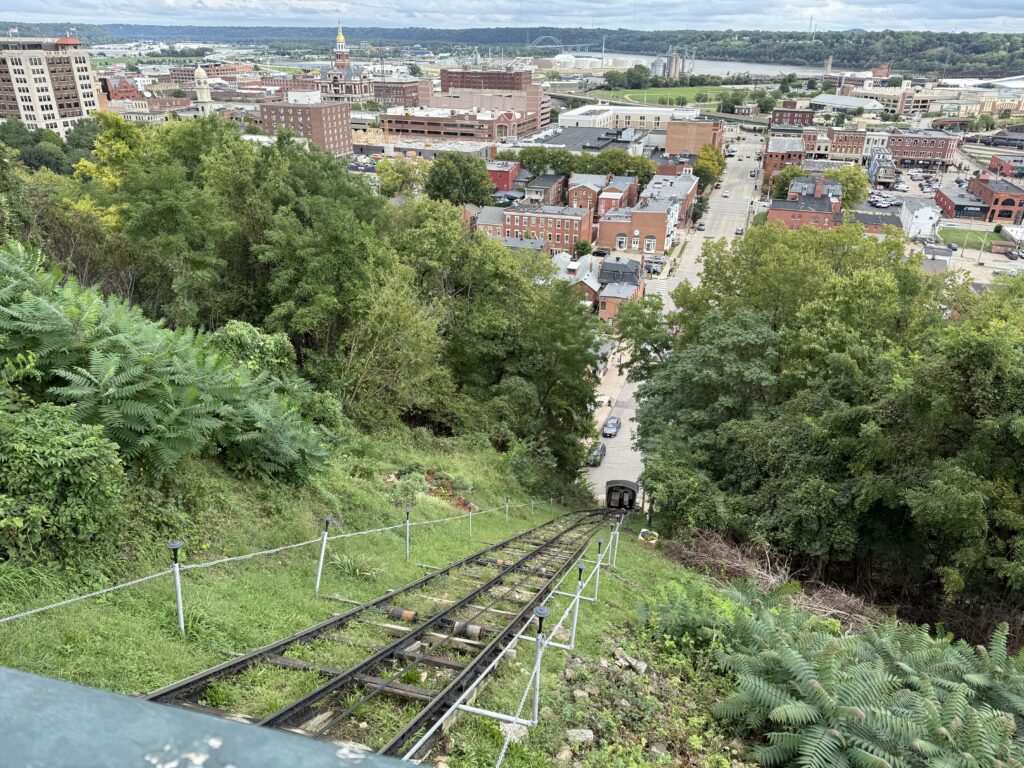
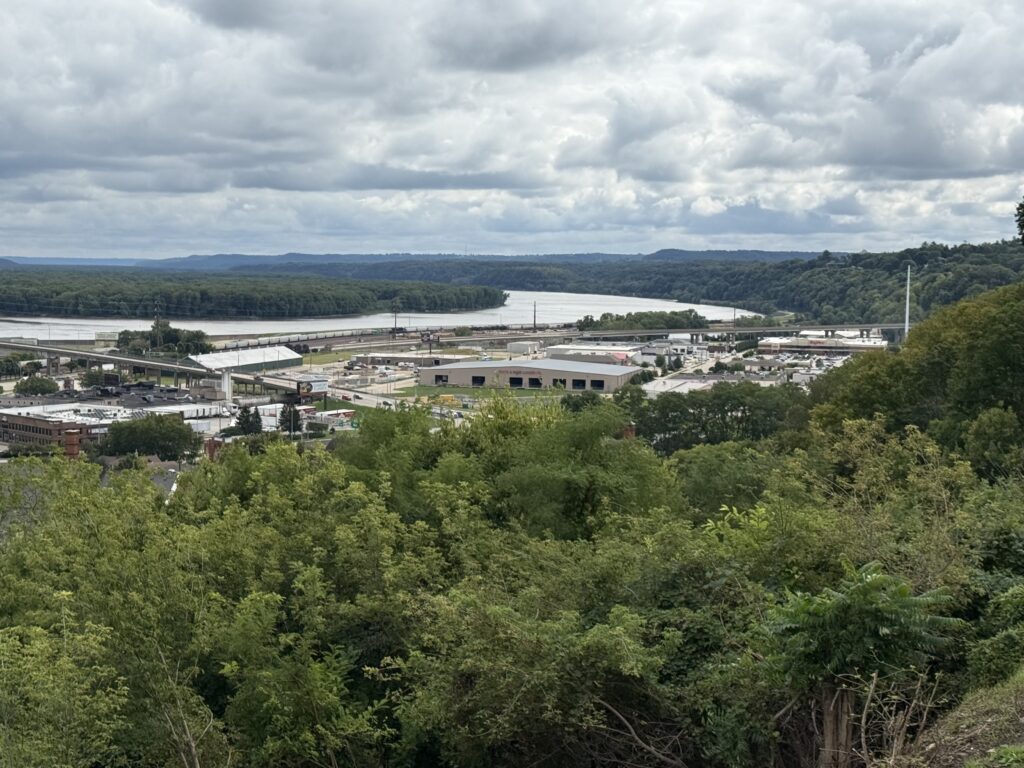
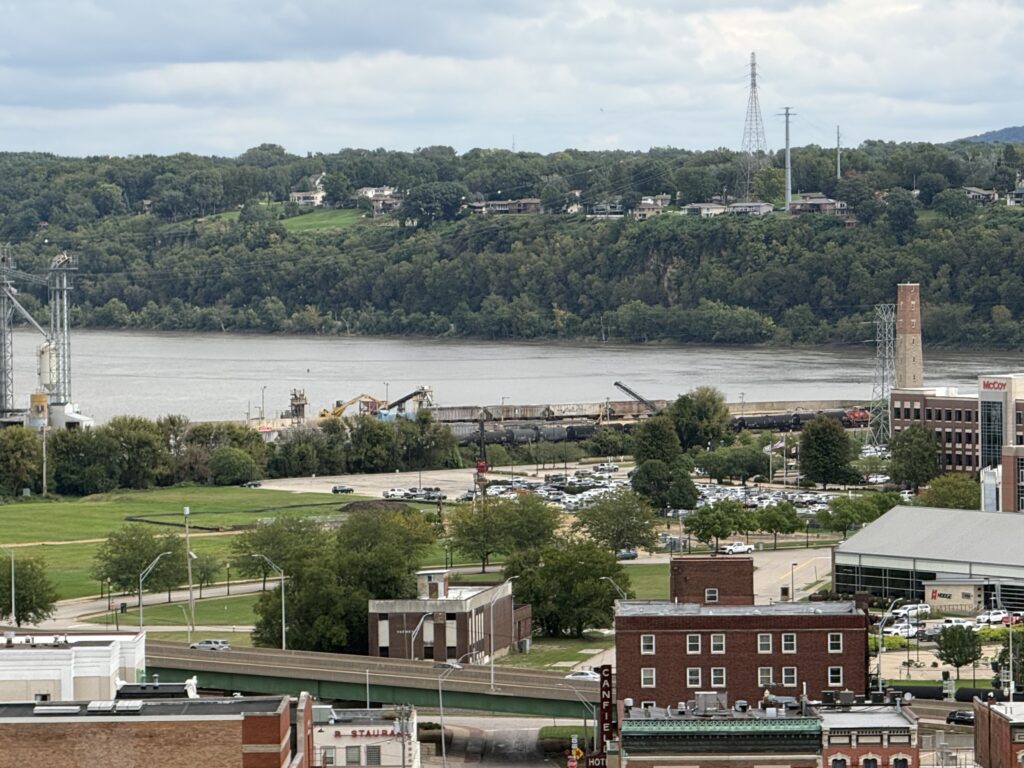
The view from the upper station was spectacular. Across the Mississippi River, I could see Dubuque’s beautiful cityscape in the foreground, with Illinois to the right and Wisconsin to the left.
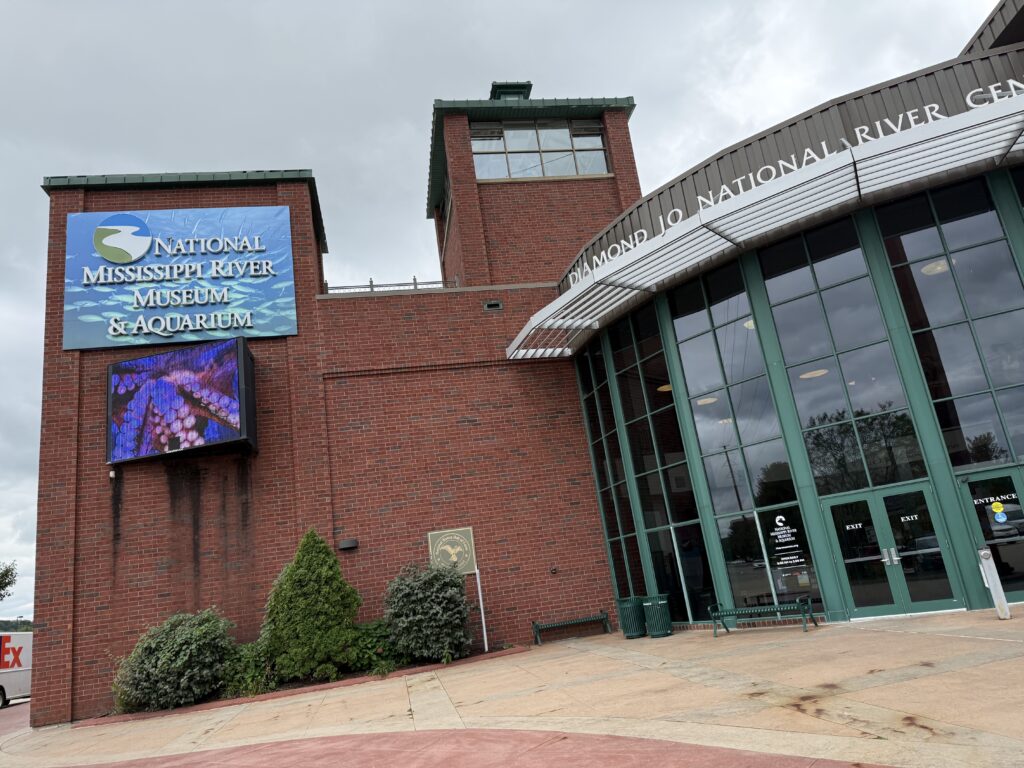
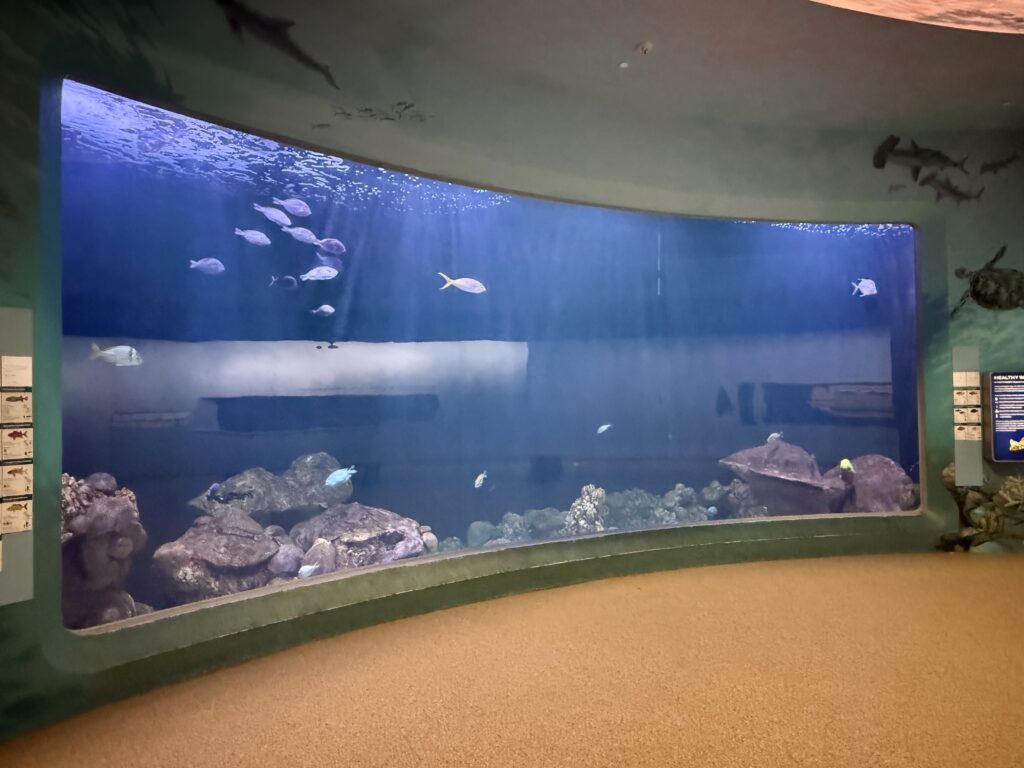
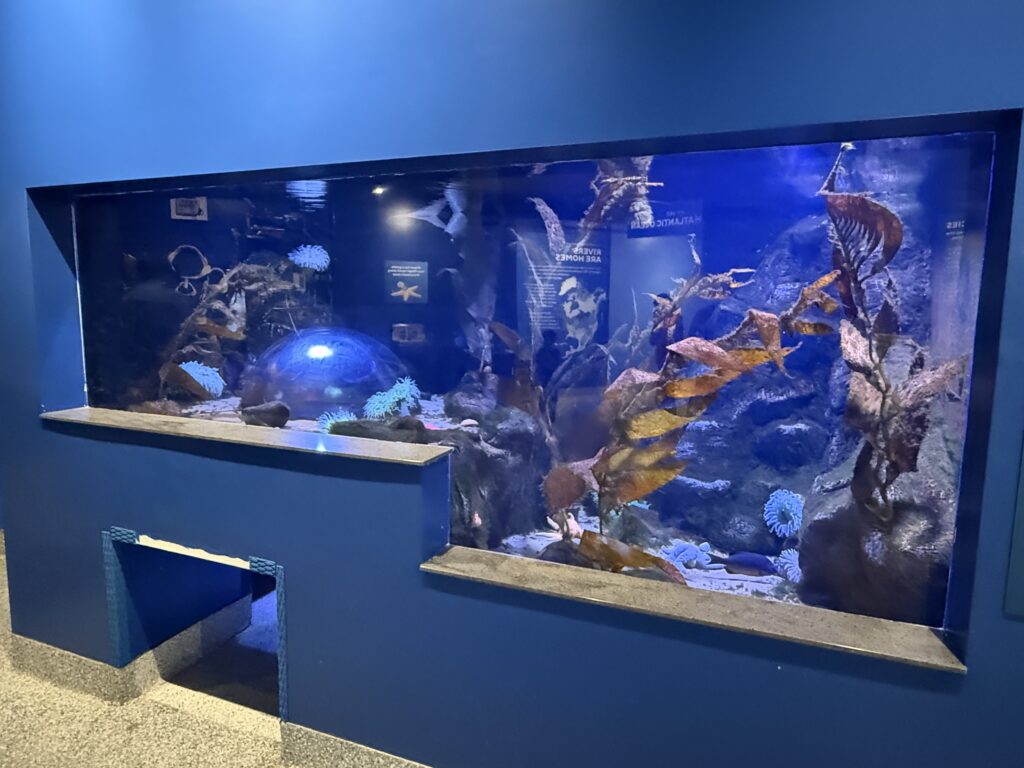
After enjoying the magnificent scenery spanning three states, I walked back down the tracks I had come up on and visited the National Mississippi Museum & Aquarium. This museum showcased the history of the Mississippi River, which runs through the heart of the United States, and how Americans have used it to build their nation. In the back, an aquarium featured marine life from the Gulf of Mexico, the Gulf of California, and other bodies of water.
Mark Twain and Tom Sawyer in Hannibal, Missouri
The next day, I left Dubuque early and drove straight south toward Missouri. My goal was to visit the Mark Twain museums in Hannibal, Missouri. I drove steadily south on US-218 and arrived in Hannibal shortly after noon.
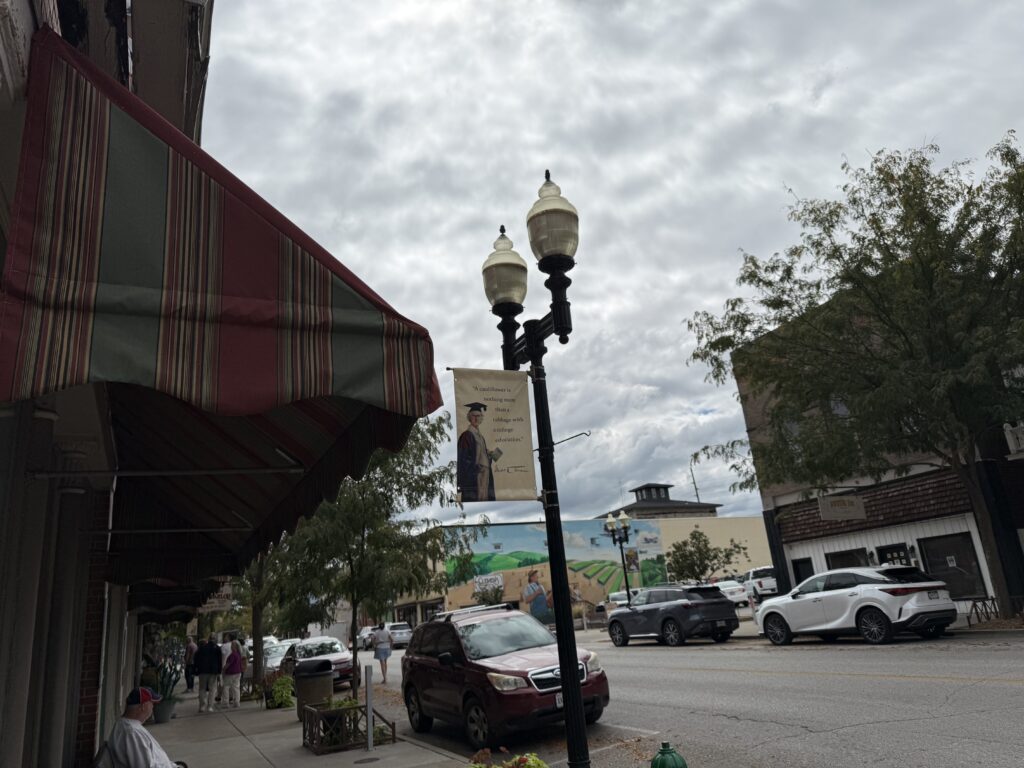
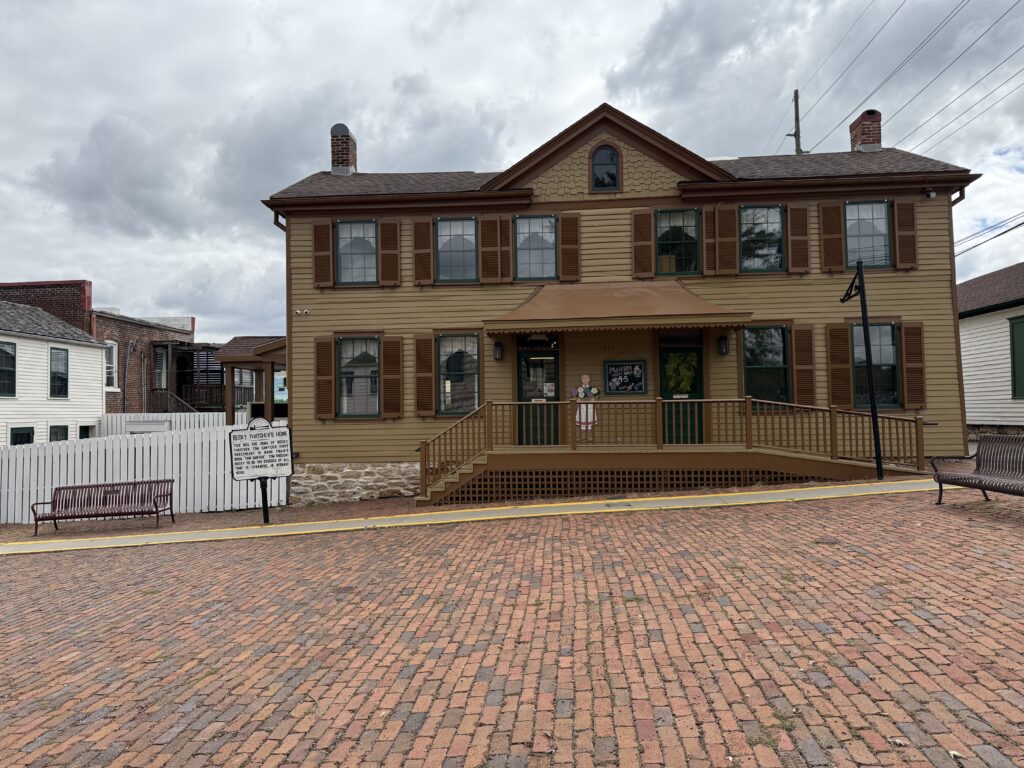
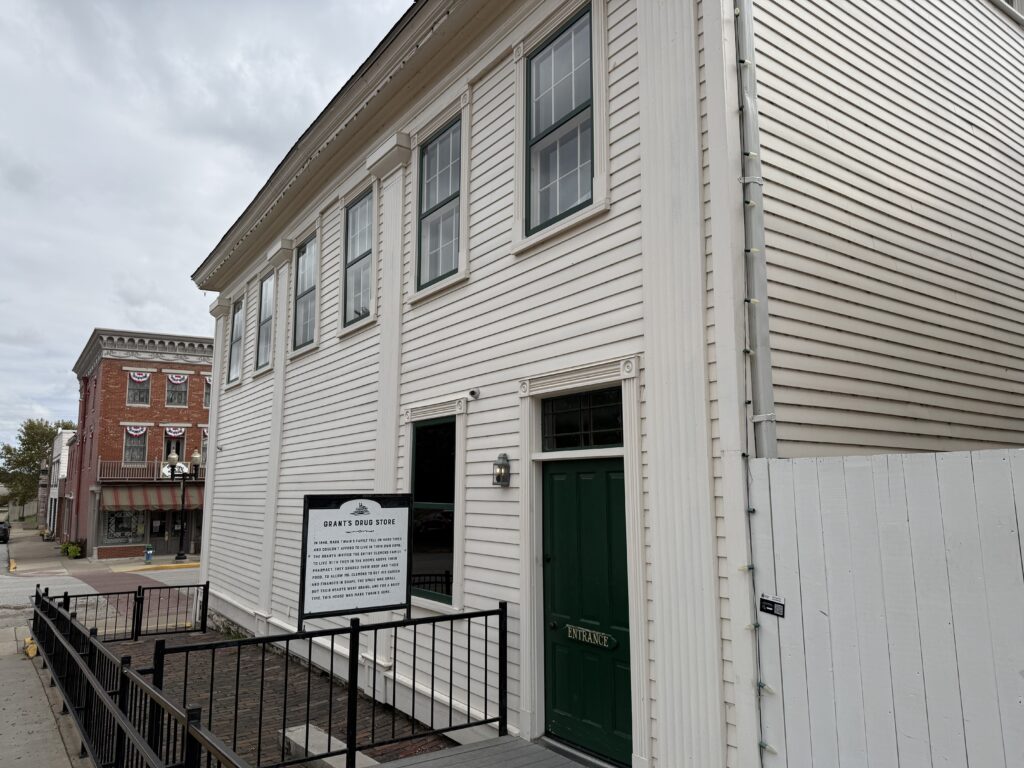
Hannibal became a tourist attraction that epitomized the fairy-tale world Mark Twain described and lived in as a child. The streets were lined with fairy-tale-like buildings, reminiscent of a town made of candy. The houses where Mark Twain and his childhood friend Laura Hawkins once lived have been preserved and turned into museums. The pharmacy where he and his family lived on the building’s second floor has also been preserved.
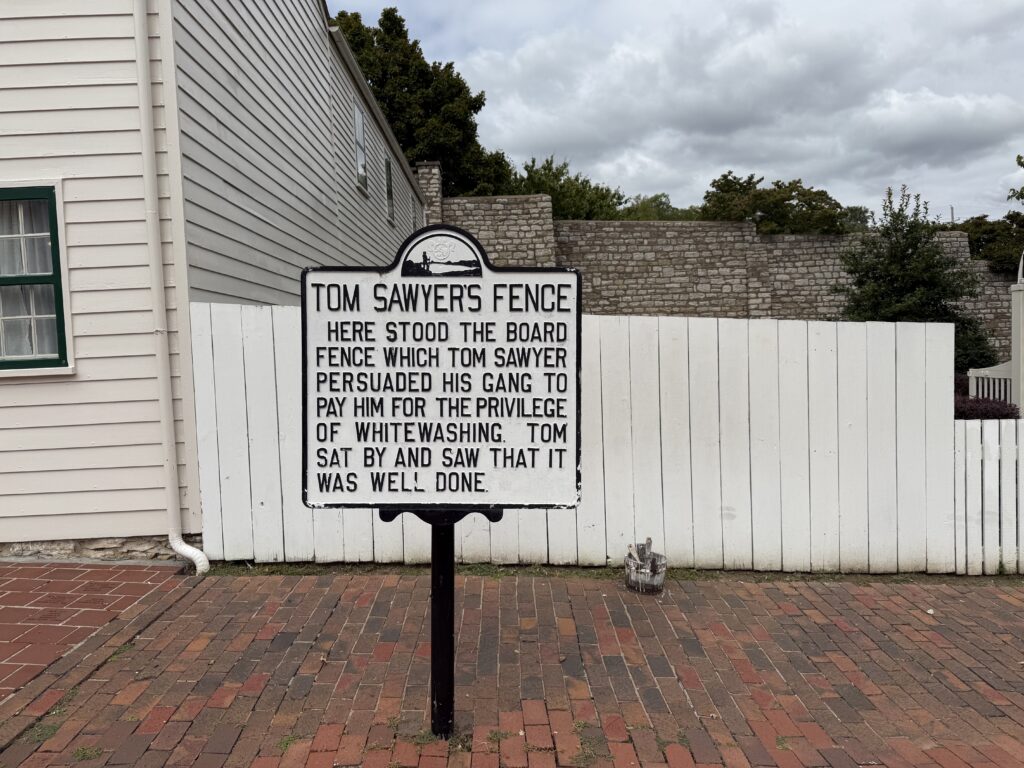
Near the town, the Mississippi River—the same one I’d seen in Dubuque—flowed majestically. A sightseeing boat offering a one-hour Mississippi cruise was docked at the pier. With little time left before departure, I bought a ticket and boarded the boat.
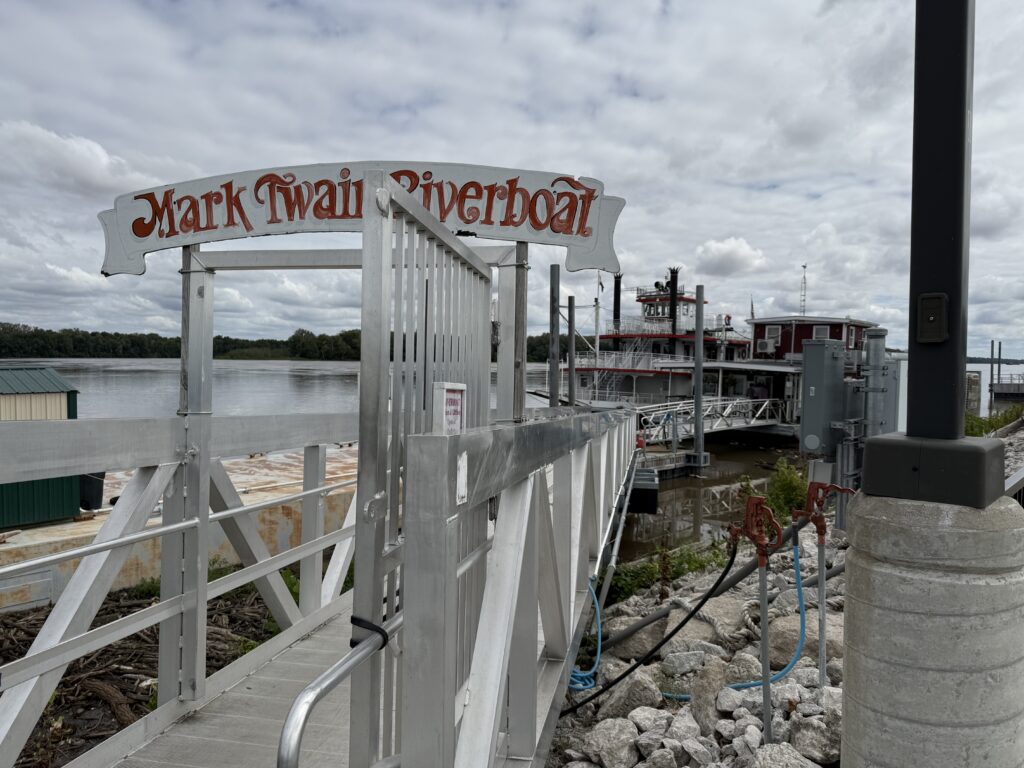
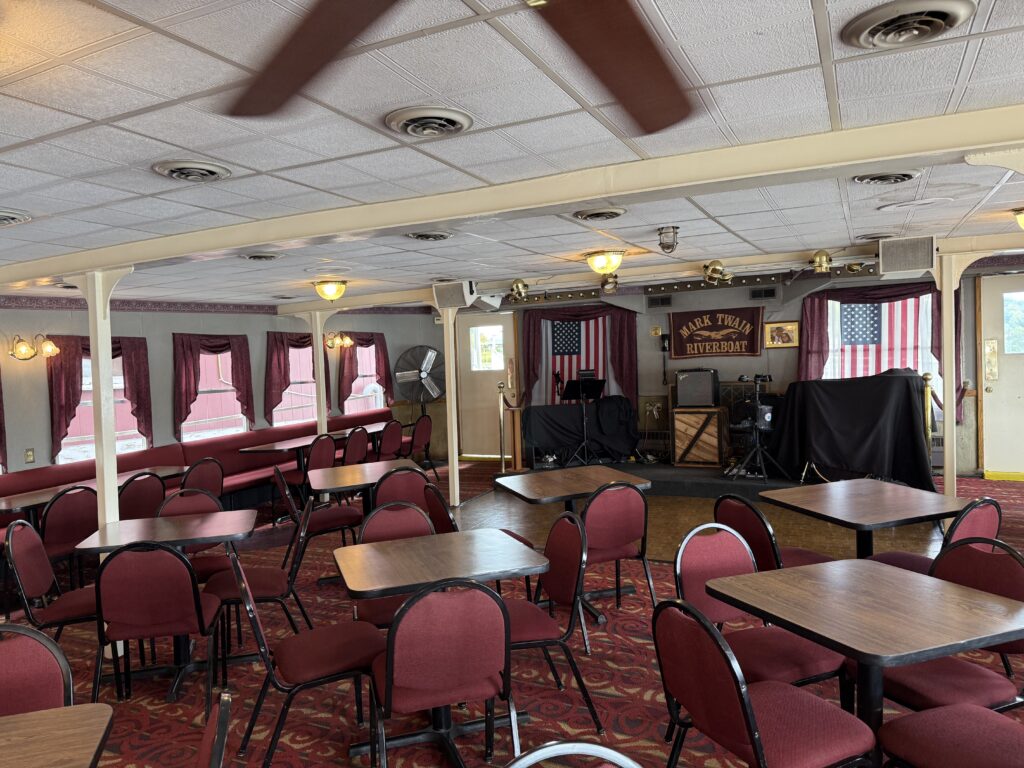
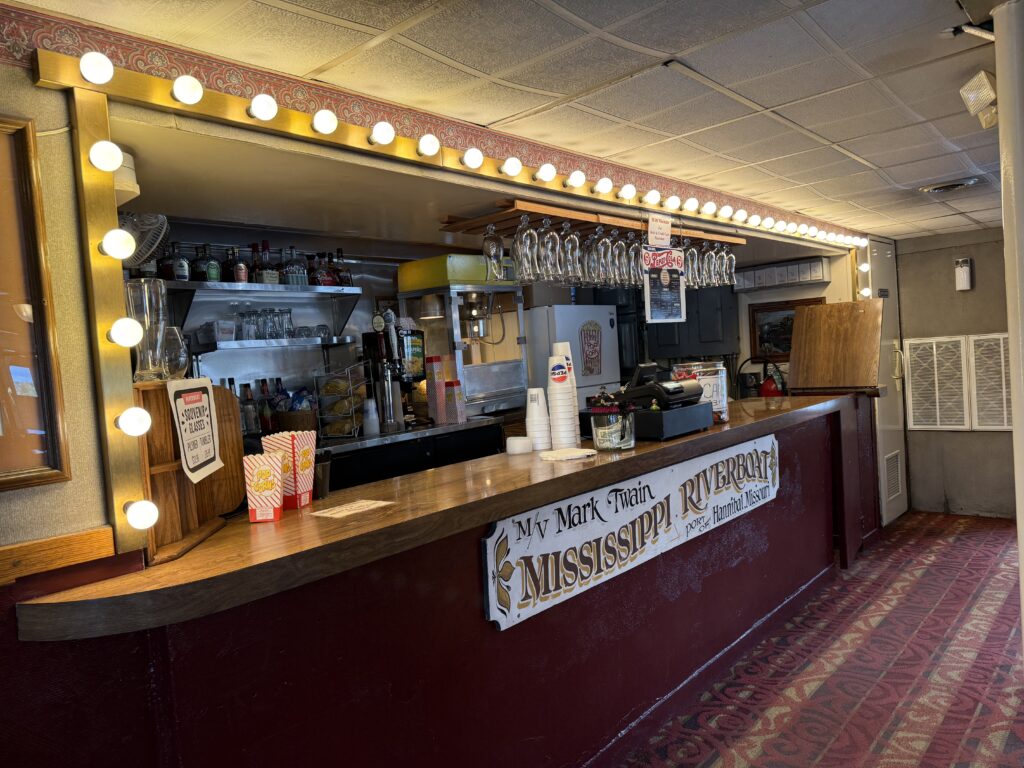
Inside the cabin, a stage was set up with musical instruments (though it wasn’t being used at the time), a concession stand selling beer, soft drinks, snacks, and popcorn, and tables where passengers could relax. A staircase led up to the deck, where passengers could enjoy the breeze while taking in the view.
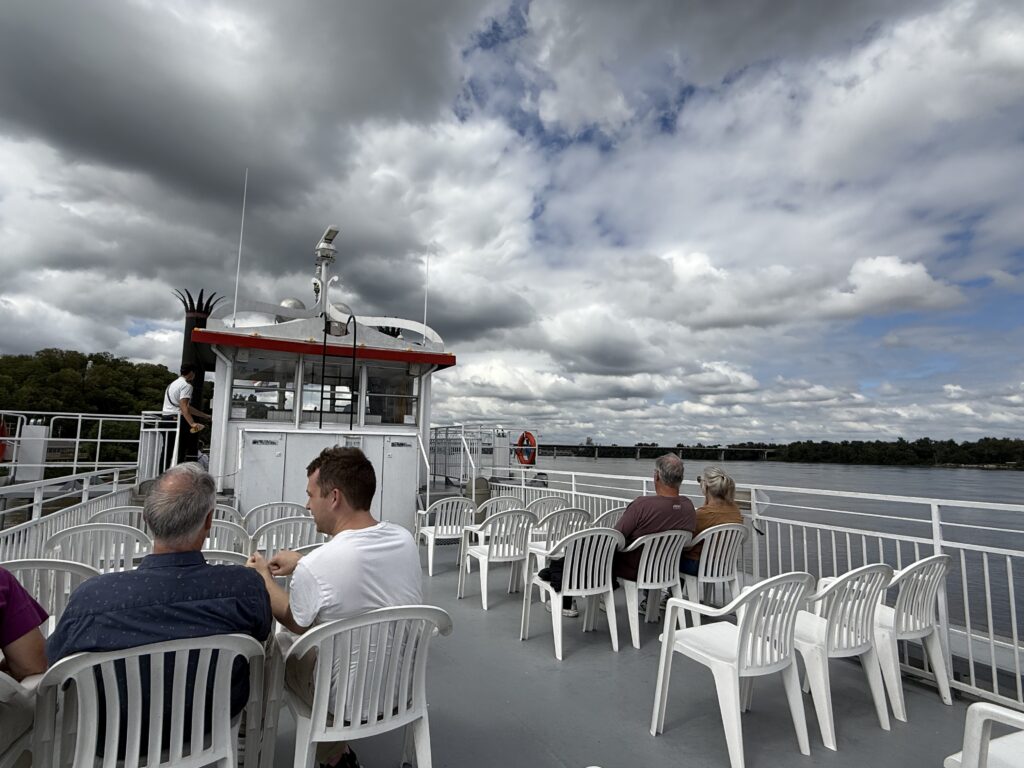
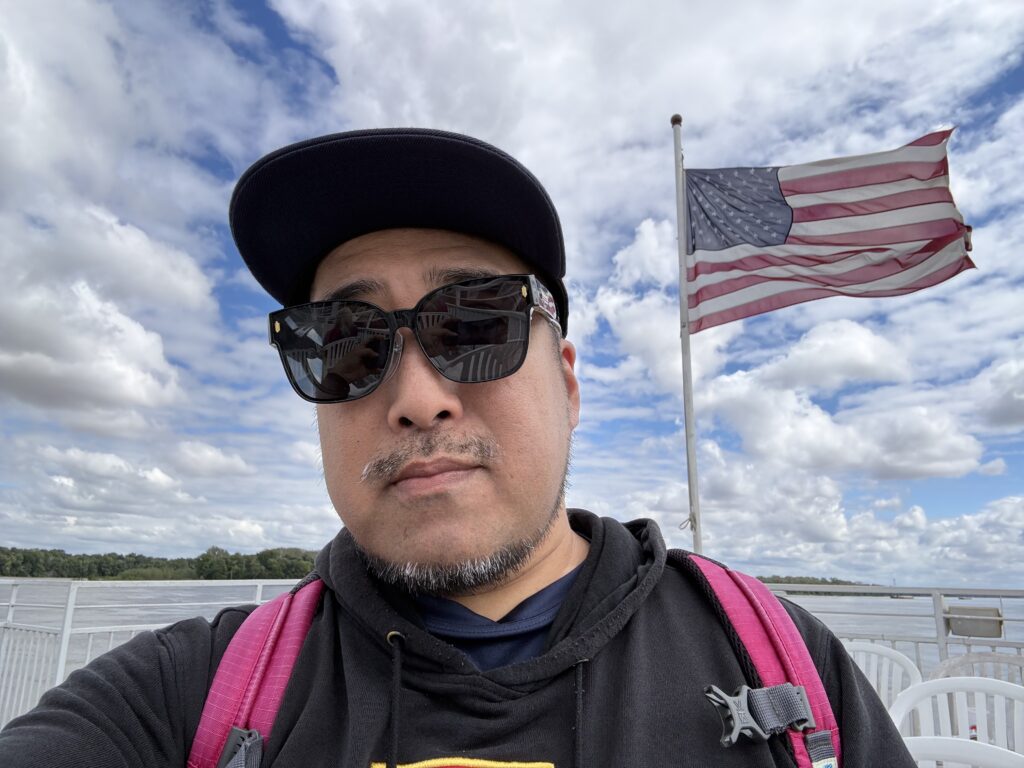
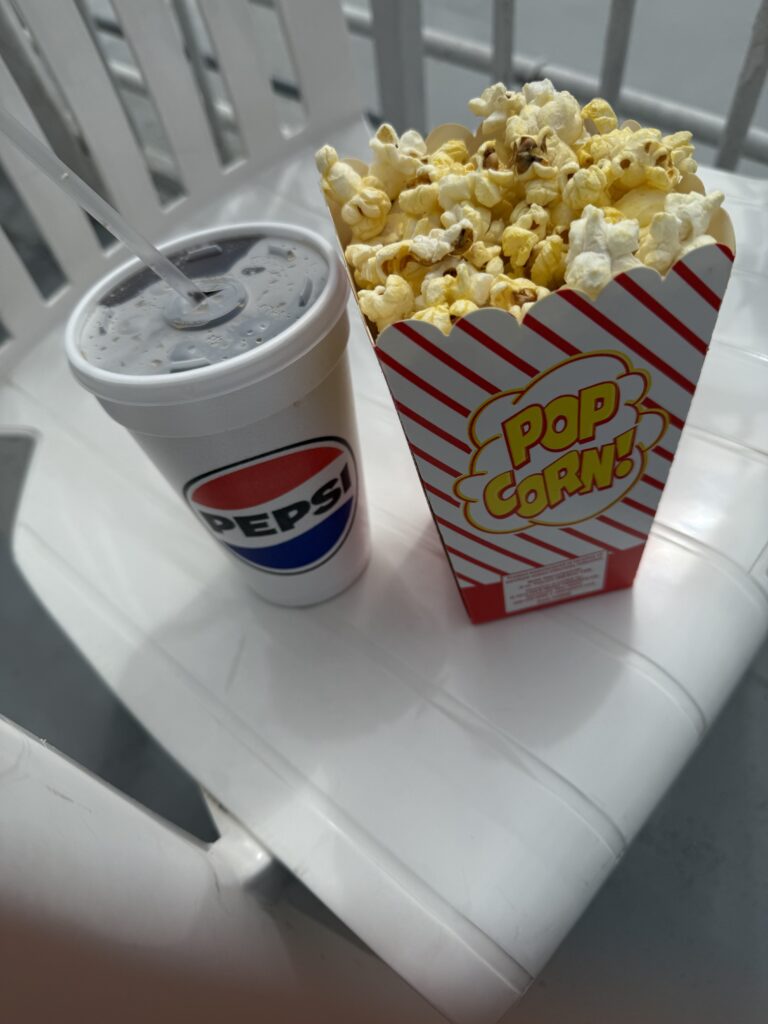
When the time came, the boat pulled away from the dock. One crew member took the microphone and spent a full hour giving a guided tour, pointing out the large bridge spanning the Mississippi River that connects Missouri and Illinois, the lighthouse and ice storage facility on the Missouri side, and the natural scenery along the riverbank on the Illinois side. Listening to fast-paced English for an entire hour was quite a challenge for me, but I thoroughly enjoyed the scenery—which I will likely never see again in my lifetime.
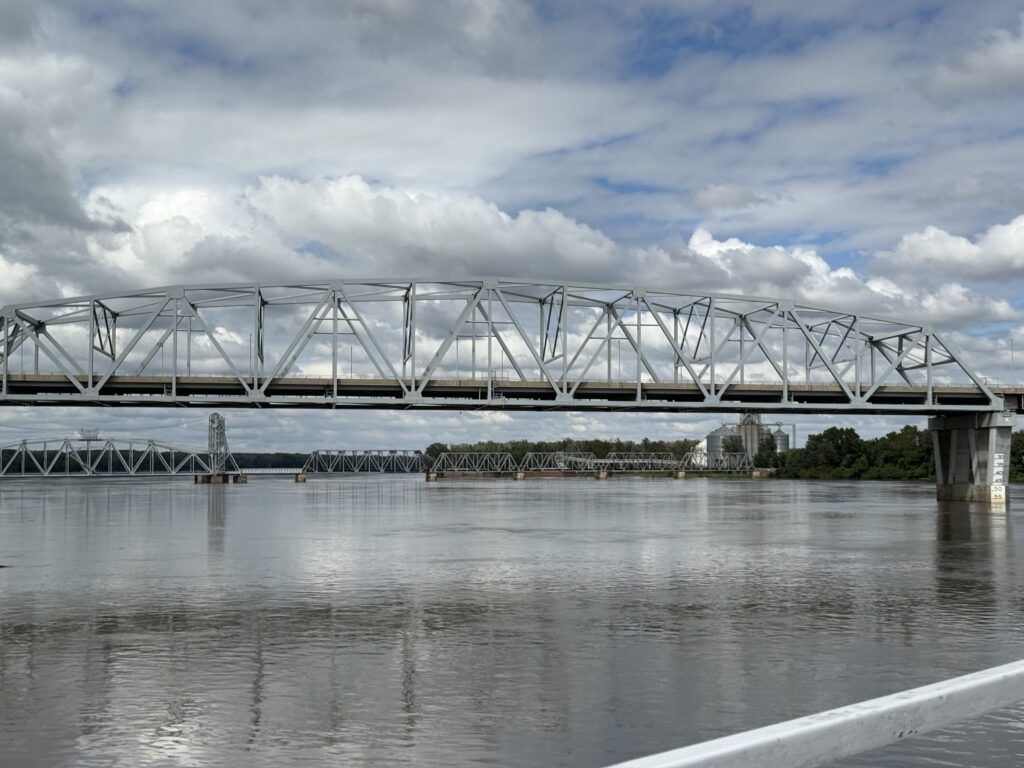
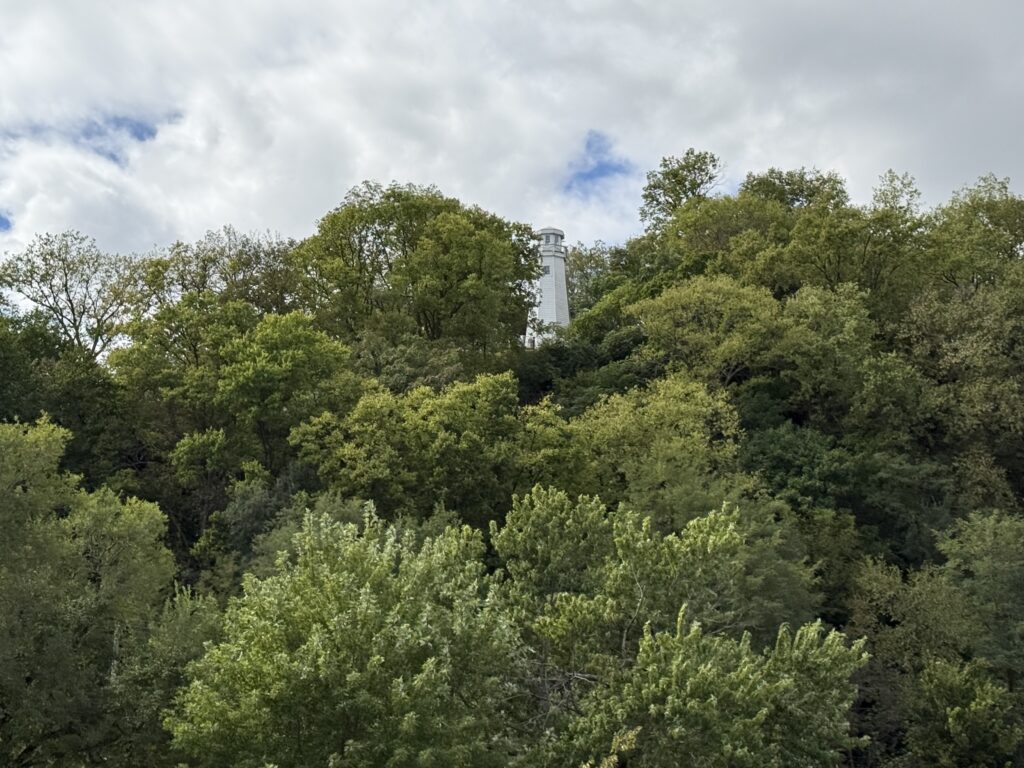
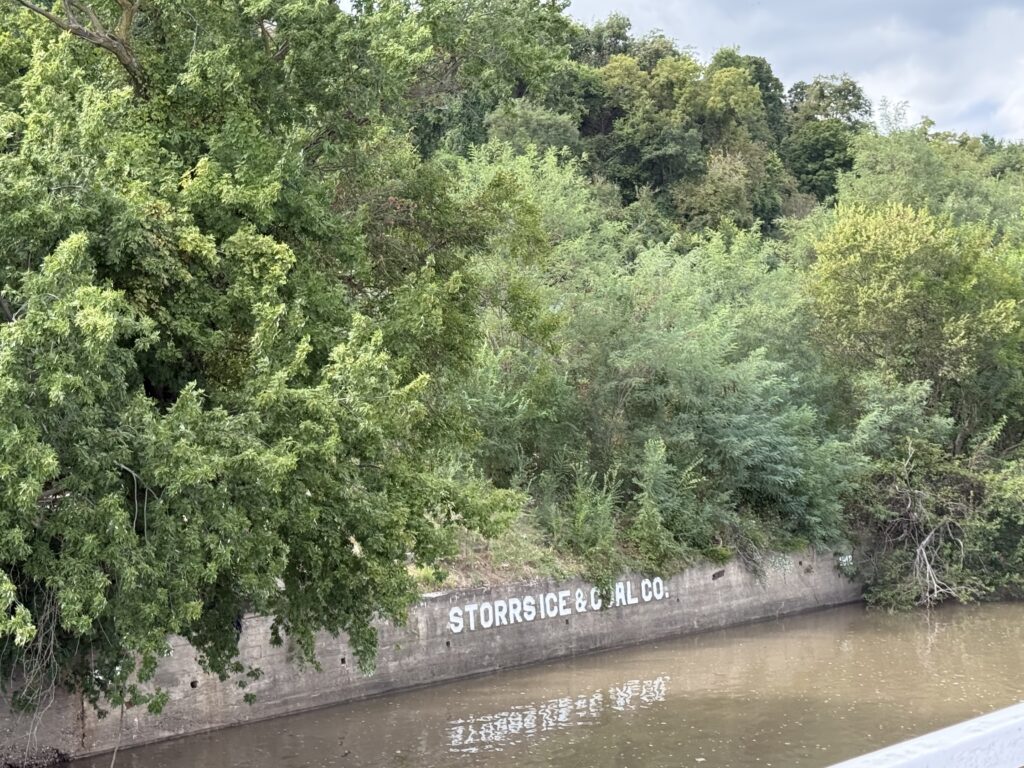
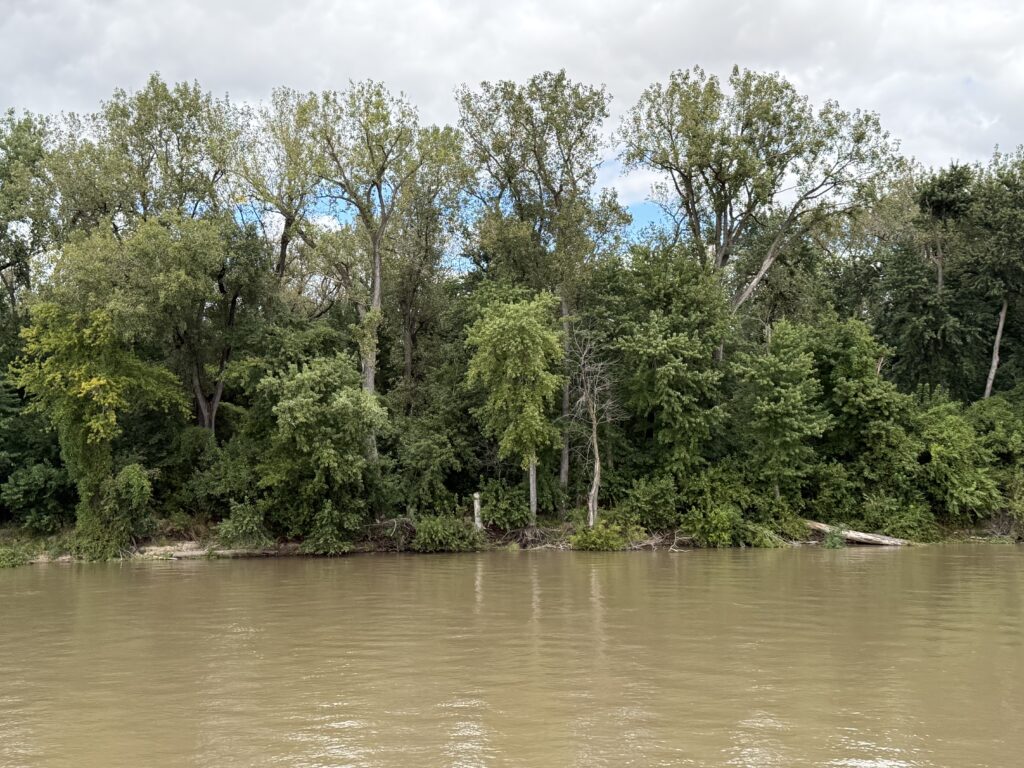
Almost all the tourists visiting this town were white Americans. I didn’t see a single other Japanese tourist besides myself. Since Hannibal has no international airport, passenger train station, or bus stop, you probably can’t get there from Japan unless you can drive. I basked in a sense of superiority, knowing I’d been granted an extraordinary privilege that most Japanese people would never experience.
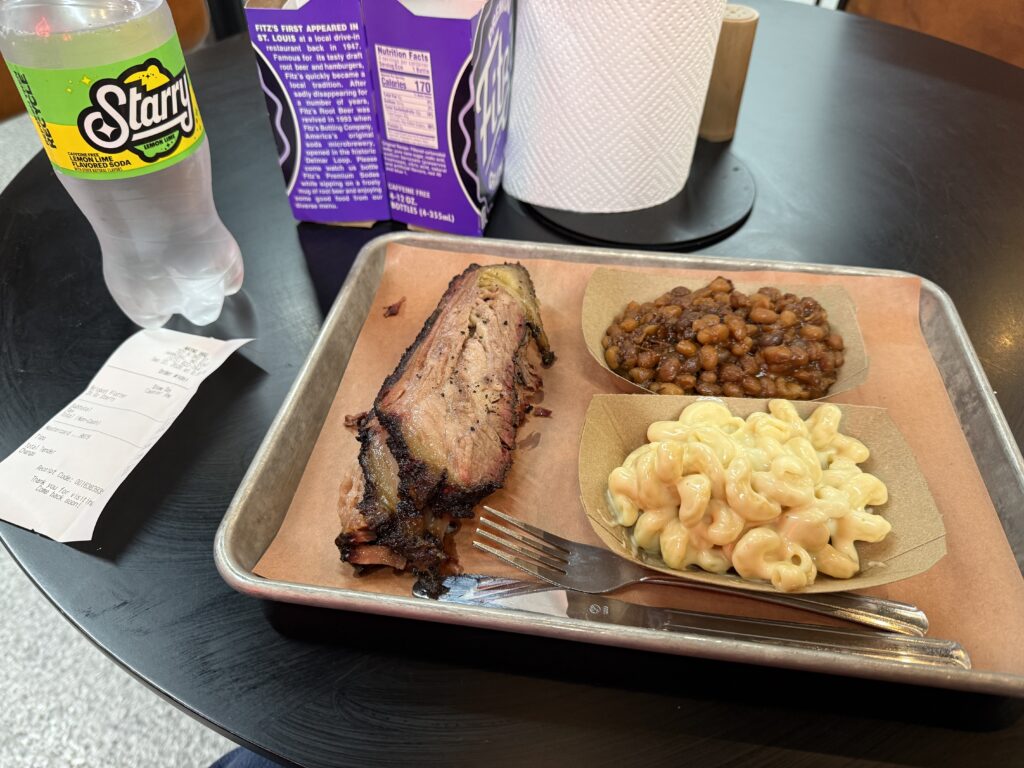
For dinner, I had brisket, baked beans, and mac and cheese. I stayed overnight in Hannibal.
Back to Iowa—Shopping in Iowa City
The next morning, before leaving Hannibal, I stopped by a nearby spot called Lover’s Leap. This tourist attraction was located on a cliff where a warrior from one Native American tribe and a princess from a rival tribe had both thrown themselves to their deaths following a doomed romance.
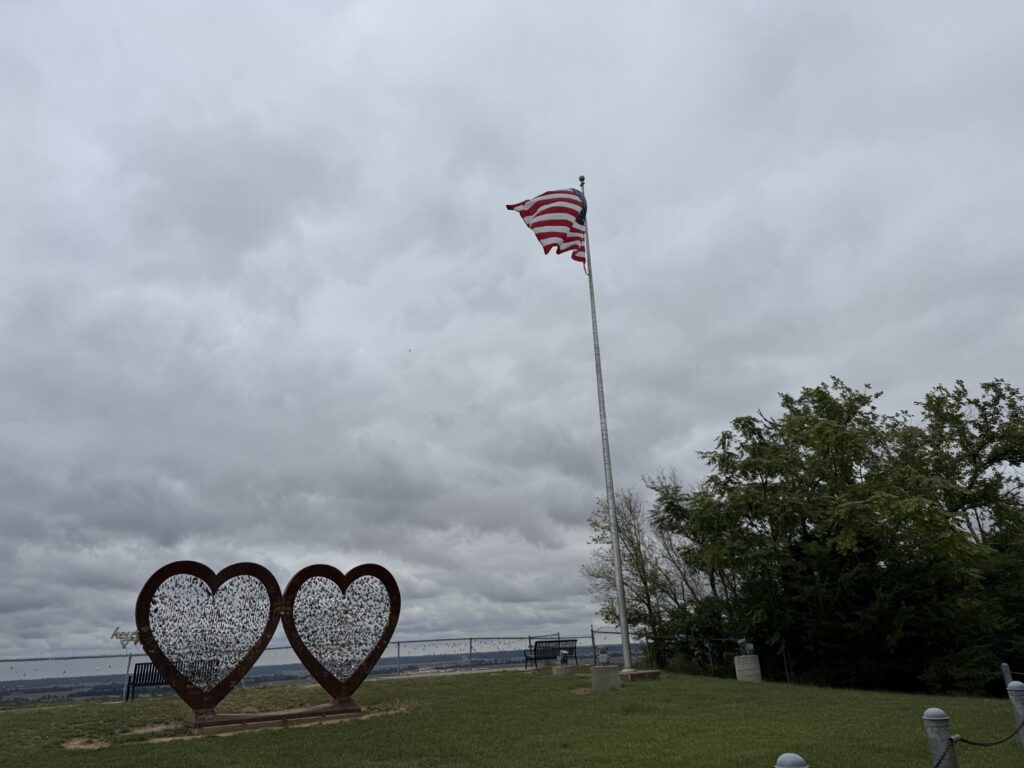
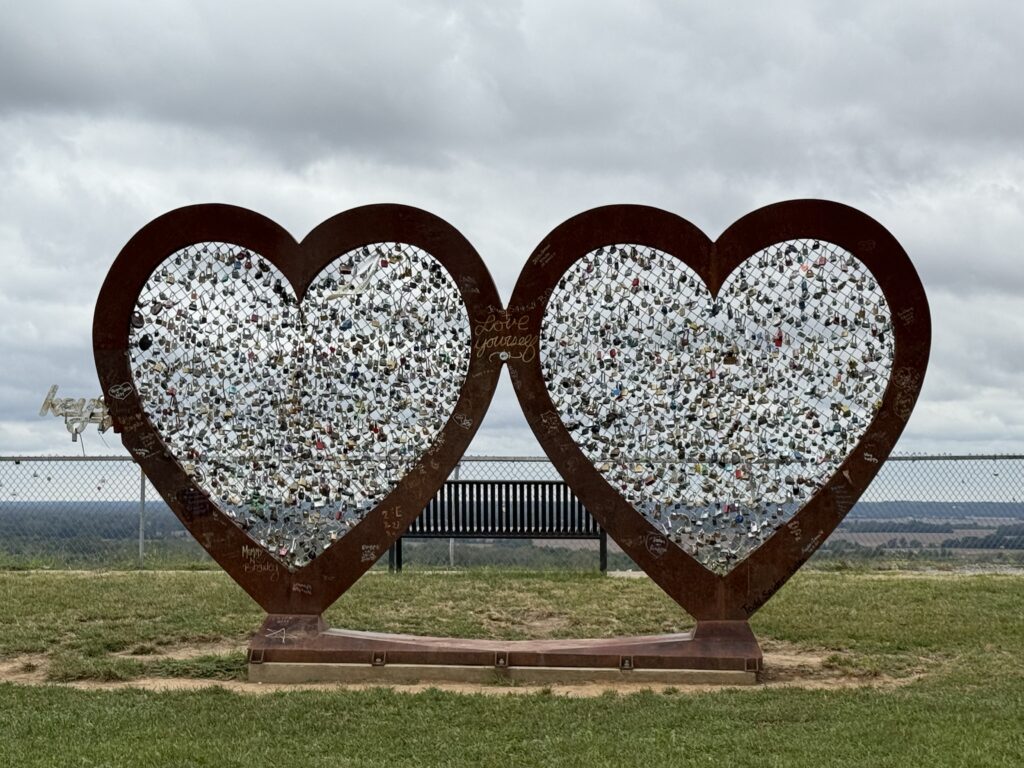
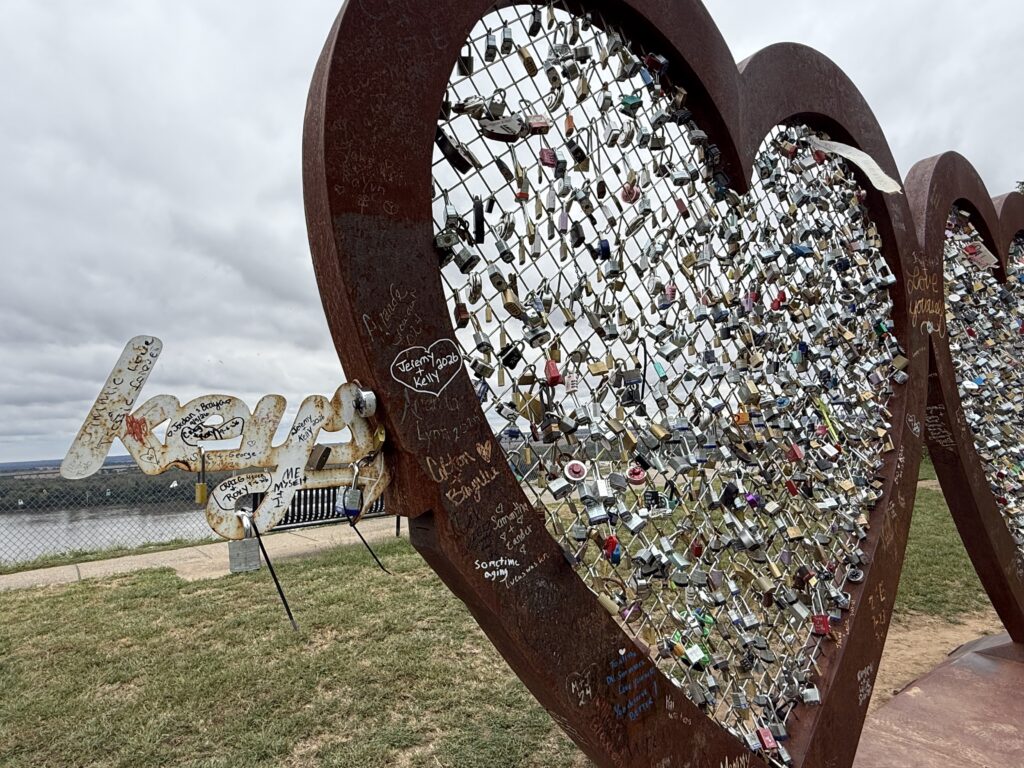
Two large heart-shaped monuments stand at Lover’s Leap, and countless padlocks left by visiting couples cover the wire mesh inside the hearts. Some visiting lovers wrote their names in pen on the heart frames.
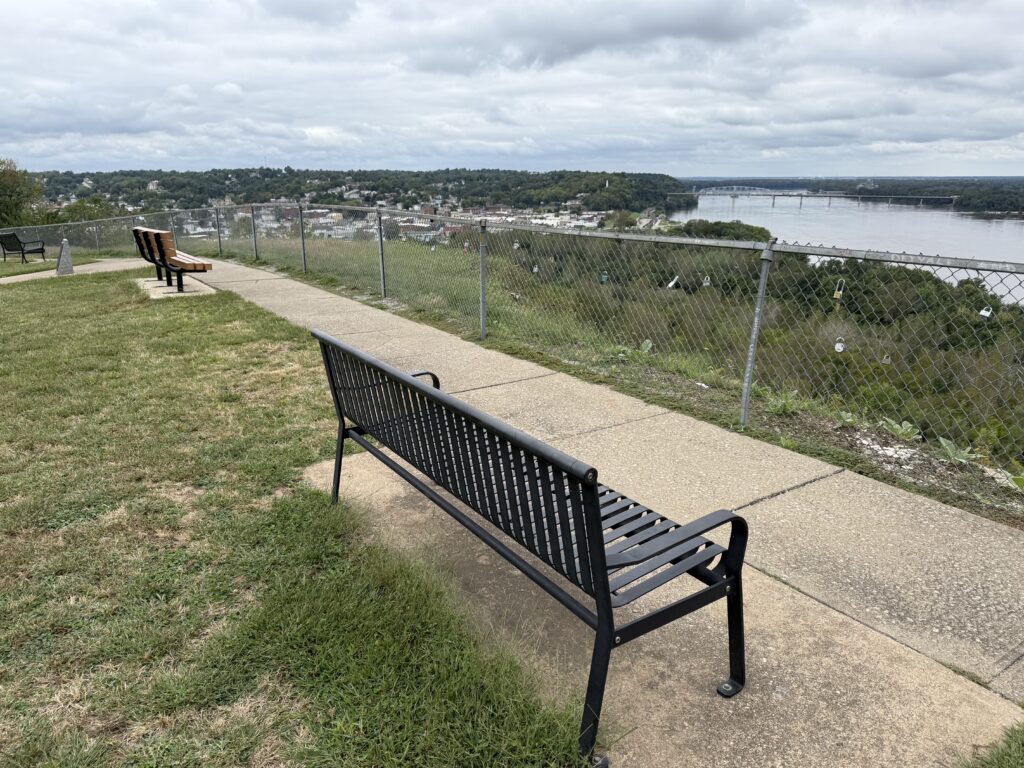
Several benches nearby let you sit and take in panoramic views of the Mississippi River and the city of Hannibal. Visiting at night would surely make for a romantic date spot.
After checking into the motel and packing the items I’d bought so far into these suitcases, they were already nearly full. I had planned to go shopping the next day, but I realized that if I went on a shopping spree, my suitcases would overflow and I wouldn’t be able to bring everything back, so I had to cut back significantly.
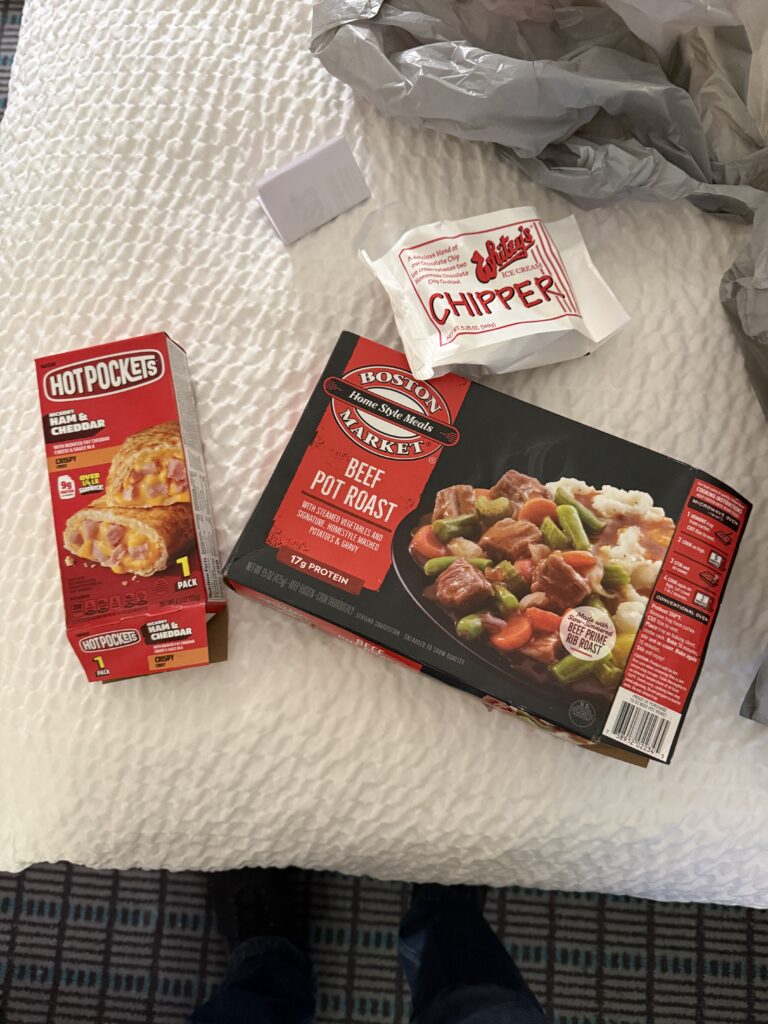
A Mexican restaurant where I could have dinner sat next to the motel, but since I’d been eating out the whole time, I decided to buy some frozen meals from a grocery store for a change and heat them up in the microwave in my room. I stopped by a grocery store called Hy-Vee, about a five-minute drive away, bought some frozen meals and ice cream, and had that for dinner.
The Last Day in America
The next day, I checked out of the motel around 10 am. I went back to Coral Ridge, where Costco is located, and stopped by Kohl’s. This department store, like a US military base PX, carried everything you need for daily life. I wanted to buy lots of unique American items that probably aren’t sold in Japan, but my suitcase had little room left, so I ended up buying only a flannel shirt and a shower curtain. I packed away the hoodies I’d worn for several days in a row and changed into the flannel shirt. I walked over to a shoe store next door called Famous Footwear, where I spotted a Converse backpack and bought it for $10.58. Next, I went to Walmart. It was supposed to be my last chance to stock up on American products, but when it came time to shop, I couldn’t find much I wanted. On top of that, there were hardly any “Made in USA” items for sale, so it didn’t really feel worth the trip to the US just to shop—I ended up buying only a few things. I went into a nearby Taco Bell and had lunch.
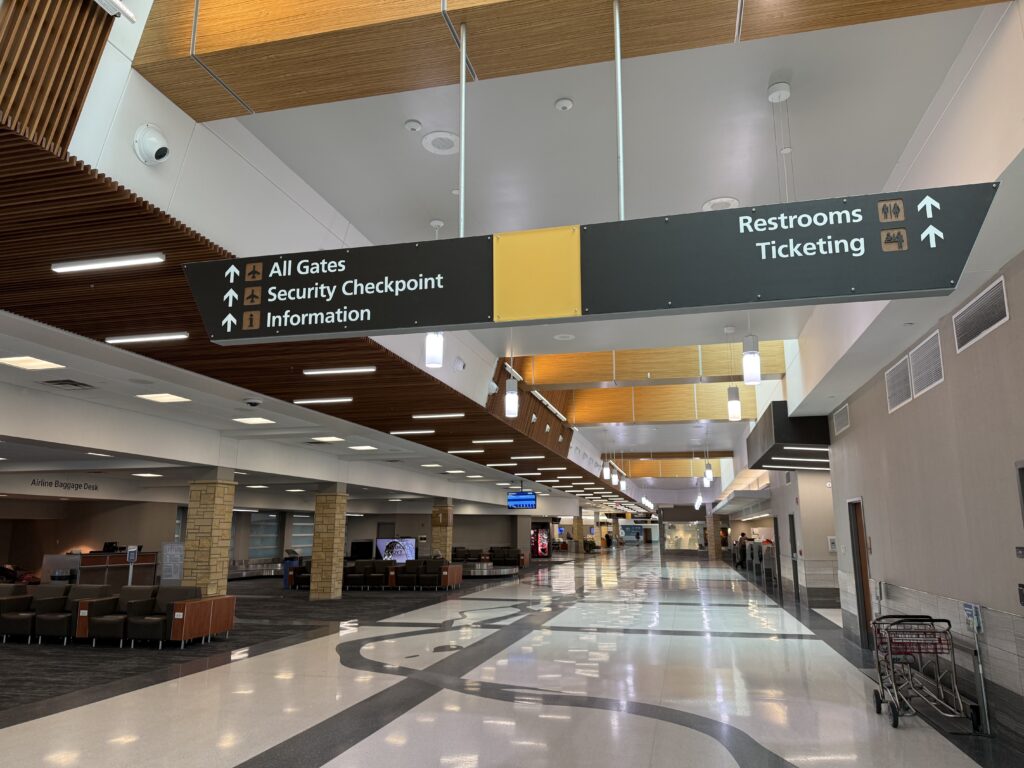
I returned my rental car at Eastern Iowa Airport in Cedar Rapids just after 4 pm. I still had more than 14 hours before my flight to Minneapolis was scheduled to depart. Since the Delta check-in counter doesn’t accept check-ins for that flight until three hours before departure, and they wouldn’t hold my large and small suitcases—filled with a massive amount of shopping—until then, I couldn’t even get through security. So, for the next 10 hours or so, I spent my time in the airport departure lobby, dragging all that heavy luggage around. There was only one restaurant in the departure lobby, but since it was open from 9 am to 4 pm, it was already closed by the time I arrived. I had already returned my rental car, so I couldn’t go to a restaurant outside the airport either. However, I could buy snacks and drinks from vending machines inside the airport, so I could eat and drink something to tide me over.
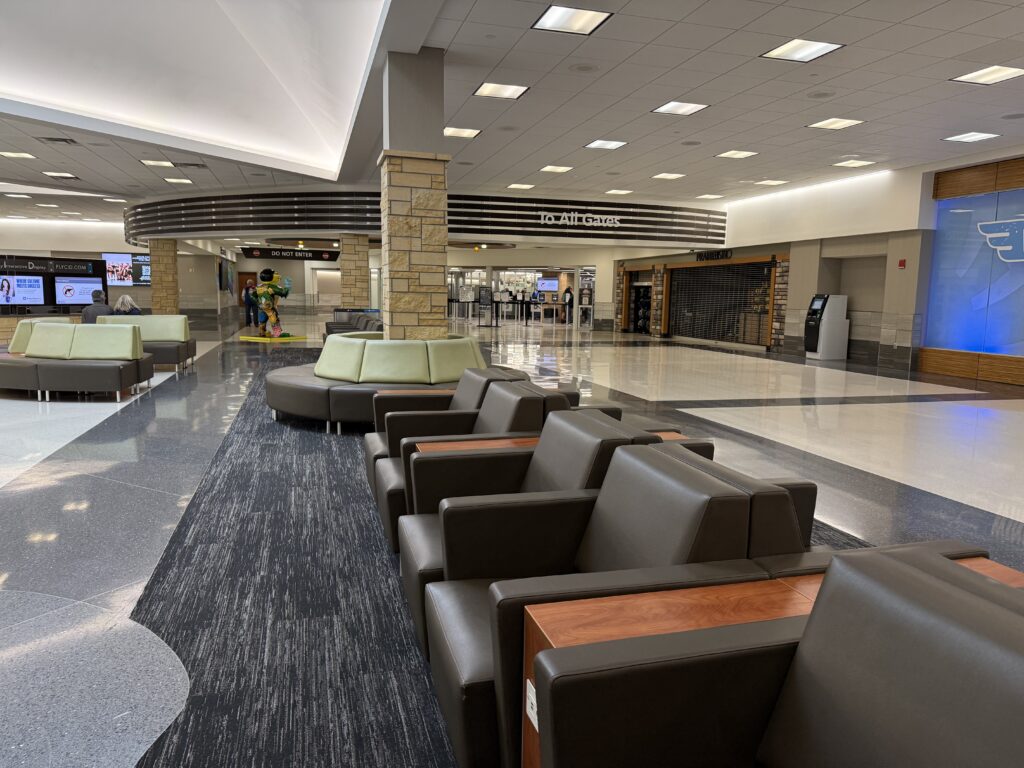
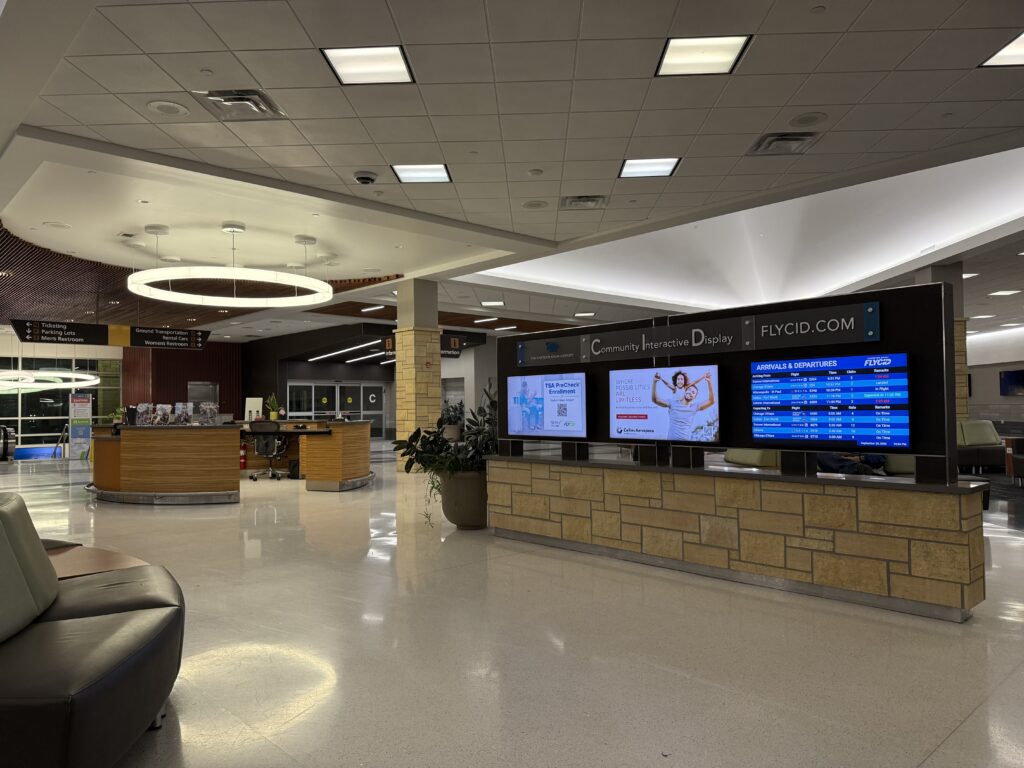
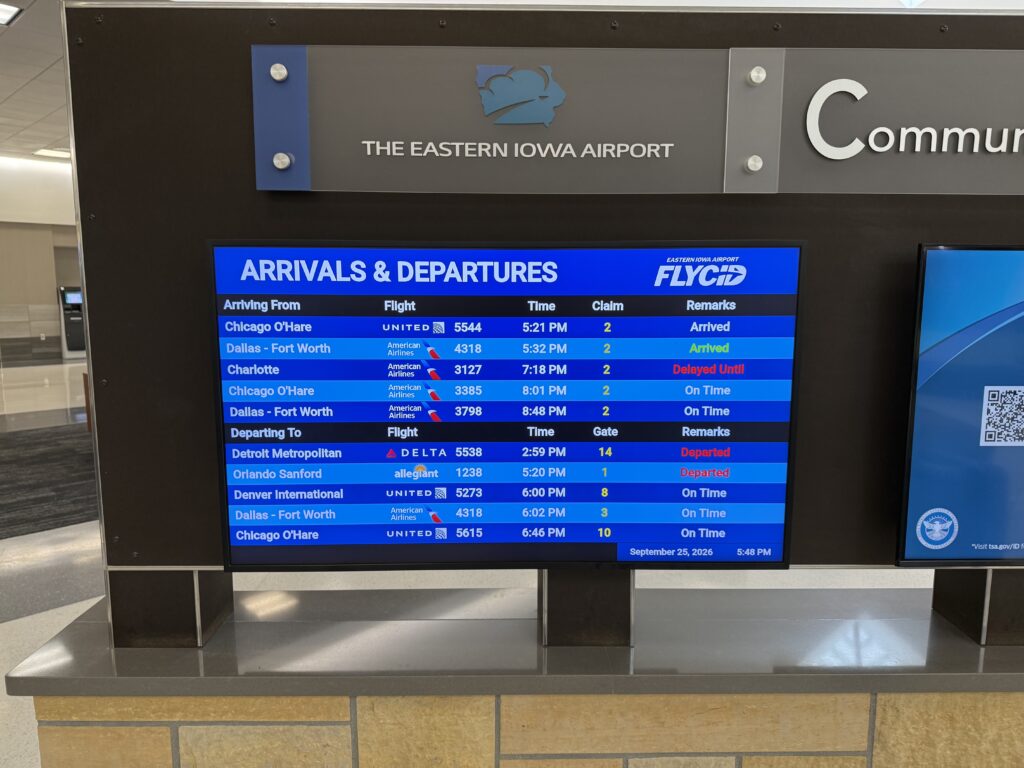
This airport handled flights to and from various parts of the United States. The last departing flight was around 8 pm. Incoming flights continued late into the night, and as they arrived, families gathered to greet passengers, with arrivals and greeters embracing each other here and there. Several flights from Denver, Colorado, were significantly delayed because a storm believed to have originated in the Denver area temporarily closed Denver International Airport, and the last flight didn’t arrive until around 2 am. When the last flight arrived, the terminal lights were slightly dimmed. With check-in still about an hour away, I lay down on benches to rest. Security guards and cleaning staff patrolled the area constantly, so I felt safe.
Returning Flights
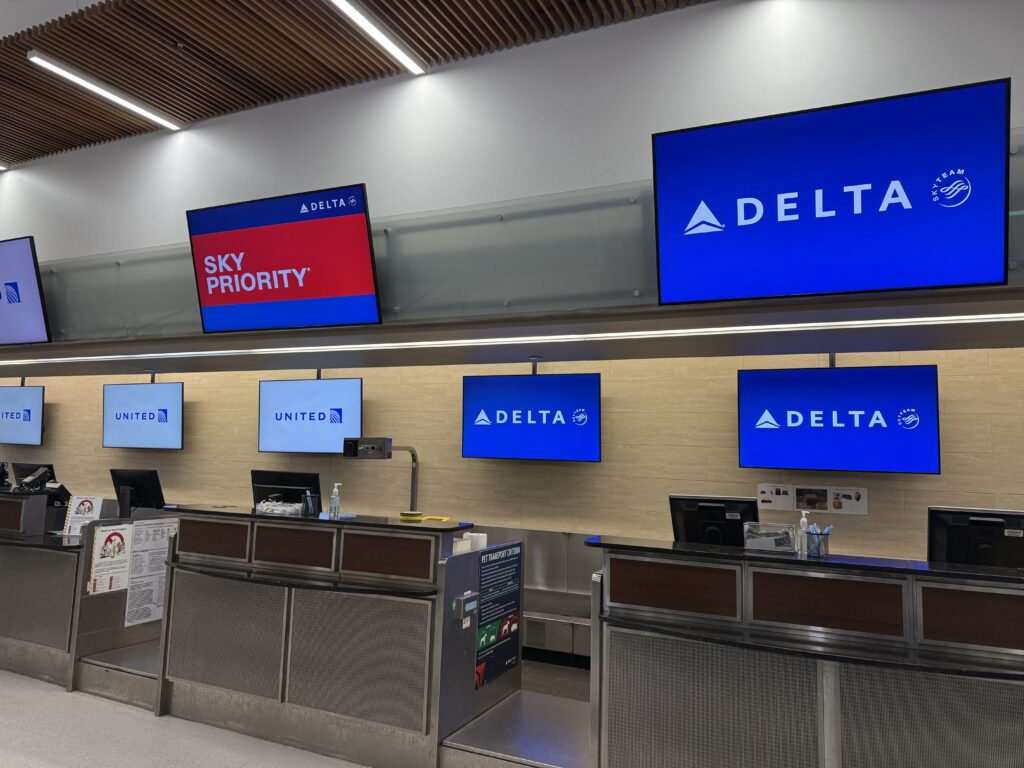
When 3:30 am rolled around—when my flight’s check-in was supposed to start—I lined up at the Delta Air Lines check-in counter, but the agent didn’t appear right away. While check-in was proceeding smoothly at the adjacent United Airlines counter, even after quite a few people had lined up here, no one came to this counter. About 25 minutes later, a staff member finally arrived. No passengers complained about the delay, and the staff member showed absolutely no sign of apologizing. Maybe that’s just how it is in America. I was finally able to check in my large and small suitcases. For the larger suitcase, I was charged an additional $100 for exceeding the weight limit. Before the security checkpoint, because I had Global Entry, I could line up in the lane marked “TSE Pre,” which shortened the screening time a bit.
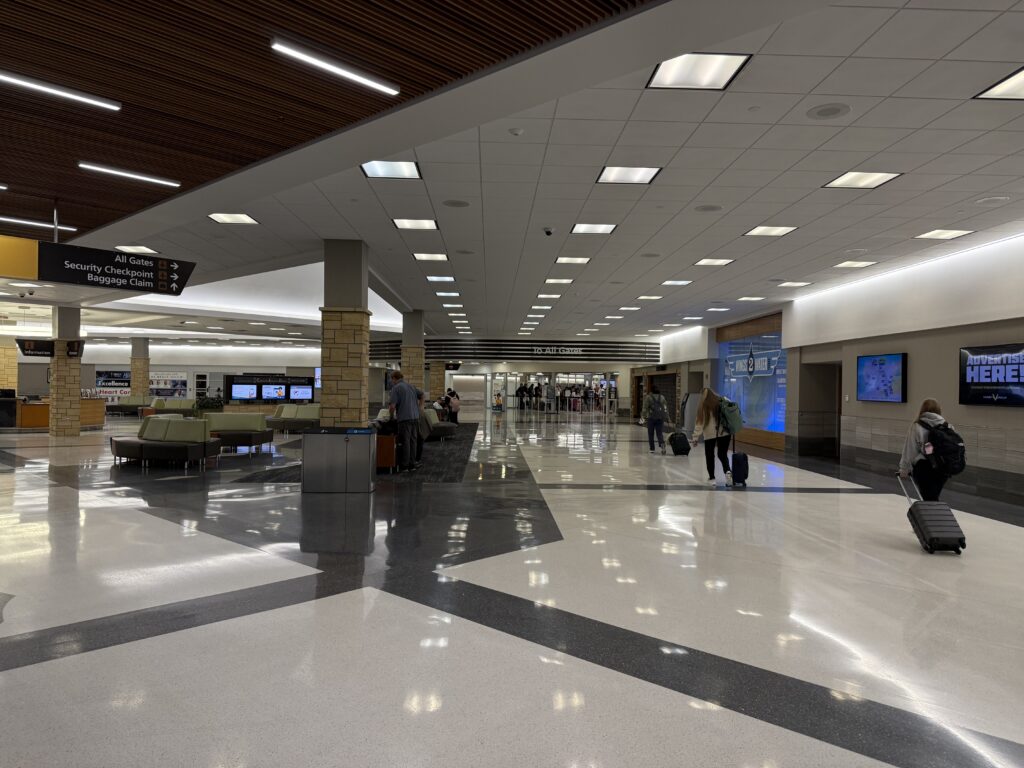
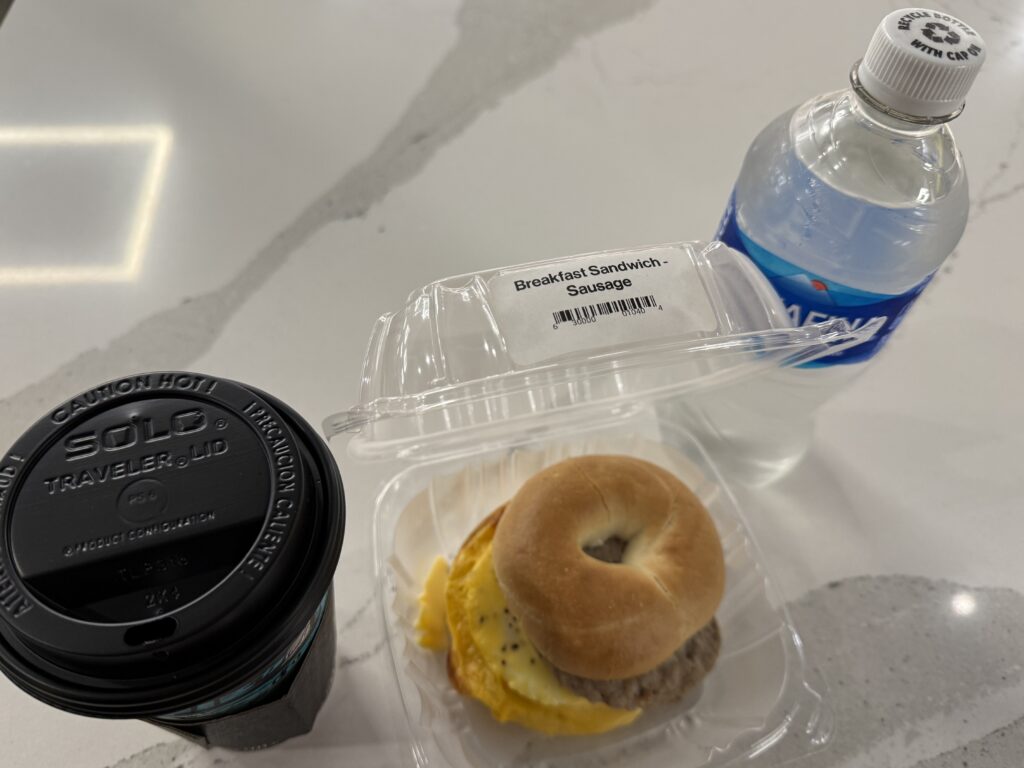
After security, I found some open cafes and shops in the restricted area. I bought a bagel sandwich, coffee, and water at a cafe for breakfast.
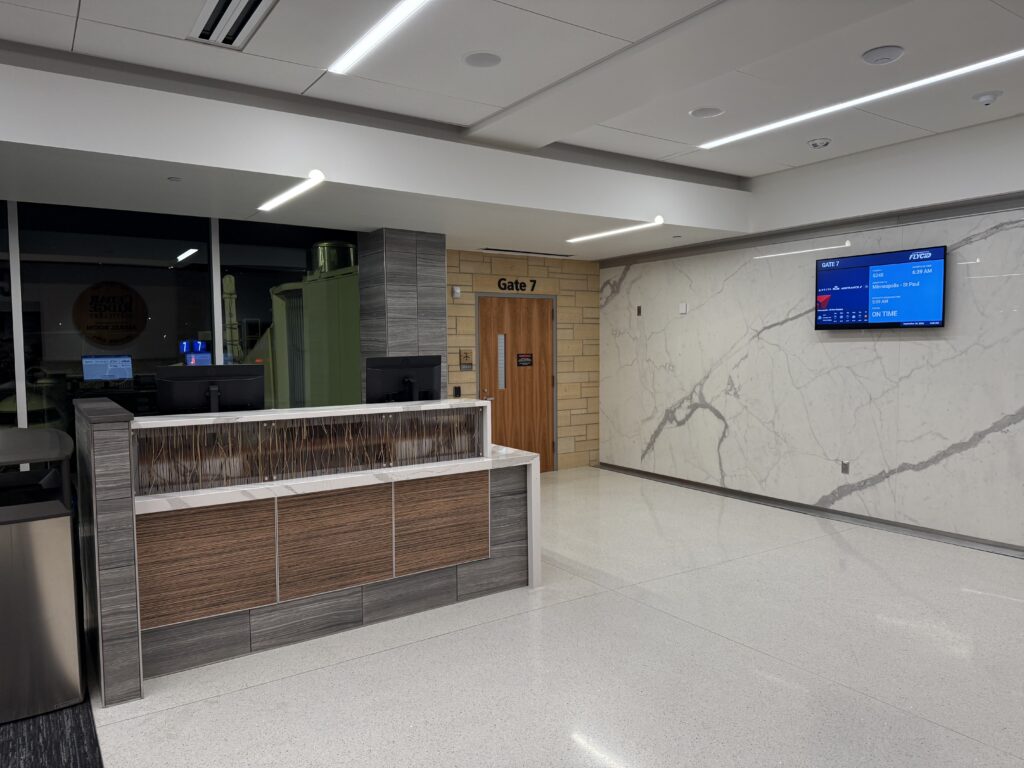
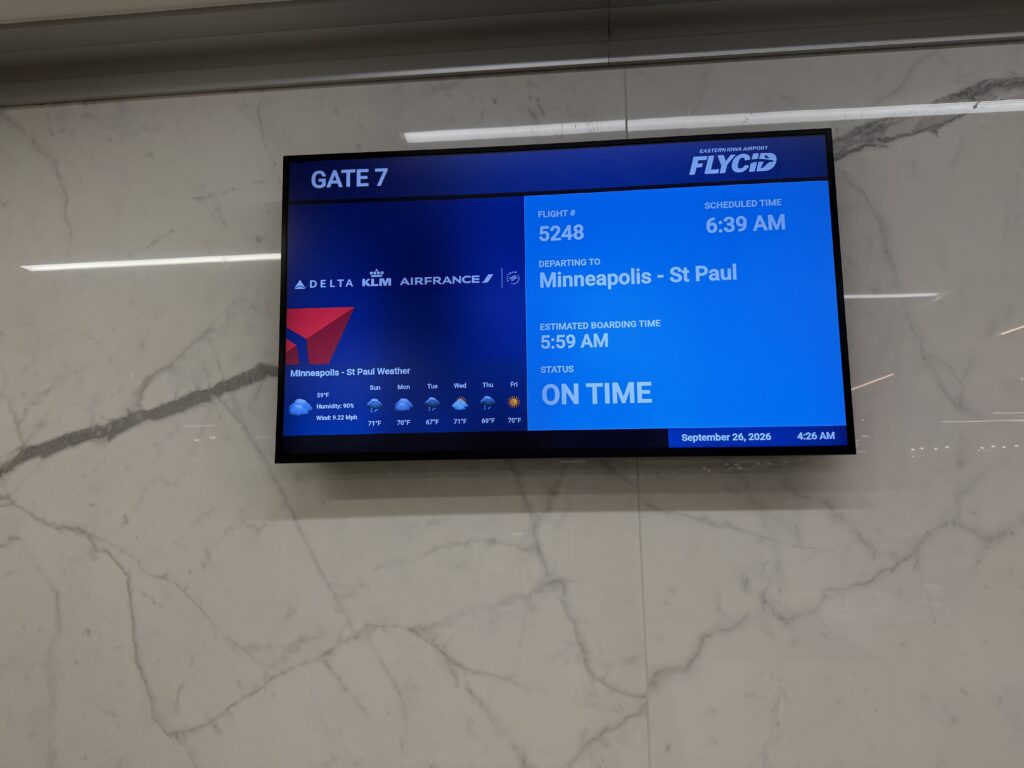
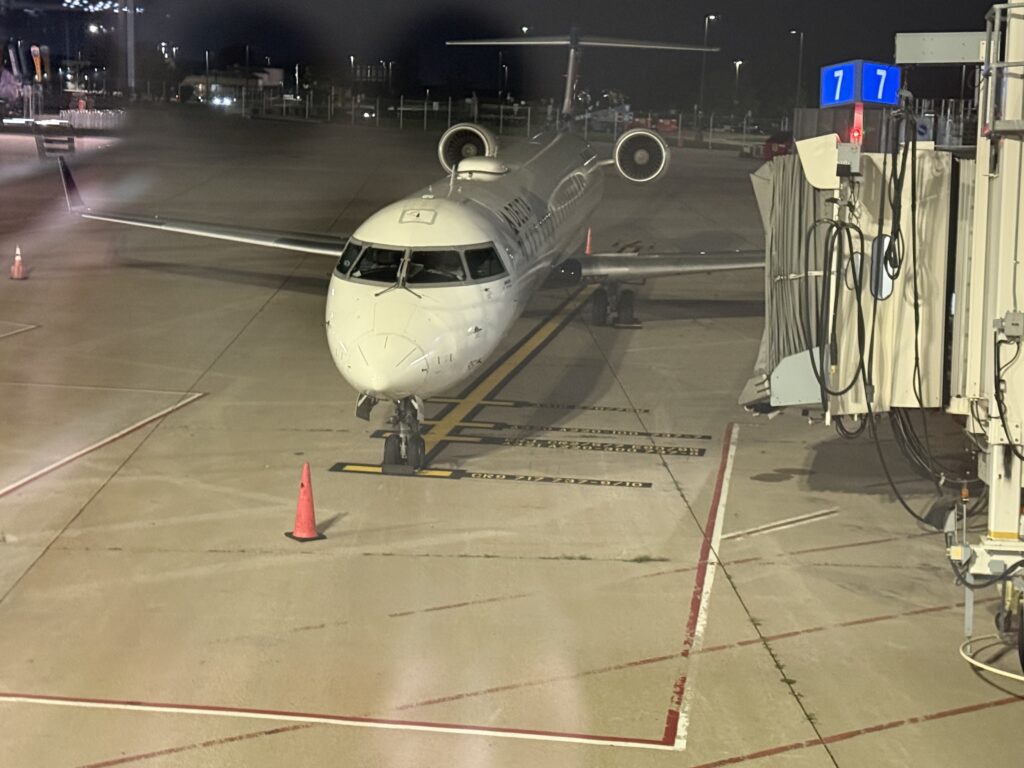
Boarding for the flight to Minneapolis began just after 6 am. The US military service members got top priority, followed by passengers in Zone 1. Since I was in Zone 6, I expected to be far down the line, but because there were few passengers overall, they called me, and I boarded in less than 10 minutes. The plane took off from Cedar Rapids around 6:50 am.
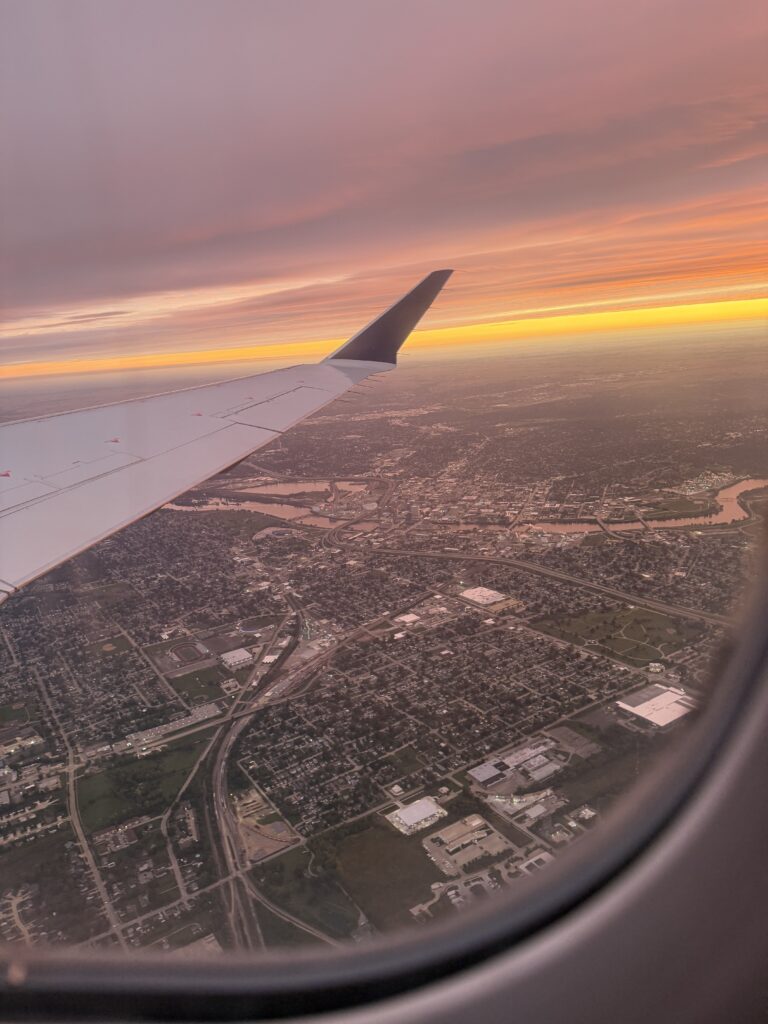
I arrived in Minneapolis at 7:45 am. My next flight to Haneda was scheduled to depart about two hours later.
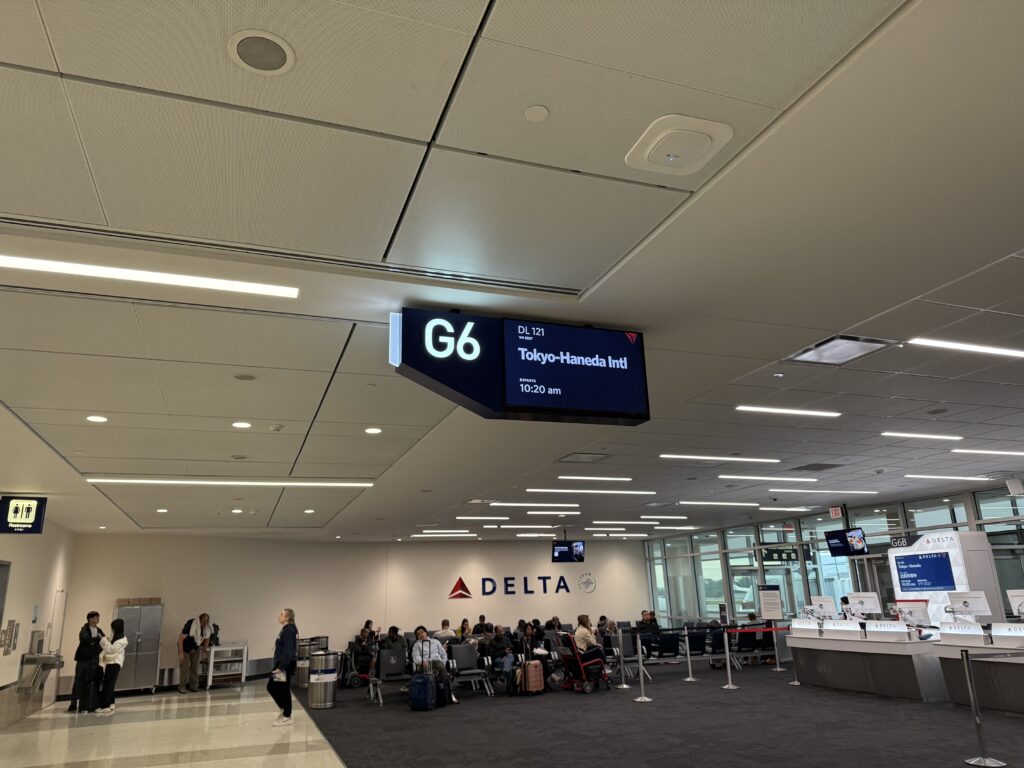
This is Gate G6, where the flight to Haneda departs. The area in front of the gate was nearly packed with Americans excited for their trip to Japan and Japanese passengers heading home.
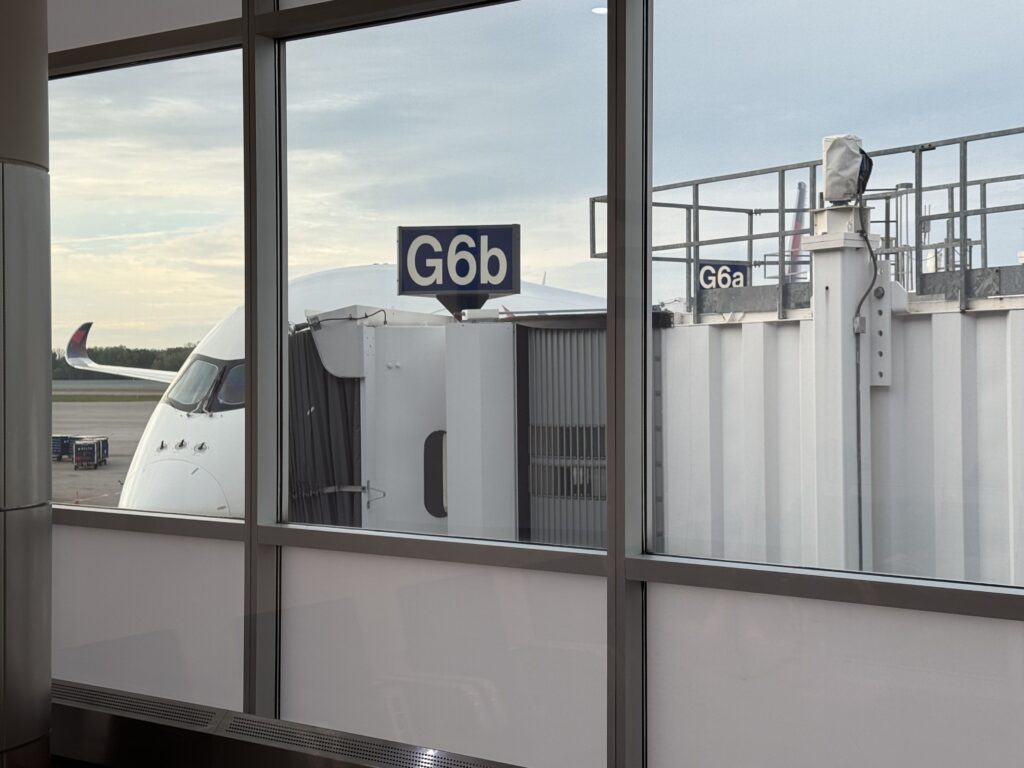
The return flight was also an Airbus A350-900. Boarding began at 9:33 am. About 15 minutes later, those of us in Zone 6 were called, but a bottleneck at the boarding bridge meant we didn’t get on the plane until around 10 o’clock. This time, my seat was in the middle of a three-seat row on the left side toward the rear of the aircraft. A couple—an American man and a Japanese woman—sat down on either side of me.
The doors closed at 10:10; we pushed back five minutes later, and at 10:27, we took off safely from Runway 12R.
The return route was further north than the outbound flight, passing through Alaska and coming very close to Russian airspace. As on the outbound flight, in-flight Wi-Fi was only available over the continental United States.
The flight time was about eleven and a half hours. The plane landed safely on Runway 34R at Haneda Airport at 12:10 pm the following day (Japan Standard Time) and arrived at 12:19 pm.
Looking Back This Trip
This nine-day trip meant a great deal to me. I actually visited Mount Vernon, Lisbon, Dyersville, Dubuque, and Hannibal—places I had seen in photos exhibited at Kokugakuin Tochigi High School’s cultural festival as part of the Kelso Heartland Homestay Program—and experienced the atmosphere of small towns in the American Midwest. I drove over 700 miles on the Lincoln Highway and surrounding American roads. I gained hands-on experience maneuvering a left-hand-drive car, checking traffic on right-hand-traffic roads, and navigating all-way stop intersections. I filled up the gas tank at gas stations. At convenience and grocery stores, I bought food and drinks, Purell hand sanitizer, five quarts of Pennzoil motor oil, rolls of Scotch tape, and multivitamin supplements. I stayed at several American motels, where I made my own waffles and toasted my own bread at the breakfast buffets. At McDonald’s and Taco Bell, I ate Big Mac combos and taco sets just as I usually do in Japan. I enjoyed hearty local dishes at American diners and Mexican restaurants. I washed the laundry that had accumulated during the trip at local coin-operated laundromats. Each of these experiences was truly priceless to me.
Public safety was impeccable everywhere I went. Whether I took out my smartphone in public or reached for my wallet, I never had to worry that they might be snatched or stolen. I didn’t need to be on guard against being suddenly attacked by a passerby or having my money extorted from me. While driving, I didn’t have to fear being the victim of a drive-by shooting by another driver.
On the other hand, almost everyone I saw out and about in town was white. The only people of color I saw were at the motel front desk or working in housekeeping. The places I visited seemed to have been built for white people, and it appeared that white people made up the majority of the community.
Perhaps because the midterm elections were coming up in November, many signs bearing the names of supported candidates were displayed in front yards. I often saw the name of a Republican named Ashley Hinson. On TV, viral videos for her—or ones listing her past “misdeeds” and discouraging Iowans from voting for her—aired frequently, about every five minutes.
I have enough Delta SkyMiles left to visit the US again. I don’t know where I’ll go next or when, but as long as time, money, and immigration officers allow it, I hope to keep traveling to the US.
Leave a Reply