I live in Japan. I have bank accounts in Japan to get a monthly income and make regular payments. Besides, I have bank accounts in the United States and Hong Kong, keeping some of my money in different banks and currencies to minimize risk. I manage my assets in these countries because there are more investment options than in Japan.
A consideration is how to transfer the money you get in Japan to a foreign bank account. Wire transfers at a bank in Japan are expensive. I tried some online international money transfer services. All of these services require at least 2,000 JPY per transaction, so sending tens of thousands of JPY with them is costly.
Having two PayPal accounts can resolve this problem. I got two PayPal accounts with my different email addresses and linked one of the PayPal accounts to a debit card of the bank account in Japan, and the other to the bank account in the US. When money was credited to the Japan bank account, I logged in to the PayPal account linked to the debit card and sent money with the debit card to the PayPal account linked to the US bank account. Then I logged out and logged in to the other PayPal account, and I withdrew money credited to the account to the US bank account linked to the PayPal account. The fee is cheaper as long as you send a small amount of money. Unfortunately, you cannot send money from Japan to Hong Kong because if you live in Japan, your PayPal account doesn’t allow you to link bank accounts in Hong Kong.
Revolut
Revolut resolves all of the problems. Revolut is a multi-currency banking service launched in the United Kingdom in 2015, and the service for residents in Japan became available this year. If you live in Japan, you can apply for a Revolut account via its smartphone app using your email address, credit/debit cards (AMEX is not supported), and your My Number Card. Once you open the account, you can top up the account using one of the credit/debit cards used for registration. The topped-up cash is credited to the account in Japanese Yen and can be exchanged for more than 150 currencies, including the United States Dollar and the Hong Kong Dollar. By registering bank accounts, you can withdraw (or pay) the money to one of the bank accounts. You can withdraw USD from US banks and HKD from Hong Kong banks. That is, you can send Japanese Yen to US banks and Hong Kong banks in each currency used in the country the bank belongs to, with an exchange fee only. You can send money to someone else’s bank account as well.
Physical And Virtual Cards
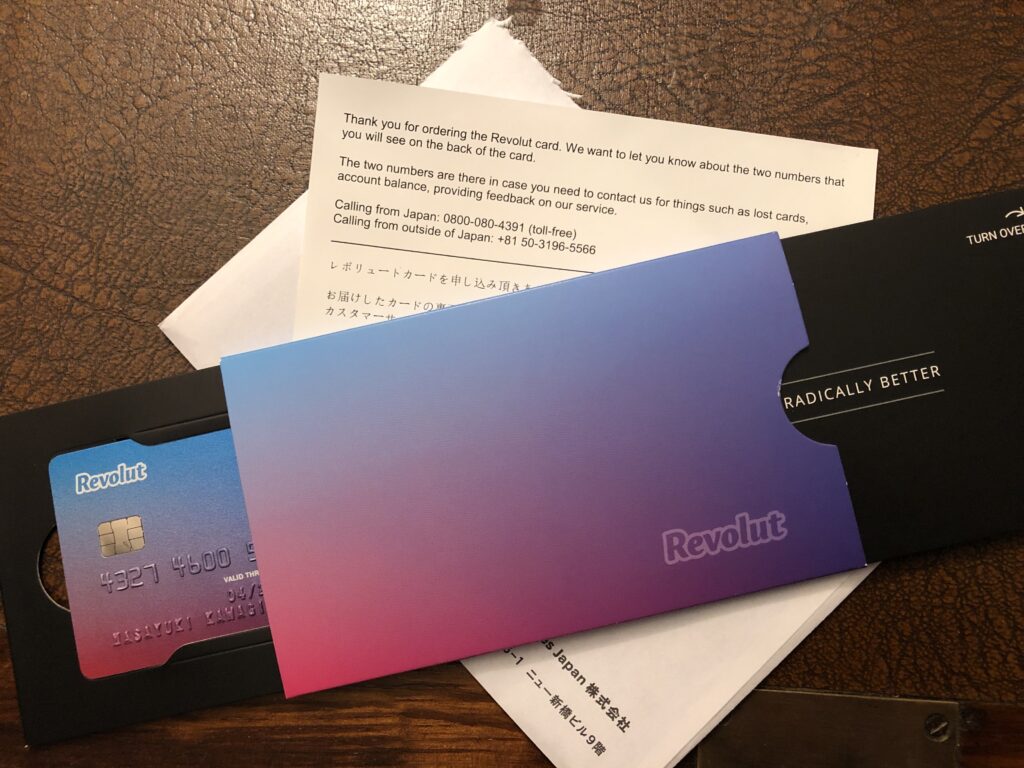
Another characteristic of Revolut is its physical VISA debit card, which you can have issued and sent to your residential address for free (a fee may apply depending on the card face type). The plastic card looks almost the same as a credit card and can be used like a credit card to make payments up to the amount you have credited to the account. Unlike other debit cards issued in Japan, this card is embossed, so it is usable with an analog credit card imprinter. Of course, the card has an IC chip, so you can use it with the four-digit PIN you registered in advance, without signing a credit card slip by hand.
A virtual card is also available for online use. If you find that your physical or virtual card has been fraudulently used, you can deactivate it in the app at any time.
Cons
Unfortunately, Revolut has some drawbacks. If you are a resident of Japan, you cannot send cash to Japanese banks, nor can you top up in foreign currencies from foreign banks. It means that you can only send money from Japanese banks to foreign banks, not vice versa. You cannot register the physical or virtual cards to Apple Pay.
Conclusion
Despite these drawbacks, Revolut is a successful fintech case and the best solution for international money transfers and prepaid card services. I’m going to use it for the time being, and I’ll give feedback on this blog later.
Leave a Reply